

Winter Storm Fern comes with billion-dollar threat to property insurers
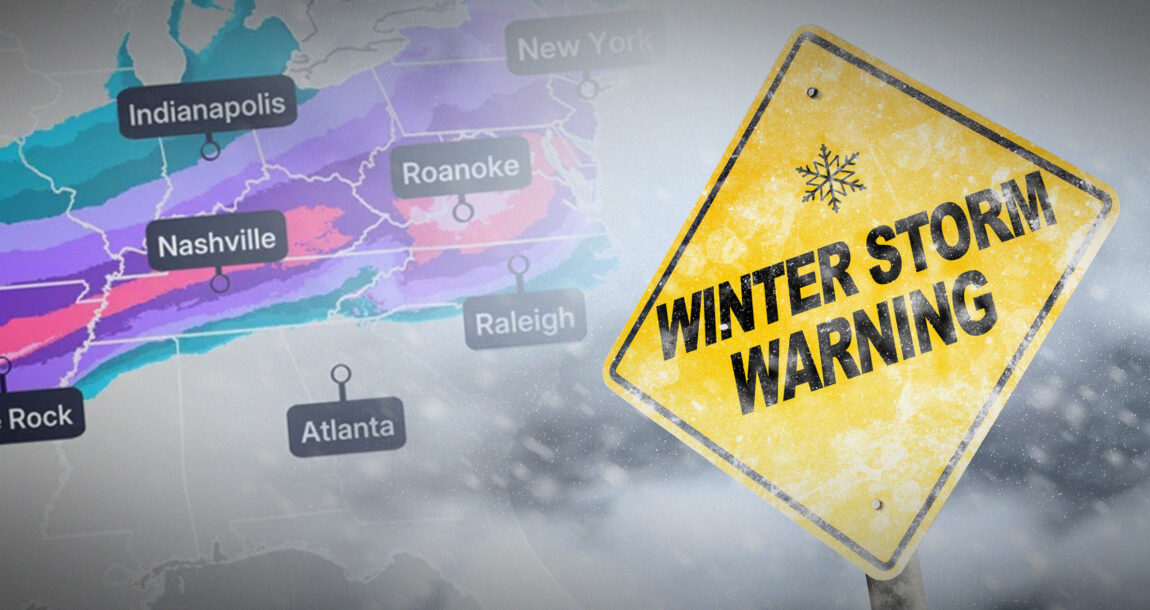
Winter Storm Fern is gathering power and set to unleash potentially billions in property damage and devastation across middle America.
The weekend storm is forecast to impact nearly 75 to 150 million people across a 700,000-square-mile area from the Southern Plains to the Northeast. Beginning with rain Friday across Texas and Oklahoma, creating potentially lethal ice conditions, the storm is expected to track east and finish with a massive snow dump across several eastern states Sunday and Monday.
Forecasters predict it could be the most significant winter storm in at least a decade. The storm will most certainly be accompanied by significant insured property damage.
Neil Alldredge is president and CEO of the National Association of Mutual Insurance Companies. The property insurance industry as a whole is navigating a "new era of risk" that tests its ability to handle multi-billion-dollar catastrophic weather events, he said.
“While the industry has historically shown resilience, the increasing frequency and severity of natural disasters – combined with economic inflation and rising litigation – have created a volatile, high-pressure environment,” Alldredge added.


Stroms grow more costly
Also this week, Aon plc released its annual Climate and Catastrophe Insight report, revealing that severe convective storms have surpassed tropical cyclones to become the costliest insured risk.
Global economic losses from natural disasters reached $260 billion in 2025, Aon reported, the lowest since 2015. However, insured losses remained elevated at $127 billion, marking the sixth consecutive year that insurance payouts exceeded the $100 billion threshold.
These high–severity disasters, particularly in the United States, continue to drive substantial insured loss even in below–average hazard years, Aon found. In many regions, especially emerging markets, more than half of economic losses remained uninsured, leaving millions exposed to financial risk.
Many property insurers are lobbying for mitigation strategies, such as fortified roofs, to increase the chances structures can withstand weather events like Winter Storm Fern.
The responsibility still falls on the owner to adequately maintain their property, explained Andrew Leeds, chief claims officer at Plymouth Rock Assurance.
“Insurers typically see higher losses from burst pipes and resulting water damage during extreme cold, particularly when freezing conditions or power outages cause plumbing failures,” Leeds said. “While many policies cover sudden pipe bursts, claims may be limited or denied if the damage is linked to a lack of maintenance or failure to maintain adequate heat.”
Prevention efforts pay off
Insurers can do their part to keep property damage and attendant claims down by highlighting risks associated with ice dams, power outages, and basement flooding, Leeds noted.
“Guidance around clearing gutters, ensuring proper attic insulation and ventilation, testing sump pumps and backup power, and recognizing early warning signs like icicles or interior water staining can help prevent minor issues from escalating into major claims,” he said.
Artificial intelligence has a role to play in helping property insurers better manage severe weather events, said Manuel Rodriguez Vera, business unit head of insurance at WNS, part of Capgemini, an information technology services and consulting company.
Agentic AI is enabling insurers to “continuously analyze risk signals, ingest external data, and apply predictive and prescriptive analytics to anticipate demand,” Vera said. “In surge-prone events such as major storms, this allows carriers to scale operations rapidly, prioritize claims intelligently, and respond with greater speed, accuracy, and empathy.”
The industry enters 2026 with “record levels of capital,” Vera said, supported by strong balance sheets, deep reinsurance markets, and alternative risk transfer mechanisms such as bonds and insurance-linked securities.
"However, capital adequacy alone does not determine outcomes. It does not close the protection gap, nor does it solve for operational scalability," he added. "High-frequency, high-volume catastrophes continue to expose limitations in legacy operating models, trained surge capacity, and fragmented workflows."
© Entire contents copyright 2026 by InsuranceNewsNet.com Inc. All rights reserved. No part of this article may be reprinted without the expressed written consent from InsuranceNewsNet.com.


A decade in decline: PHL Variable serving as a cautionary tale
‘Baseless claims’: PacLife hits back at Kyle Busch in motion to dismiss suit
Advisor News
- Your client’s $3 million portfolio doesn’t tell you their insurance needs
- How life insurance can provide liquidity for wealthy families
- Retirement providers turn to digital engagement to retain assets
- Looking out for clients with diminished mental capacity
- House panel advances CLEAR Forms Act backed by IRI
More Advisor NewsAnnuity News
- What lower interest rates mean to annuity payouts
- AM Best downgrades A-Cap insurers amid financial and regulatory troubles
- Lawsuit claims Delaware Life hid billions in insurer-linked investments
- AM Best to Deliver Presentation at 2026 ACLI Annual Conference
- Global Atlantic Announces Launch of ForeLifetime Income, a New Fixed Index Annuity
More Annuity NewsHealth/Employee Benefits News
Life Insurance News