

The cost of ignoring long-term care
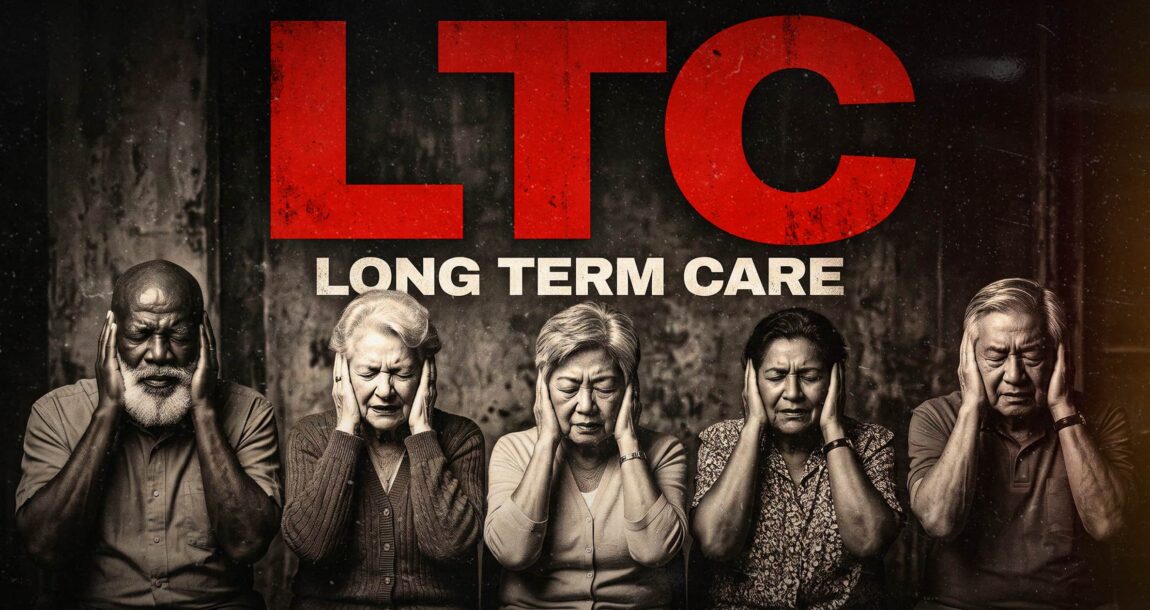
Let me ask you something uncomfortable: When was the last time you brought up long-term care with a client?

If you're like many agents, the answer is somewhere between "rarely" and "never." And that's understandable. For years, the LTC conversation was difficult, negative and overly complicated. It often felt like a topic you only brought up when a client asked — if you brought it up at all.
But the reality has changed. Your clients are aging. Every single day. And virtually all of them will face some kind of care event at some point — for themselves or for someone they love.
Roughly 70% of people turning 65 will need some form of long-term care during their lifetime. The question is no longer whether care will matter. The question is whether someone will have a plan when it does. That is where the long-term care blind spot becomes costly — for clients and for the agencies that serve them.
The demographic wave is here
About 65 million baby boomers are moving through their highest-need years. At the same time, the supply of professional caregivers is tightening, family caregivers are burning out and care costs continue to rise faster than most clients expect.
A home health aide in many markets now costs $30 to $40 an hour. Assisted living commonly runs $5,000 to $8,000 a month. Skilled nursing can exceed $120,000 a year.

Those aren't theoretical numbers. Those are real costs families face today. And clients are paying attention. They may not know how to frame the issue, but they feel the pressure. They worry about becoming a burden on their children. They want to remain at home as long as possible. They don't want a care event to wipe out the assets they worked decades to build. That is exactly why LTC belongs in the conversation.
- Clients are already asking, just not directly. Most clients will not say, "I want to discuss long-term care." Instead, they say things like: "I never want to be a burden on my kids." "I want to stay in my home as long as possible." "We've worked too hard to let healthcare wipe out everything." Those are LTC concerns in everyday language. If they are not coming up in your conversations, it may be because clients do not yet see you as the person to ask.
- It creates real differentiation. Most agencies are still not addressing this need consistently. That is not necessarily because they do not care. More often, it is because LTC feels complex, unfamiliar and easy to postpone. But that complexity creates an opening.
When an agent can speak intelligently about long-term care, they stop competing only on price and start competing on depth, relevance, and trust. That kind of differentiation is hard to copy — and it becomes especially valuable in a market where many clients still lack any dedicated plan for extended care. Only a small fraction of Americans over age 60 hold stand-alone long-term care insurance.
- It closes a major gap in coverage. Clients often have life insurance, health insurance, disability coverage, auto insurance and homeowners insurance. What many do not have is a plan for the one event that can disrupt everything: the need for extended care.
That gap matters. It matters for the client, and it matters for the advisor who wants to offer truly comprehensive planning. Agencies that leave the gap unaddressed risk weaker retention when a care crisis eventually hits a client’s family, and they leave relationship equity on the table that competitors can claim.
- It strengthens the relationship. Helping a client think through later-life independence is not just about policy design. It is about solving one of the most personal financial questions they will ever face. When an advisor helps a client with that issue, trust deepens. So does retention. So do referrals. Over time, that trust becomes one of the most valuable assets in the practice.
Why the old approach falls short
Some agents try to address the issue through life insurance riders — chronic care, terminal care or extended care features. Those products may have a place in some cases, but they are not the same thing as dedicated LTC planning. They are often limited by the structure of the death benefit. They can be harder for clients to fully understand. And in some cases, they leave clients with the impression that they have addressed long-term care risk when they really have not.
That is an important distinction. True long-term care solutions are designed specifically for the realities of aging, independence and care needs. They can offer more robust planning options, broader usefulness and a clearer conversation about actual care funding.
A better conversation — and why it still seems difficult
The future of LTC is not fear-based. It is not facility-focused. And it should not be product-first. The better conversation centers on dignity, choice and planning — how clients want to live and what it will take to protect that independence.
Still, knowing that does not make the conversation easy. Many agents hesitate because they worry about sounding negative, opening a complex topic they cannot fully resolve on their own, or being asked detailed questions about products and underwriting they do not handle every day.
That hesitation is understandable. The solution is not to become an expert overnight. It is to get comfortable raising the issue and then connecting the client with someone who lives in this space every day.
The opportunity for agencies
Agencies do not need to become LTC specialists. But they do need to stop treating LTC like an optional add-on. The agencies that will stand out in the years ahead are the ones that can help clients connect the dots among retirement income, family responsibilities, independence and care planning — and then bring in the right specialist when deeper expertise is required. That is where partnership becomes powerful.
Working with a certified long-term care specialist allows an agency to offer real depth without forcing every advisor to master a complex and evolving product set. The agent keeps the primary relationship. The specialist brings focused knowledge, current product insight and the ability to guide clients through the nuances of funding independence. Clients experience seamless, comprehensive advice. The agency strengthens retention and differentiation. Everyone wins.
The practical next step is simple: start the conversation, listen carefully and then introduce a specialist when the discussion moves beyond the surface. Clients respect advisors who know their limits and bring in the right help. That willingness to collaborate is itself a form of expertise. Because if you are not having that conversation — and connecting clients to people who can truly help — someone else eventually will.
The long-term care conversation is changing. The old model of selling fear is fading. It is being replaced by a more practical, more human planning conversation about how people want to live and what it will take to preserve that independence.
That shift creates both responsibility and opportunity for agents and advisors. The responsibility is to stop ignoring the issue. The opportunity is to become the professional who brings it into the planning conversation before a crisis forces it there — and who knows when to bring in a certified specialist who can finish the job well.
© Entire contents copyright 2026 by InsuranceNewsNet.com Inc. All rights reserved. No part of this article may be reprinted without the expressed written consent from InsuranceNewsNet.com.



What to do when adult children become the client
Advisors await SEC decision on Vanguard fair fund distribution
Advisor News
- When a client moves, their insurance plan needs to move, too
- A rising retirement challenge: The license to spend
- Financial stress leaves less room for retirement saving
- Giving while you’re living: 3 frequently asked questions about gifting
- Helping clients prepare for one of their biggest retirement expenses
More Advisor NewsAnnuity News
- Global Atlantic names Dan Farrelly head of IMO and IBD channels
- A rising retirement challenge: The license to spend
- What lower interest rates mean to annuity payouts
- AM Best downgrades A-Cap insurers amid financial and regulatory troubles
- Lawsuit claims Delaware Life hid billions in insurer-linked investments
More Annuity NewsLife Insurance News
Property and Casualty News
- wildfire-mitigation-insurance-savings
- TEXAS SENIORS GET PROPERTY TAX BREAK
- Texas seniors are getting a huge property tax break
- Business People: Dana McNabb promoted to CEO at General Mills
- CEO of The Hartford, one of state's biggest companies, to step down
More Property and Casualty News