

Why timing the market is still a retirement mistake and what to do instead
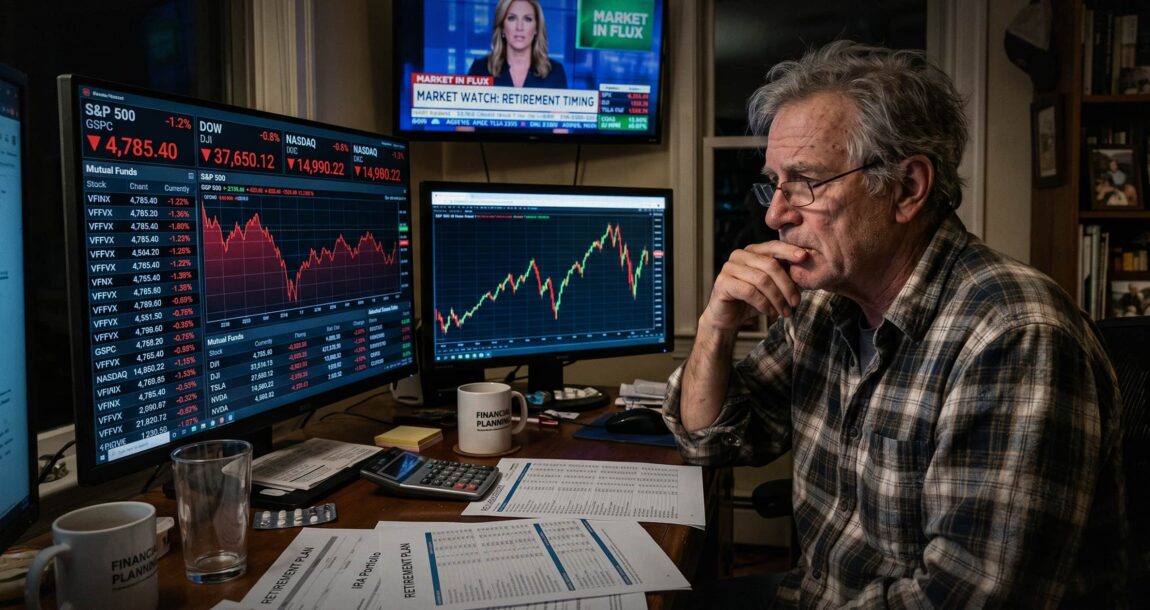
The economy has shown signs of uncertainty and as a result, many clients have been trying to time the market.
However, experts agree that attempting to do so is one of the greatest mistakes anyone can ever make.
Even Jack Bogle, the founder of Vanguard is on the same page.
“After nearly 50 years in this business, I do not know of anybody who has done it successfully and consistently," Bogle said. "I don't even know of anybody who knows anybody who has done it successfully and consistently."
Another mistake many are making is assuming the framework that has worked well for the last 40 years will continue to be effective.
The reality is that the last 40 years were historically unusual. And characterized by globalization, falling rates, and generally stable inflation.

“That environment was very favorable and helped create a pattern where stocks and bonds often moved in opposite directions," said Brad Chastain, managing director, global head of research at U.S. Money Reserve.
Unfortunately, it’s not guaranteed going forward.
The importance of an IPS
Contrary to popular belief, it’s not the advisor’s role to predict where markets are headed.
“Instead, the focus should be on producing an investment policy statement (IPS) for each and every client,” said Robert R. Johnson, professor of finance at the Heider College of Business at Creighton University.
An IPS is a written document that clearly lays out a client’s return objectives and risk tolerance over their relevant time horizon. It also considers constraints, such as liquidity needs and tax circumstances. Additionally, it includes a glide path adjusting asset allocations as the individual ages.
In essence, an IPS sets out the ground rules of the investment process and guides the investment plan.
When developing an IPS, it’s best to do so in a calm market.
“Developing an IPS in a volatile market or during major stories is problematic," Johnson explained. "The whole point of an IPS is to guide you through changing market conditions. It shouldn’t be changed to accommodate market fluctuations."
What Fed leadership changes mean
Despite the political tension between Federal Reserve Chair Kevin Warsh, President Trump, and supporters of former chair Jerome Powell, Johnson expects no meaningful impact on retirement income strategies.
“I don’t believe the Fed will lower interest rates this year," Johnson said. "In fact, I believe that the current bias among Board of Governors members is toward a rate hike, rather than a rate cut."
Clients often hope for lower interest rates, but hope is not a strategy.
“A change in the Federal Funds rate isn’t like a light switch for markets, though traders make it look as such in short-term pricing,” Chastain explained.
The Fed Funds Rate simply reflects the central bank’s monetary policy stance.
Chastain noted that the Fed heavily influences short-term rates. As a result, a rate cut will likely lead to lower short-term rates for products like money market funds, CDs, or savings accounts.
However, longer-term rates, such as the 10-year Treasury yield, mortgage rates, and long-term bond yields, aren’t directly impacted by the Fed’s policy rate.
These rates, which matter more for retirement planning are primarily driven by expectations for economic growth and inflation.
Planning adjustments for advisors to explore
Advisors need to recognize the changes taking place in the world today and consider whether the tools that they’ve used successfully in the past will provide clients with the best chances for success in the future.
“It’s wise to explore what many advisors are already recognizing and implementing for their clients: an allocation to precious metals,” Chastain said.
Over the last 25 years, gold has not only outperformed both stocks and bonds, but it’s also less correlated to stocks than bonds, providing greater diversification.
Steven Rogé, chief investment officer and CEO at R.W. Rogé & Co., echoes Chastain’s thoughts and said now is the time to focus on modern advancements in asset allocation.
“Many advisors ignore other asset classes that provide real diversification, such as commodities (especially gold), managed futures or trend trading, and insurance-linked securities like catastrophe bonds,” Rogé said.
Considering where a client is in life is also essential.
For a retiree, slower economic growth will have virtually no impact on their day-to-day life. Social Security isn't affected by it, and they don't have to worry about being laid off.
Portfolio value shouldn't be as much of a concern either, because if the plan was built properly, all of their future expenses have already been paired with an appropriate investment, immunizing them against a shortfall without the need for an expensive and confusing annuity or insurance product.
“For someone a few years from retirement, an economic slowdown can be more of a concern, especially if their job is at risk," Rogé explained. "In that case, it may be wise to redirect new savings from a brokerage account into a few extra months of emergency reserves in a bank savings account."
The same holds for a small business owner whose cash flow could be hit if the business is economically sensitive.
Regardless of the market environment, it’s essential for both downside protection and upside participation, so it can withstand a wide range of conditions.
“A resilient portfolio shouldn't need to pivot based on expectations and speculation,” Rogé added.
© Entire contents copyright 2026 by InsuranceNewsNet.com Inc. All rights reserved. No part of this article may be reprinted without the expressed written consent from InsuranceNewsNet.com.



Greg Lindberg slams ‘vindictiveness’ in fight for prison computer access
AVOID Act may push businesses to avoid New York State
Advisor News
- A rising retirement challenge: The license to spend
- Financial stress leaves less room for retirement saving
- Giving while you’re living: 3 frequently asked questions about gifting
- Helping clients prepare for one of their biggest retirement expenses
- Important year-end financial conversations every advisor must have
More Advisor NewsAnnuity News
- A rising retirement challenge: The license to spend
- What lower interest rates mean to annuity payouts
- AM Best downgrades A-Cap insurers amid financial and regulatory troubles
- Lawsuit claims Delaware Life hid billions in insurer-linked investments
- AM Best to Deliver Presentation at 2026 ACLI Annual Conference
More Annuity NewsHealth/Employee Benefits News
Life Insurance News