

The opportunity in the Canadian life market

A recent LIMRA study found 57% of Canadian adults say they have life insurance coverage. Although this is three points higher than the results from a similar study conducted by LIMRA in 2019, 30% of Canadian adults say they live with a coverage gap. Understanding the product market trends may help the industry focus on the products that will have the greatest success and help more Canadians get the coverage they need.
The life insurance market in Canada expanded 7% in 2024 to a record-high $2.04 billion, largely driven by strong whole life and universal life new premium. Over the past five years, independent distribution market share has expanded to 85%, up from 81% in 2020. This shift has come from career agents, who made 14% of sales, down from 19% in 2020.
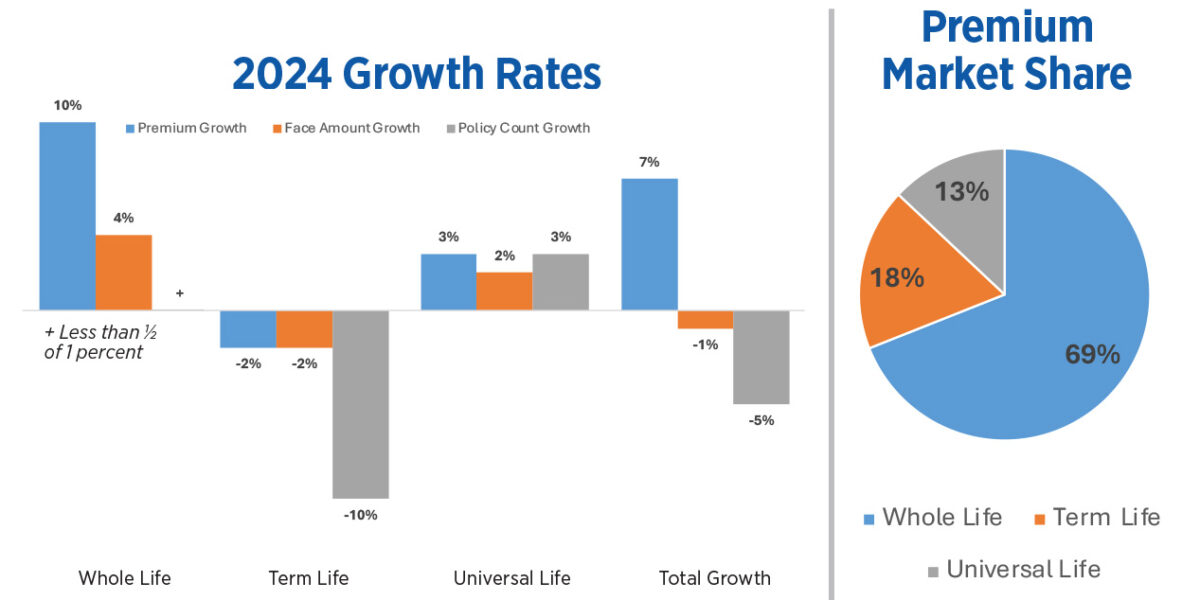
Another shift in the Canadian individual life insurance market is toward larger policy sizes and higher premiums. Some of these larger policy sales are occurring as several carriers intentionally focus their efforts on high net worth consumers. Advisors also seem to be shifting toward a more affluent clientele.
Sales in Canada are heavily focused on participating whole life, which represents more than 60% of total market share. Consumers often choose participating whole life products because they are permanent, and the cash value component available for loans also makes this product attractive to consumers. Advisors appreciate participating whole life products because they are often part of a larger retirement strategy and provide greater tax benefits to clients.
Overall, whole life premiums increased 10% to $1.4 billion in 2024, continuing a growth trend for this product line that has persisted since 2019. These products have been buoyed by both ongoing popularity and several companies introducing enhancements or new products throughout the year. This product line is likely to remain the primary source of premium in 2025 as the new products and enhancements introduced in 2024 continue to gain popularity and companies continue to vie for market share in participating whole life products. At the same time, the market for whole life insurance in Canada is extremely consolidated, with the top three companies reporting nearly 70% of all new whole life sales.

Term products, a mainstay for middle-income and younger consumers, account for the majority of new policies, with 53% of new policies being some form of term life insurance. Sales in 2024 were $372.5 million, down 2% from 2023 results. Historically, these products have grown at small, relatively stable rates from year to year.
During the portion of the COVID-19 pandemic with the strictest safety measures in place, term became the simplest product to sell when advisors could no longer meet their clients face to face, and as a result, they had some higher than usual sales growth. Since the end of 2020, however, term has yet to regain its momentum from before the pandemic and yearly growth has been flat to low. Companies have gone through several rounds of repricing recently. Some of term’s sluggish growth may be a result of advisors and consumers sitting on the sidelines until the dust settles.
With economic conditions in flux, expectations for the Canadian life insurance industry in 2025 are difficult to quantify. It is likely that carriers will continue to compete for market share by enhancing their participating whole life products or focusing selling efforts on these products. However, while the individual life industry has trended toward growth over the years, the current and coming political and economic climate could deeply affect the industry.



How health care costs change the face of women’s planning
Medicare: An important piece of the financial planning puzzle
Advisor News
- Flourish brings private-bank-like cash solution to MassMutual’s network
- Majority of Americans concerned recent market highs are unsustainable
- GLP-1 users choose between medication and retirement saving
- Gen X and millennials seek new retirement model
- Are families ready for the costs of aging at home?
More Advisor NewsAnnuity News
- New class-action lawsuit targets Delaware Life over annuity disclosures
- A client remarried: Does their annuity still fit?
- Gen X and millennials seek new retirement model
- Global Atlantic names Dan Farrelly head of IMO and IBD channels
- A rising retirement challenge: The license to spend
More Annuity NewsHealth/Employee Benefits News
Life Insurance News