

Knighthead’s big move — With Ed Massaro
Knighthead Life enters the U.S. annuity market with a rare advantage: deep experience but no legacy baggage. After years of building a strong international annuity business and a disciplined reinsurance operation, the company acquired a clean, fully licensed platform and built modern systems from the ground up. The result is a lean, technology-forward carrier, built for speed, transparency and consistent market presence.
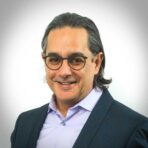
Knighthead focuses on simplicity and service, said Ed Massaro, CEO and Chief Investment Officer of Knighthead Insurance Group and Knighthead Life. Its Staysail 3, 5, 7 Multi-Year Guaranteed Annuity (MYGA) lineup gives agents clear, flexible options that match real client needs.
“We have a plan,” says Massaro. “We started with a multiyear guaranteed annuity, and we’ll develop a fixed indexed annuity product. We might develop some fixed indexed annuity products over time. It’s about making sure we can be competitive and provide best-in-class service to all our stakeholders.”
In this interview with InsuranceNewsNet Publisher Paul Feldman, Massaro discusses Knighthead’s journey into this new market and what he sees in the company’s future.
Paul Feldman: Tell me a little bit about yourself. What was your background before joining Knighthead?
Ed Massaro: I’ve spent about the past 30 years in the financial services industry. First in the investment banking and leveraged finance world: J.P. Morgan, Salomon Smith Barney and UBS. I was always in a credit and capital markets role. About 15 years ago, I moved over to join and help grow Knighthead Capital Management, which is a credit asset manager and manages about $10 billion of assets today.
I had been on the banking side of the business, then moved to the asset management side of the business with my partners. I was responsible for business development and the operations of the company and looking at new opportunities, and that’s what brought us to insurance. Back in 2010, we were watching what both private equity and some asset managers were doing in the insurance business. I guess most notably we were seeing what Apollo and Athene were doing, and folks like Greenlight Re and Third Point Re, on the property/casualty side.

As asset managers and credit folks, we felt that life and annuity was a business we could understand. It had cash flows that were very much in tune with credit and originating credit and being able to pay people back with fixed income and floating rate securities.
Our interest shifted to what was happening in the market; how could we provide retirement services? First, internationally. Second, and now most recently, domestically in the U.S. My interest has always been in credit, leveraged finance, asset management, and as we all know, that’s a big part of what drives our fixed indexed and fixed annuity market today.
Feldman: It’s always exciting to have a new entrant in the market, especially Knighthead because you’re already an A-rated company; you’ve been doing this for a long time. I’d love to hear that story.
Massaro: We started Knighthead Annuity & Life Assurance in 2014, after four or five years of analyzing the market. Knighthead Annuity & Life Assurance Co. was our first carrier. We saw an opportunity to provide annuity products not to the U.S., which is very developed, but to the international markets. So we started just selling MYGA and FIA products to the non-U.S. market.
In our view, that was an underserved market; it wasn’t massive, but there was a need — a niche market — for a high-
service provider to provide transparent products. The international market uses it for retirement, uses it for accumulation — a little bit more so than the U.S. In our first year we did $25 million of premium in 2015, and today we write just shy of $500 million.
Again, we’re small for the U.S. market, but we are the No. 1 provider in the international market. Many of our clients and policyholders are in Asia, Latin America and parts of Eastern Europe, where they don’t have access to dollar-denominated annuities. We can sell to them through our Knighthead Annuity & Life business, which is based in the Cayman Islands.
As we grew, we saw an opening among middle-market U.S. carriers in need of capital relief. They were looking for reinsurance partners. In 2017 we jumped in and said, in the $500 million to $1 billion of reinsurance flow premium, we see a real opportunity to provide good partnership to carriers in the U.S., and we started our reinsurance business.
What did we do? No blocks, no legacy. This was not a grow at all costs. It was, “Let’s find partners, let’s learn the business, let’s grow with them.” We have six cedent carriers on our books, all flow transactions, all multiyear. We’ve been at this for seven, eight years with our carriers, and we went hand in hand with them pricing monthly MYGAs and FIA products. So, while we are “new” to the market, we’ve obviously learned a lot from our partners. We’ve seen the winners and maybe some mistakes that have been made over the past five or seven years. But part of the ultimate plan was to find and capitalize our company so that we’d have three business lines: our international direct, our reinsurance business of U.S. annuities, and then we believe that we could get a fair share of the U.S. market directly.
We acquired a carrier that had 46 licenses, great people and some great systems. It didn’t have any legacy business. It was ready-built to get going, but, frankly, it just never did. But it had created the platform. We stepped in, hoping to add a little bit of expertise and some capital, and we used that to launch our U.S. direct product. We really started selling in January last year. People often say, “Hey, there are plenty of annuities carriers out there and there are some great ones and there are some big ones.” We thought we’d take the same tack: high service, white-glove service — a boutique company offering competitive rates. We will ultimately grow, but it’s not growth at all costs.”
Being new to the market, you don’t have legacy blocks, you don’t have legacy systems. So, we can choose. We have fresh technology. We can turn premiums around; we can tell people where their policy stands. That’s a big lift, but you must do it carefully. We want to make sure we’re not falling down on the job for our policyholders or our distribution partners. We know you must be consistent, you must have technology and you must have capital.
We have a plan. We want to have capital so that we can be consistent. We started with a MYGA and we’ll develop FIA products. We might develop some FILA products over time. It’s about making sure we can be competitive and provide best-in-class service to all our stakeholders.
Feldman: When you say “the U.S. direct,” some people think you’re writing direct to consumer, but it sounds like you plan on using distribution.
Massaro: Right now, we’re using independent marketing organizations exclusively. We’ll expand into the bank and broker-dealer channel over time. As an example, in the international business where we sell to non-U.S. people, 90% of that distribution is through banks and broker-dealers. So, we’re also somewhat unique. Most carriers new to the U.S. come to the market like we did, use the independent or IMO channel and then, ultimately after some time, go to banks and broker-dealers.
We’re reasonably well known by a handful of U.S. banks and broker-dealers who serviced offshore clients. Ultimately, we think we’ll partner with those folks in the U.S. We are absolutely looking at the direct-to-consumer channel. Some of our peers are doing some very interesting things and have been very successful in that market. We’re looking at it. I think technology’s going to bring us there. I think it will bring younger people into the world of annuities at some point. But right now, I’d say we’re starting more in a traditional way with some six IMOs who have partnered with us to distribute our product.
Feldman: Your initial entry into the industry was MYGAs. What makes your MYGAs different, better or more interesting for an agent?
Massaro: The MYGA market continues to be strong. I think of the MYGA product as your fullback on the football team: You have to have one. It must be competitive. They’re commodity-like, but I think they become noncommodities when you do a few things. You can issue the policy in a quick turnaround, you can answer people’s most important policyholder questions, and you can provide options.
Our Staysail 3, 5, 7 product is our MYGA-branded product name. We offer clients three buckets. In the MYGA market, there are some folks who say, “I’m not going to touch this money. I want the best rate in the market.” We give them a simple interest rate, we show them the compounded rate, and they look at it and say, “I’m not touching that for five years. I know I don’t need it. I’ll pick this option in your riders.” Others say, “I want to have an income product. I’m happy to have a nice big coupon crediting rate, and every month I’m going to do systematic withdrawal.” And we’re happy to price that and happy to take a certain business mix in that match so that we give that agent and that client a solution.
And then there are some folks who say, “I don’t really know. I might need the money. I might not. I might need to make withdrawals. I still want a competitive rate.” I think our Staysail with our liquidity and no-liquidity riders — and how we’ve priced those — gives the agent the opportunity to have those three discussions. There are others like that in the market, but I feel we have a good rate and we have that optionality and we also can answer the questions and offer service. It’s given us some pretty good mindshare.
We are right on target for where we wanted to be. That’s how I’d say we’ve positioned Staysail in a very full market. We’ve been near the top on rates. You must have a good rate. But I think people will look at the rate and look at those other things and say, “How does this fit into my portfolio, and does it give me some optionality?” I think we’ve done reasonably well there, and the uptake has been what we’ve expected.
Feldman: There are so many indexes out there. What is Knighthead thinking about which route you’re going to take? The Standard & Poor’s model? Or some of the other models that are aggressive but have good track records? What are your thoughts on that?
Massaro: We will absolutely have a base S&P option. We will absolutely have a fixed option.
I think our approach will be a competitive group of indices, but we expect 50% to 60% of the clients we’re going to be looking to attract to take the S&P option. But will there be a balanced option? Will there be an all-equity option? Will there be a balanced with maybe a commodity component? Yes, but I think it’ll be with indexes that are well tested and that will give you good performance. We really don’t want to be on the aggressive side.
I think over time we’ll offer maybe some income products, too. But we’re going to come into the market as sort of a competitive, transparent, high-service model to establish ourselves. Because again, we’re thinking over the next five years, “Where do we get to, and what does our product portfolio look like?” We want to make sure we get it right. But sometime this year you should see an FIA offering from Knighthead Life.
Feldman: What’s the difference in the buyer mindset in the international market compared with the United States?
Massaro: The international buyer wants dollar assets because they live someplace where they’d like to have some dollar exposure, which they can’t get in their home country. And they want something — here’s where it’s similar to the U.S. market — that is safe and “guaranteed.” You’re living in Argentina or you’re living in Mexico City, and you have investments and you could be highly successful. Our target client in international has a net worth of between $1 million and $6 million — some have much more. They want a portion of their portfolio outside of that jurisdiction in dollars and with an A-rated counterparty. So, their real motivation is accumulation and the ability to give that to their beneficiaries.
For our international clients, only about 10% of our business is FIA and 90% is MYGA because of their focus. The U.S. folks are willing to take a little bit of, “Hey, I’m happy to be principal protected, but I want a little upside, and I’ll buy 50% MYGA, 50% in FIA.” The real mindset is capital preservation, great counterparty, and working with a jurisdiction that is fully transparent, fully reporting: Cayman. So, that’s the difference. But it is used less for income in international, more for estate planning and preservation of capital.
Feldman: It sounds like it’s part of a diversification plan.
Massaro: It absolutely is. And, historically, they’ve bought structured notes, they’ve bought fixed income products. But they’re thinking, “Well, wait a second, my fixed income interest rates go up. I don’t want a structured note that has some equity exposure. I pay big fees.” They like that they don’t pay a load. We’re paying the distribution partners there just like we do here. And they get a fair rate.
Feldman: How do the age ranges compare internationally versus in the United States?
Massaro: They are very similar. The international market may skew a little bit younger. I’d say, on average, we are seeing across that book around 60, versus what I’d call 65 or 68, maybe in a broader book in the United States. But it’s the whole spectrum. We sell up to about year 80, just like we do in the States.
Feldman: Service is important these days. There’s nothing worse than dealing with an outsourced service.
Massaro: We self-administer, and I’ll be the first to tell you, we’ve made our mistakes. But I think we’ve minimized those mistakes because we’ve been able to control our volumes and we want to grow with our volume. But if there’s a problem, if an agent has a problem, they know who to call.
I get on the phone with agents three times a week, but not all those conversations are about problems. The good news is, though, when you control your own destiny, you can fix it and you can make sure if you have a deficit in one area, there are great third-party administrators. Some of our seeding clients have terrific service. We’ve decided to do it ourselves. It’s costly, but I think, in the long run, it pays off.


Building momentum — with Lonniece McDonald
Hybrids will lead the way in product trends for 2026
Advisor News
- Flourish brings private-bank-like cash solution to MassMutual’s network
- Majority of Americans concerned recent market highs are unsustainable
- GLP-1 users choose between medication and retirement saving
- Gen X and millennials seek new retirement model
- Are families ready for the costs of aging at home?
More Advisor NewsAnnuity News
- New class-action lawsuit targets Delaware Life over annuity disclosures
- A client remarried: Does their annuity still fit?
- Gen X and millennials seek new retirement model
- Global Atlantic names Dan Farrelly head of IMO and IBD channels
- A rising retirement challenge: The license to spend
More Annuity NewsHealth/Employee Benefits News
Life Insurance News