Social Security myths on social media: How they could hurt you when paper checks end - Insurance News | InsuranceNewsNet

InsuranceNewsNet — Your Industry. One Source.ℱ

Sign in
  • Subscribe
  • About
  • Advertise
  • Contact
Home Now reading Newswires
Topics
    • Advisor News
    • Annuity Index
    • Annuity News
    • Companies
    • Earnings
    • Fiduciary
    • From the Field: Expert Insights
    • Health/Employee Benefits
    • Insurance & Financial Fraud
    • INN Magazine
    • Insiders Only
    • Life Insurance News
    • Newswires
    • Property and Casualty
    • Regulation News
    • Sponsored Articles
    • Washington Wire
    • Videos
    • ———
    • About
    • Advertise
    • Contact
    • Editorial Staff
    • Newsletters
  • Exclusives
  • NewsWires
  • Magazine
  • Newsletters
Sign in or register to be an INNsider.
  • AdvisorNews
  • Annuity News
  • Companies
  • Earnings
  • Fiduciary
  • Health/Employee Benefits
  • Insurance & Financial Fraud
  • INN Exclusives
  • INN Magazine
  • Insurtech
  • Life Insurance News
  • Newswires
  • Property and Casualty
  • Regulation News
  • Sponsored Articles
  • Video
  • Washington Wire
  • Life Insurance
  • Annuities
  • Advisor
  • Health/Benefits
  • Property & Casualty
  • Insurtech
  • About
  • Advertise
  • Contact
  • Editorial Staff

Get Social

  • Facebook
  • X
  • LinkedIn
Newswires
Newswires RSS Get our newsletter
Order Prints
April 11, 2025 Newswires
Share
Share
Tweet
Email

Social Security myths on social media: How they could hurt you when paper checks end

Susan Tompor, Detroit Free PressUSA Today Online

Unfortunately, we live in a time where oddball financial advice crops up on social media — as a way to cope, perhaps, with all sorts of anxiety.

And unfortunately, again, some people could get hurt by following bad advice relating to many things, including Social Security.

A friend on Facebook recently shared a tip that didn't sound quite right to me. "Folks, the federal workers began advising last month that all Americans remove all funds from the account where they normally receive any federal payments (Social Security, federal tax refunds and the like). Keep the account but only use it as a place for feds to transfer money. Immediately move all transferred cash to a separate account."

The loading screen of the Facebook application on a mobile phone

The concern, according to the post: "DOGE can declare you dead and force your bank to send back any funds paid to you."

Don't fool around with bad banking tips

The Department of Government Efficiency has fueled a sense of doom for many when it comes to Social Security payments, as the Elon Musk-led group develops aggressive strategies to cut costs in federal government agencies.

But making a quick move with your Social Security money — or listening to a scammer who calls out of the blue — isn't the right thing to do here.

Retirement planning: $1.5m is a retirement 'magic number.' Here's how long it lasts in every state.

The post I found on Facebook isn't a savvy insider banking tip that you should follow if you're anxious about the possibility that something could go haywire at the Social Security Administration. In fact, it could be exactly the wrong move for many people to make right now.

"A knee jerk reaction could just make things worse," warns Mary Johnson, an independent Social Security and Medicare policy analyst.

Retirees don't want to start keeping a lot of cash on hand, of course, because they fear that their Social Security money will be seized by the federal government. Keeping too much cash on hand only makes you a mark for getting robbed at home or on the street.
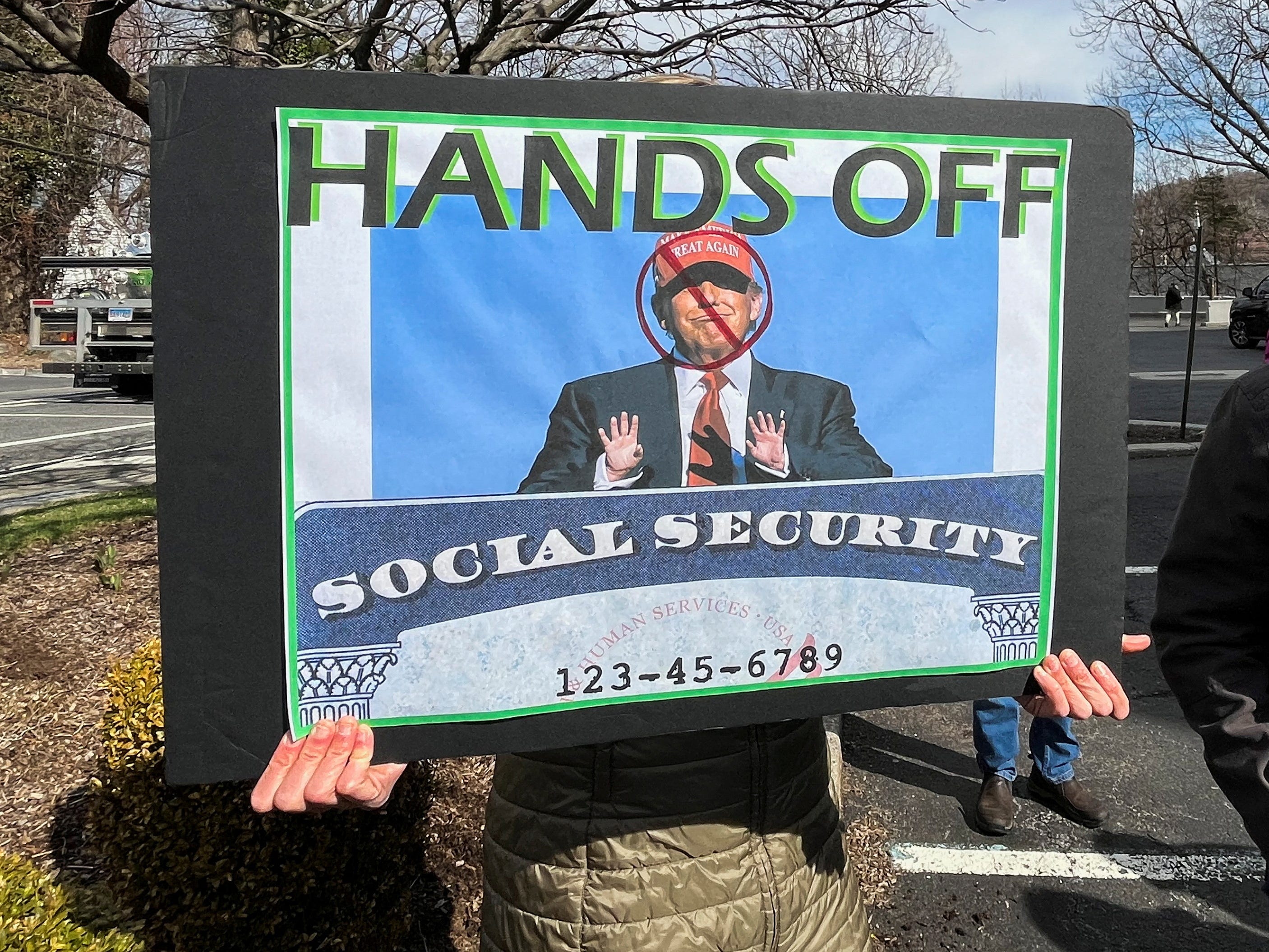
A person holds a sign during a protest against cuts made by U.S. President Donald Trump's administration to the Social Security Administration, in White Plains, New York, U.S., March 22, 2025.

And there are very good reasons why you want to keep Social Security benefits in the account where it's directly deposited each month.

For example, Johnson noted, Social Security accounts enjoy special protections under law. If someone followed that advice on Facebook and transferred their Social Security benefits into a different consumer account, she said, "they might open themselves up to weaker consumer protections, scam and worse."

How some Social Security benefits are protected from debt collection

Social Security payments are specially coded when sent to the consumer’s account, according to banking experts, so your bank can identify and protect those benefits from certain types of garnishment. But there's no such code when the money is transferred from the account that received the government benefits into another account.

It's a key point to understand if you could be dealing with debt collectors.

Before a debt collector can take money that you receive through Social Security or benefits from the U.S. Department of Veterans Affairs, the debt collector must sue you and win a judgment against you for the amount you owe, according Consumer Financial Protection Bureau online tutorial.

"Then, the debt collector must get a court order that tells your bank or credit union to turn over money from your account or prepaid card," according to the CFPB.

Even then, though, some of your Social Security money could be protected in this process.

Banks will receive a garnishment court order, and then conduct a “lookback” to see whether federal benefits have been deposited into the account within the past 60 days.

"When your bank receives a court order to garnish money in your account," the CFPB notes, "your bank must look at your account history to see if you received federal benefits by direct deposit in the last two months. Two months’ worth of benefits are protected and remain in your account for you to use."

The “protected amount” equals the sum of federal payments received over the last 60 days or the amount protected under state law, whichever is higher, and it will not be garnished, according to the CFPB.

The amount of money in the account that exceeds the protected benefit would be released to the creditor. And yes, there are exceptions.

Social Security payments, excluding Supplemental Security Income, can be garnished to enforce child support or alimony orders. Social Security benefits can be garnished to enforce restitution to victims of certain crimes.

What happens if you're delinquent on federal income taxes

In many cases, taxpayers who have delinquent federal income tax debt could see the Internal Revenue Service take up to 15% of their benefits each month to cover the tax debt, which would include interest and penalties. But that does not apply to SSA Disability Insurance Benefits.

The federal payment levy program involving taxes excludes certain delinquent taxpayers who receive Social Security payments if their income falls at or below certain established levels, based on the Department of Health and Human Services poverty guidelines. Lump sum death benefits and benefits paid to children are not included in the levy program.
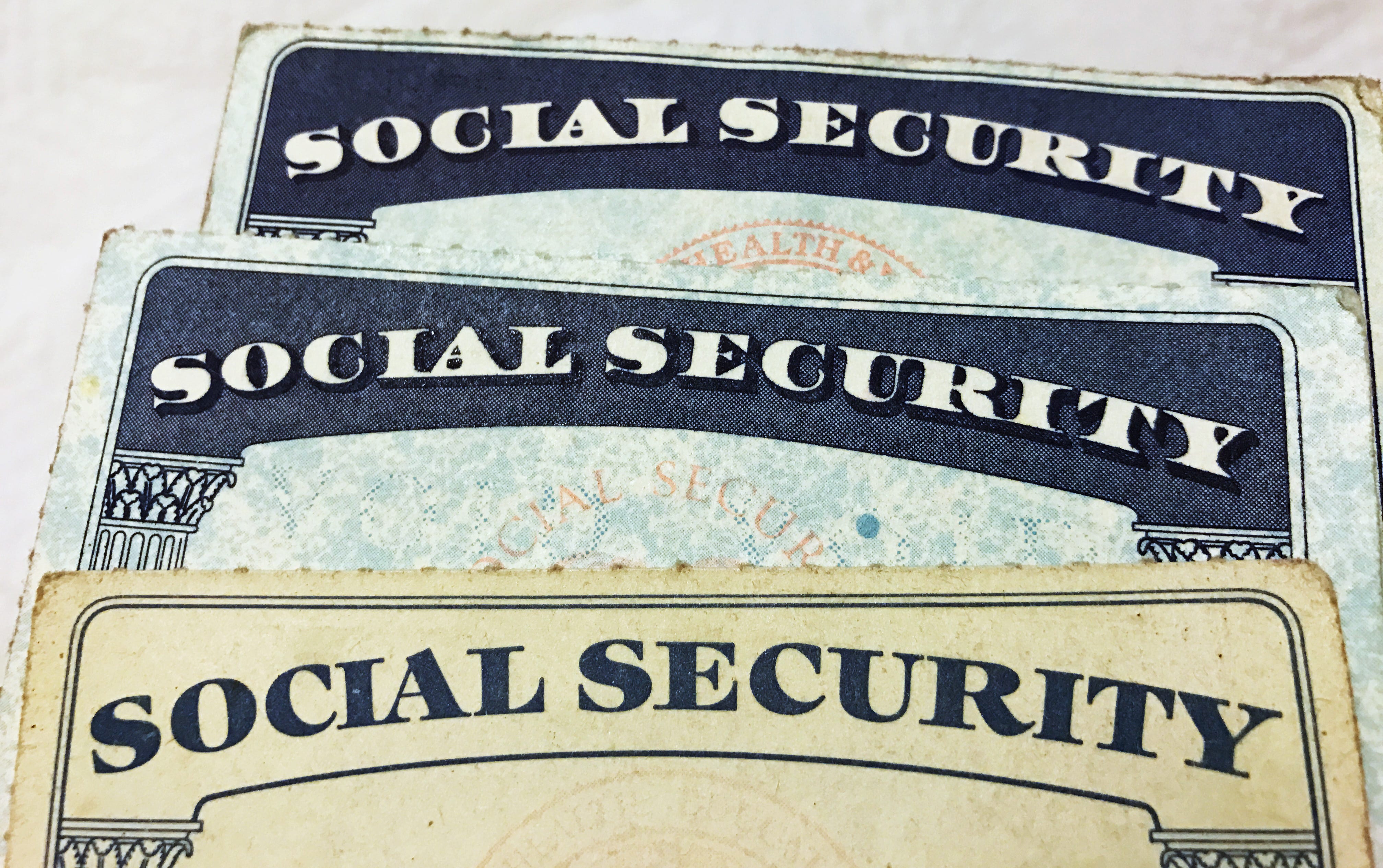
U.S. Social Security card designs over the past several decades are shown in this photo illustration in 2017.

The Social Security Administration has information about direct deposit on its website. See www.ssa.gov/deposit for information.

Direct deposit of Social Security benefits will be required soon

All federal benefit payments ― including Social Security and Supplemental Security Income benefits ― must be made electronically, based on federal law, according to information online at the Social Security Administration.

Two ways exist for receiving Social Security benefits, according to Social Security, if you're signing up now: You can have the money directly deposited into an existing bank account or have it deposited onto a Direct Express Debit Mastercard.

Social Security payments: Did you receive a letter about Social Security overpayments? Here’s what it means

The Social Security Administration website noted on March 31: "If you currently receive Social Security or Supplemental Security Income benefits by check, you must switch to an electronic payment option listed above."

If you're already receiving a paper check, Social Security offers a variety of ways to switch to direct deposit. One option is to call the Social Security Administration at 800-772-1213.

More than 455,000 people continue to receive Social Security checks in the mail based on data from Social Security.
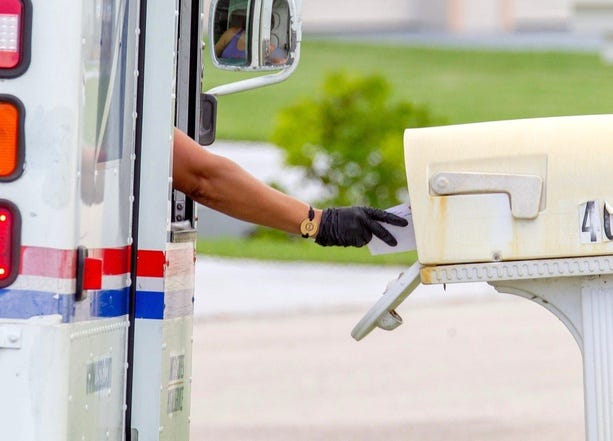
A letter carrier with the U.S. Postal Service places a letter into a mailbox while out making deliveries on a residential street on the Treasure Coast Friday, Aug. 5, 2023.

President Donald Trump signed an executive order March 25 to get the federal government out of the business of issuing paper checks to the extent permitted by law as of Sept. 30. That includes tax refunds.

The goal is to use direct deposit, payments onto debit and credit cards, digital wallets, and other electronic payment options.

According to the order, the Treasury Department could still issue checks when an electronic option isn't feasible, such as to "individuals who do not have access to banking services or electronic payment systems."

Many people remain rightly concerned about a small group of Social Security beneficiaries who might face anxiety or difficulty switching to direct deposit.

Some might face issues, Johnson said, if they're not informed well in advance that they must set up electronic accounts. Public awareness will need to build when it comes to the Sept. 30 phaseout of paper checks.
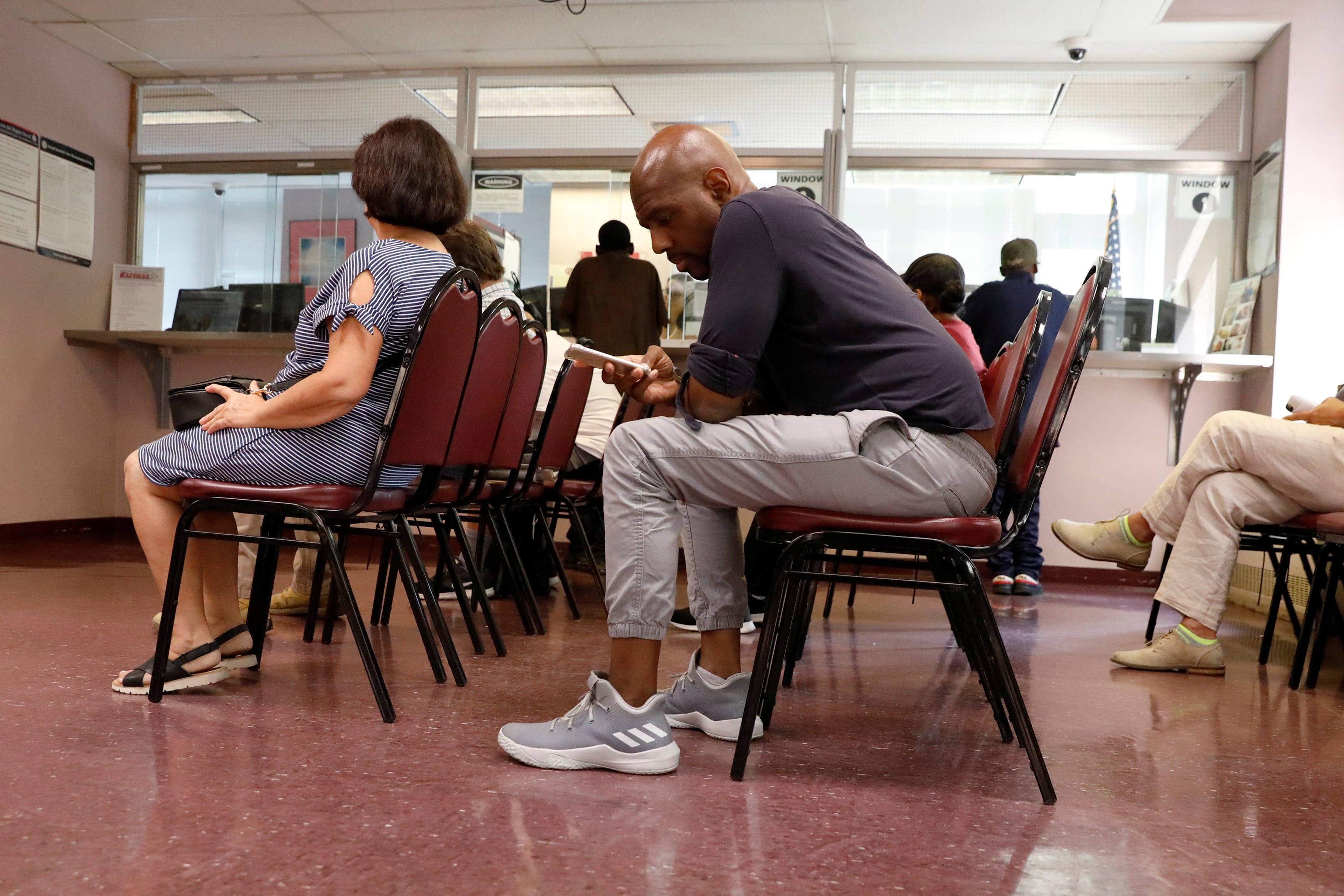
People wait to be called upon at a Social Security office in New York City on July 16, 2018.

Or some, Johnson said, might face difficulty getting issues resolved if they don’t have easy electronic access, either through cellphones or the internet. Some seniors have cognitive issues, she said, that make it difficult to drive and handle other tasks, such as online banking.

In general, I've long favored using direct deposit, instead of opting for a paper check, to eliminate the risk of someone stealing your paper check.

The risk of fraud and lost payments should be a significant concern for those receiving any kind of payment by paper check. The threat of someone stealing your tax refund check or Social Security check out of a mailbox is a huge concern.

"Historically," according to Trump's executive order, "Department of the Treasury checks are 16 times more likely to be reported lost or stolen, returned undeliverable, or altered than an electronic funds transfer (EFT)."

Granted, I'd say we cannot ignore that we have a long list of scammers who will trick you out of money that's in your bank account. But it's time for more protections for consumers from such schemes.

Many people don't realize, though, that depositing a paper Social Security check into a bank account won't protect you in cases of debt collection and garnishment.

"If you receive Social Security or VA benefits by check and then deposit the check into your bank account, the bank does not have to protect two months’ worth of benefits in the account," according to the CFPB information online.

"This means that your entire account balance could be frozen and you’ll need to go to court to prove that it comes from protected federal benefits and should not be garnished."

Using direct deposit for Social Security benefits — and not shifting it around to hide in other accounts — in general will provide additional legal protections, according to regulators and banking experts.

No doubt, many seniors are getting uneasy feelings relating to their Social Security payments. But those feelings aren't a reason to panic or follow every tip you spot on Facebook.

Contact personal finance columnist Susan Tompor: [email protected]. Follow her on X @tompor.

This article originally appeared on Detroit Free Press: Social Security myths on social media: How they could hurt you when paper checks end

Older

Texas House panel escalates inquiry into Medicaid insurer that investigated lawmakers

Newer

Social Security changes have Minnesotans worrying and waiting

Advisor News

  • D.C. Digest: 'One Big Beautiful Bill' rebranded 'Working Families Tax Cut'
  • OBBBA and New Year’s resolutions
  • Do strong financial habits lead to better health?
  • Winona County approves 11% tax levy increase
  • Top firms’ 2026 market forecasts every financial advisor should know
More Advisor News

Annuity News

  • Judge denies new trial for Jeffrey Cutter on Advisors Act violation
  • Great-West Life & Annuity Insurance Company Trademark Application for “EMPOWER BENEFIT CONSULTING SERVICES” Filed: Great-West Life & Annuity Insurance Company
  • 2025 Top 5 Annuity Stories: Lawsuits, layoffs and Brighthouse sale rumors
  • An Application for the Trademark “DYNAMIC RETIREMENT MANAGER” Has Been Filed by Great-West Life & Annuity Insurance Company: Great-West Life & Annuity Insurance Company
  • Product understanding will drive the future of insurance
More Annuity News

Health/Employee Benefits News

  • ‘Egregious’: Idaho insurer says planned hospital’s practices could drive up costs
  • D.C. DIGEST
  • Medicaid agencies stepping up outreach
  • D.C. Digest: 'One Big Beautiful Bill' rebranded 'Working Families Tax Cut'
  • State employees got insurance without premiums
More Health/Employee Benefits News

Life Insurance News

  • One Bellevue Place changes hands for $90.3M
  • To attract Gen Z, insurance must rewrite its story
  • Baby On Board
  • 2025 Top 5 Life Insurance Stories: IUL takes center stage as lawsuits pile up
  • Private placement securities continue to be attractive to insurers
Sponsor
More Life Insurance News

- Presented By -

Top Read Stories

More Top Read Stories >

NEWS INSIDE

  • Companies
  • Earnings
  • Economic News
  • INN Magazine
  • Insurtech News
  • Newswires Feed
  • Regulation News
  • Washington Wire
  • Videos

FEATURED OFFERS

Elevate Your Practice with Pacific Life
Taking your business to the next level is easier when you have experienced support.

ICMG 2026: 3 Days to Transform Your Business
Speed Networking, deal-making, and insights that spark real growth — all in Miami.

Your trusted annuity partner.
Knighthead Life provides dependable annuities that help your clients retire with confidence.

8.5% Cap Guaranteed for the Full Term
Guaranteed cap rate for 5 & 7 years—no annual resets. Explore Oceanview CapLock FIA.

Press Releases

  • Two industry finance experts join National Life Group amid accelerated growth
  • National Life Group Announces Leadership Transition at Equity Services, Inc.
  • SandStone Insurance Partners Welcomes Industry Veteran, Rhonda Waskie, as Senior Account Executive
  • Springline Advisory Announces Partnership With Software And Consulting Firm Actuarial Resources Corporation
  • Insuraviews Closes New Funding Round Led by Idea Fund to Scale Market Intelligence Platform
More Press Releases > Add Your Press Release >

How to Write For InsuranceNewsNet

Find out how you can submit content for publishing on our website.
View Guidelines

Topics

  • Advisor News
  • Annuity Index
  • Annuity News
  • Companies
  • Earnings
  • Fiduciary
  • From the Field: Expert Insights
  • Health/Employee Benefits
  • Insurance & Financial Fraud
  • INN Magazine
  • Insiders Only
  • Life Insurance News
  • Newswires
  • Property and Casualty
  • Regulation News
  • Sponsored Articles
  • Washington Wire
  • Videos
  • ———
  • About
  • Advertise
  • Contact
  • Editorial Staff
  • Newsletters

Top Sections

  • AdvisorNews
  • Annuity News
  • Health/Employee Benefits News
  • InsuranceNewsNet Magazine
  • Life Insurance News
  • Property and Casualty News
  • Washington Wire

Our Company

  • About
  • Advertise
  • Contact
  • Meet our Editorial Staff
  • Magazine Subscription
  • Write for INN

Sign up for our FREE e-Newsletter!

Get breaking news, exclusive stories, and money- making insights straight into your inbox.

select Newsletter Options
Facebook Linkedin Twitter
© 2026 InsuranceNewsNet.com, Inc. All rights reserved.
  • Terms & Conditions
  • Privacy Policy
  • InsuranceNewsNet Magazine

Sign in with your Insider Pro Account

Not registered? Become an Insider Pro.
Insurance News | InsuranceNewsNet