

Nationwide marks 100 years as a modern mutual
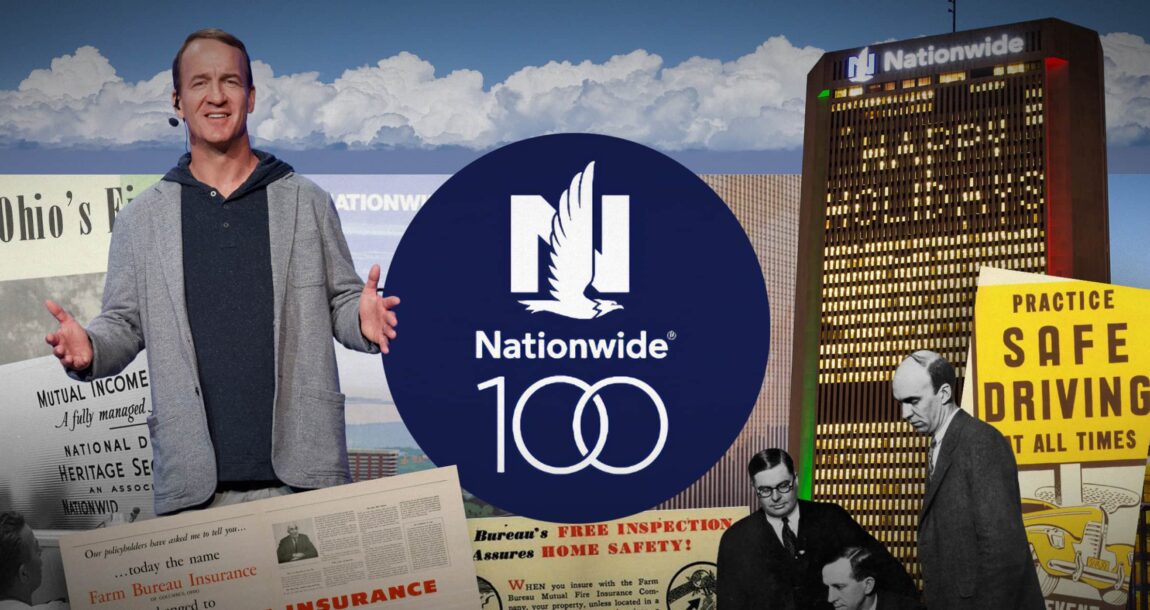
In 1926, the U.S. was at the height of the roaring twenties, but prosperity was not shared equally. Urban Americans were experiencing rising incomes, new consumer goods and rapid technological change, while many farmers had been struggling for years. The decade transformed the automobile from a luxury to a common part of American life, with many farmers using it for transportation, hauling supplies and connecting isolated rural families. In fact, cars were more common on farms than tractors were in the 1920s.
But amid this growing adoption of the automobile came a problem: Farmers had trouble obtaining affordable insurance coverage for their vehicles, as most insurers at that time focused on covering vehicles in urban areas and premium rates reflected the risks of city driving.
The Ohio Farm Bureau Federation, established in 1919, was an organization that exclusively focused on helping farmers in Ohio deal with the many economic challenges that they faced in the post-World War I economy. The federation began to offer auto insurance to farmers under the name Farm Bureau Mutual Automobile Insurance Co., and a well-known U.S. insurance brand was born from that.
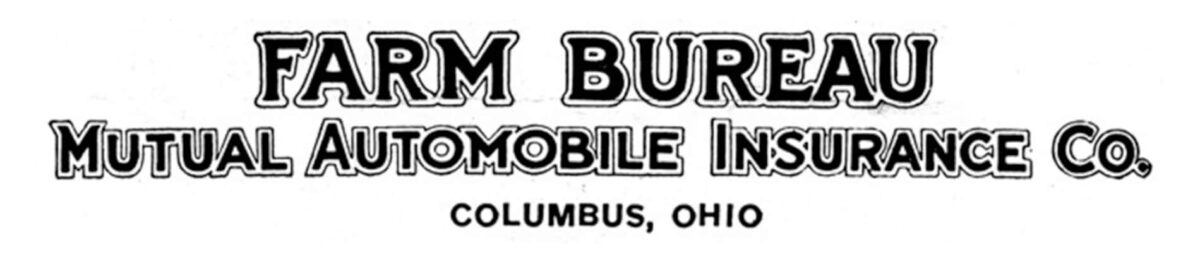
Nationwide marks 100 years in business in 2026. The company calls itself “a modern mutual,” growing to offer life and property/casualty insurance, as well as annuities and financial products, to a 21st-century consumer audience while remaining true to its rural roots.
The company maintains its headquarters in Columbus, Ohio, and continues to invest in the community there.

Steve Hausfeld, Nationwide’s archivist, looked back on Nationwide’s century of providing protection to individuals, families and businesses, starting from its origin as the Farm Bureau Mutual Automobile Insurance Co.
“One of our early taglines was ‘Insurance at a farmer’s rate’ because we had a rate that was reflective of the farmers’ environment — rural roads,” he said.
By 1928, other state farm bureaus began asking Farm Bureau Mutual to provide auto insurance to their members, and the federation began to grow through its relationships with farm bureaus and cooperatives.
As the U.S. entered the 1930s, the population began an exodus from farms into rural towns and villages. The insurer evolved with the time, offering what it called a “rural policy” for auto insurance on drivers in these rural communities. In 1934, Farm Bureau Mutual Fire Insurance Co. was created to offer fire insurance to homeowners in small towns and villages.
Branching out into life
The company branched out into life insurance in 1935, acquiring a Columbus-based life insurer that went into receivership and forming the Farm Bureau Life Insurance Co.
During the economic expansion that swept the U.S. after World War II, the company expanded as well, becoming involved in some noninsurance business along the way.
“We started a real estate development company and built some housing developments,” Hausfeld said. “We started a radio station called WRFD, with the RFD standing for ‘Rural Free Delivery,’ the postal designation for farmers. We got into auto and home financing.”
As the company continued to expand into different businesses by the late 1940s, insurance commissioners from rural states recommended that it separate its operations from the Ohio Farm Bureau because it was still operating as part of that organization.
“We agreed to separate operations in 1948 and became our own company,” Hausfeld said. “From there, we continued to look for opportunities to benefit more people.”
The company’s CEO at that time, Murray Lincoln, saw an opportunity to offer asset protection to its customers, and the company acquired a mutual fund company, Mutual Income Foundation, in 1952.
A new name is adopted
As the company continued to expand its offerings in the 1950s, company leaders decided the Farm Bureau name no longer reflected the insurer’s increasing reach. The name Nationwide was adopted in 1955.
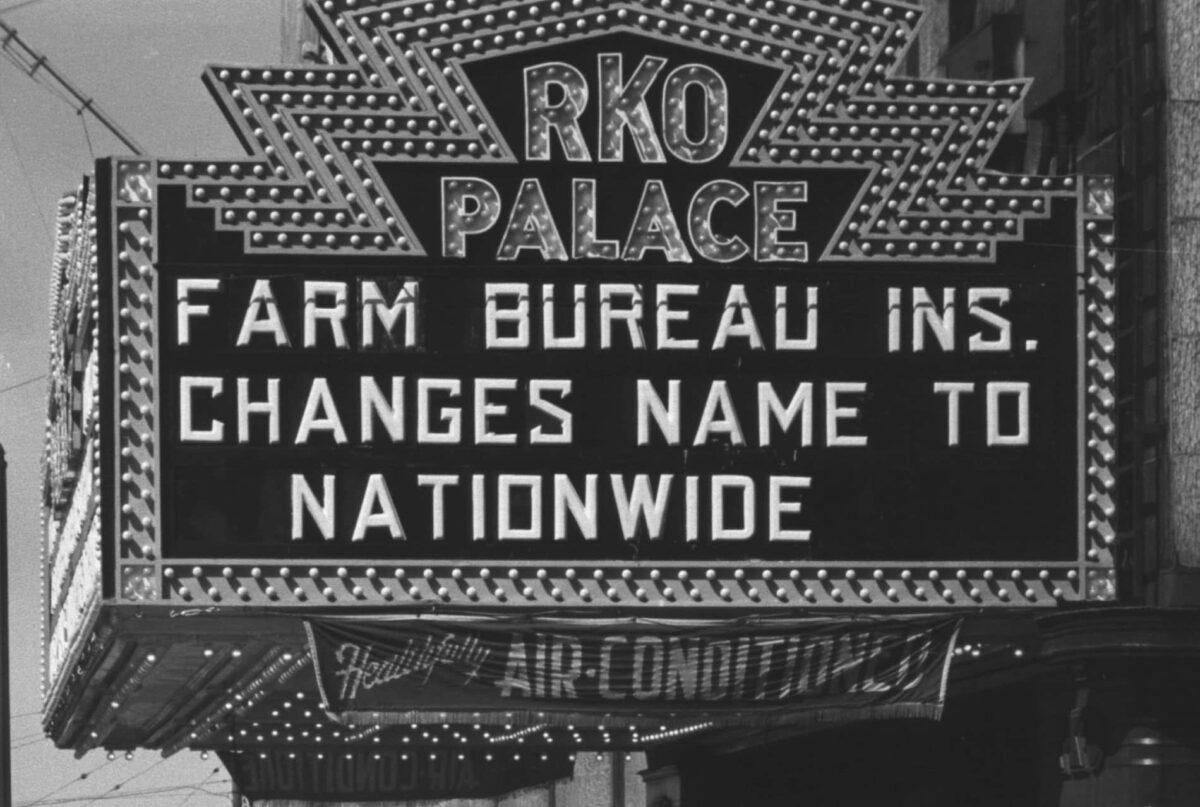
“We weren’t fully operating in every state at that point,” Hausfeld said. “We were getting licensed to sell in every state, so there was some aspirational nature to that name, but it more reflected the diversification of the products and services that we were able to offer our members.”
Nationwide expanded into other business interests besides insurance during the 1950s. The company bought radio stations in Ohio, eventually buying WGAR, which had assets of its own, including majority ownership of the Cleveland Browns.
The agent field force hits the streets
In Nationwide’s early years, the company relied on a network of exclusive agents to distribute its products, which were advertised in local newspapers and brochures and on radio stations. A national advertising campaign was still years away.
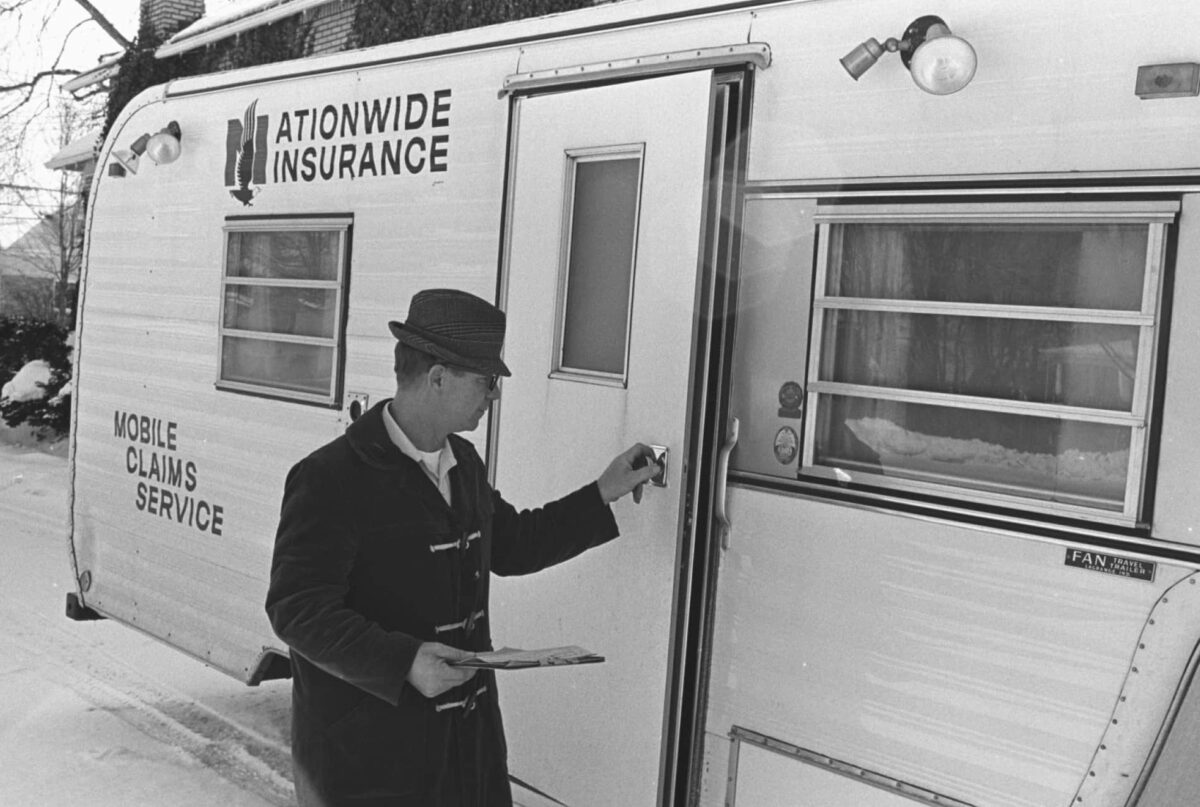
Hausfeld credited the agent field force for Nationwide’s early success.
“It was through these local agents who talked to prospective policyholders, knocking on doors. I give them a lot of credit for their dedication and the service they provided. It was always important for us to provide quality claim service and training for our agents, and this was something that we talked a lot about in those early years.”
In the 1950s, the company formed a holding company called Nationwide Corp., which began acquiring some smaller life insurance companies. The following decade proved a challenge as the U.S. economy flattened a bit after its significant postwar expansion. Hausfeld said Nationwide responded by putting more emphasis on its customer service.
An iconic slogan takes shape
Murray Lincoln retired as Nationwide’s CEO in 1964. Lincoln was one of the founders of the company and served as its head for 25 years. In the wake of his departure, Nationwide adopted a new advertising slogan, “The man from Nationwide is on your side.” This replaced a slogan that had been in place since 1955: “In service with people.”
The new advertising slogan was set to music in 1969, when Nationwide introduced its first TV commercials. It was shortened to “Nationwide is on your side” in 1973 and remains a familiar jingle heard on radio and TV and sung by recording artists such as Brad Paisley, H.E.R. and Jill Scott.
The 1970s saw Nationwide branching out even further. The company partnered with the Public Employees Benefit Servicing Co. to begin underwriting their public employee benefit product. Nationwide eventually acquired Public Employees Benefit Servicing and soon began offering variable annuities.
Nationwide continued to expand through the 1980s, acquiring Farmland Insurance and reaching further into agribusiness coverage. Nationwide also established a company called Scottsdale, which was an excess and surplus lines carrier. It also partnered with the former Wausau Insurance to expand Nationwide’s commercial coverage.
The company took a big step in 1997, when it formed Nationwide Financial Services Co., taking it public through an initial public offering on the New York Stock Exchange and expanding Nationwide’s presence in the financial services arena.
Investing in Columbus
Nationwide’s headquarters had been in downtown Columbus from the beginning but has been in several locations over the years, Hausfeld said. The company’s first headquarters was in a couple of rooms in a downtown hotel that no longer exists. Then it was located in the Farm Bureau Federation’s office, moving next to a Victorian house, where it stayed until 1936.
In 1936, Nationwide moved to 246 N. High St., in view of the company’s current headquarters, One Nationwide Plaza, which became its home in the 1970s.
“It was very intentional that we stayed in downtown Columbus,” Hausfeld said. “Our CEO at the time, Dean Jeffers, saw that this was a challenged part of the city and Dean saw this as a commitment to the city and that we would help revitalize this part of town.”
The Nationwide Foundation was established in 1959 and supports national and local programs. The most significant of these is the foundation’s support of Columbus Children’s Hospital, now known as Nationwide Children’s Hospital following a significant grant to the institution in 1996.
Also in the mid-1990s, Nationwide announced it would privately fund the construction of an arena in downtown Columbus to attract an NHL expansion team, now known as the Columbus Blue Jackets. The arena opened in 2000, leading to the redevelopment of the neighborhood known as the Arena District.

Supporting public safety
Nationwide has supported several driver and public safety programs over its lifetime. The company sponsored a traffic safety and education program for high school students. In the early 1960s, the company was the first insurer to create financial incentives for policyholders who wore seatbelts while traveling in their cars.
The company remains committed to the farm community, partnering with the National FFA Organization to conduct farm safety programs. Nationwide launched its Grain Bin Safety campaign in 2014 to address the growing problem of grain bin entrapments and fatalities on U.S. farms. The program’s stated goal is a “zero lives lost” approach to grain bin accidents. The program is perhaps best known for providing grain rescue tubes to rural fire departments and hands-on rescue training for first responders.
‘A modern mutual’
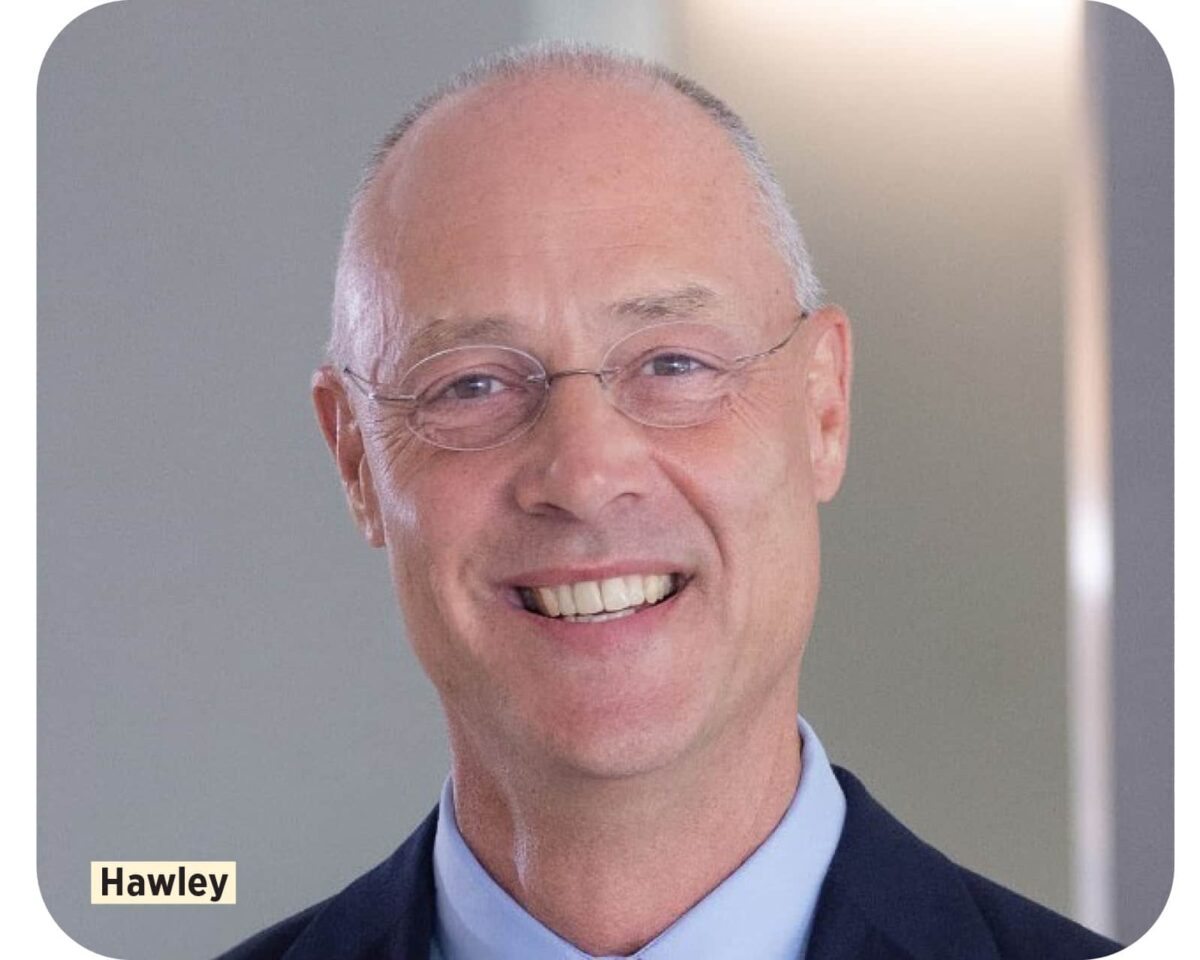
Nationwide’s executives describe the company as “a modern mutual,” and Craig Hawley, president and chief operating officer of Nationwide Financial, said that term is used “because we aspire to take all the benefits of not having the pressure of quarterly earnings, of being able to think long term and make the long-term decisions that mutuals have, but we also push ourselves to have the urgency of a publicly traded company. I think that over the last decade we’ve really done a great job with that, and it’s allowed us to take a lot of market share across our businesses.”
Among annuity carriers, Nationwide ranks seventh in LIMRA’s 2025 rankings at $21.9 billion, with balanced strength across fixed, indexed and variable lines. The National Association of Insurance Commissioners ranks Nationwide in seventh place among U.S. life insurers based on direct premiums written in 2025. On the property/casualty side, Nationwide ranks 13th based on 2025 net premiums written, according to AM Best data.
Hawley attributes Nationwide’s rankings to “having diverse offerings and a wide breadth of distribution.”
Value and strength are what set Nationwide’s life and annuity offerings apart in a crowded marketplace, Hawley said.
“People are looking for strong value. They’re looking for experiences. They’re looking for someone who will make a promise to them that’s going to be kept.”
A change in distribution
Nationwide’s distribution system underwent a major change when the company announced in 2018 that it would convert its exclusive agents into independent agents and become a “fully independent agency carrier.” More than 99% of its former captive agents chose to continue working with Nationwide through the independent channel.
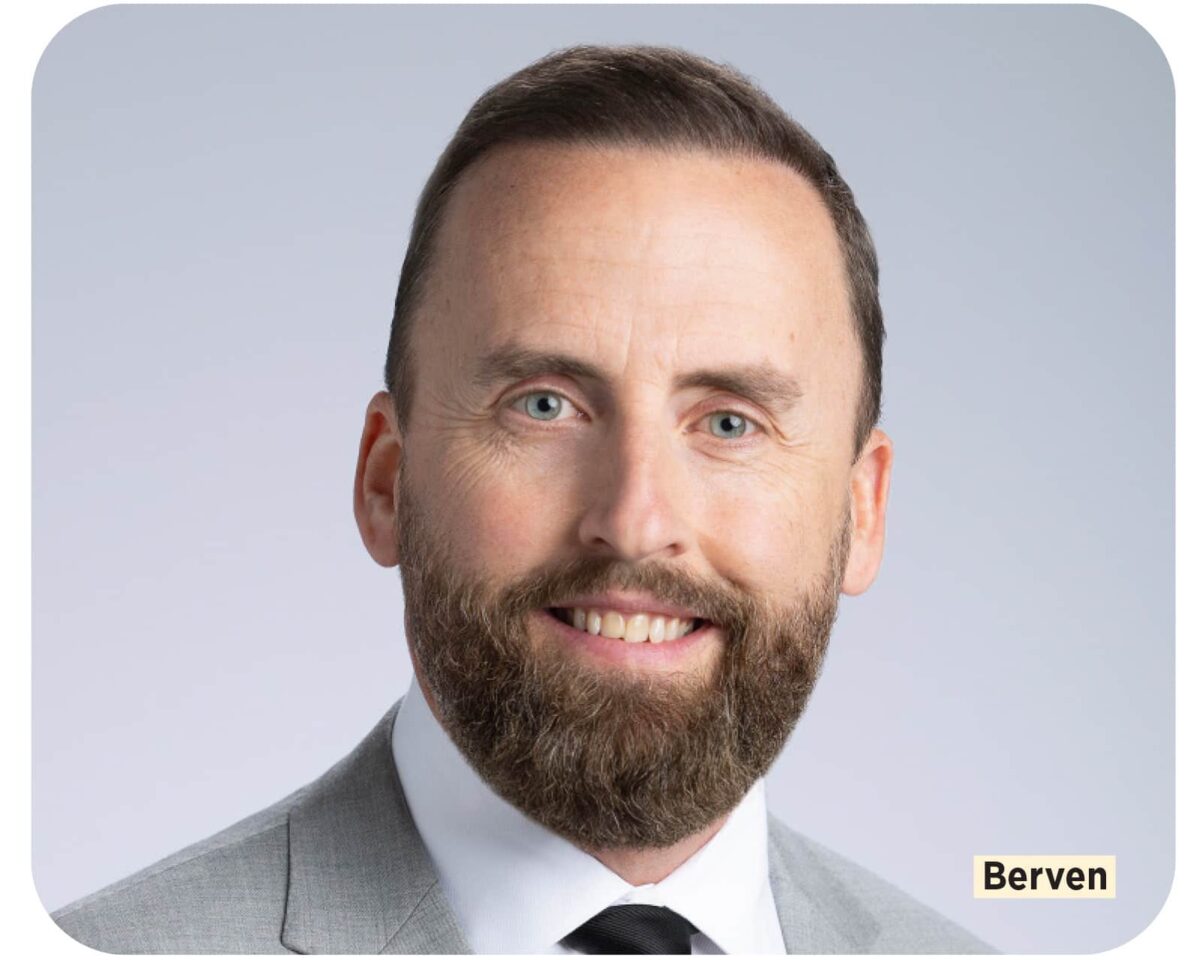
Mark Berven, Nationwide Property & Casualty chief operating officer, said that move “was a difficult decision, but it was the right decision because we focused the decision on what was in the customers’ best interest.”
Berven said that in a captive agent environment, “you need to be a generalist.
“What we found was that as risk continues to become more complex, the ability to specialize and have the capabilities to take care of customer needs became more complex,” he said.
“One size fits all wasn’t in our customers’ best interest. We have a specific appetite in the market about the customers we can best serve with the solutions that we can deliver. It meant there were also things that we looked at and said we may not be able to be the best provider for a certain type of customer based on their risk, and the captive agency model was somewhat restrictive for that.”
Berven said Nationwide’s leaders also recognized that the company’s agents needed access to products and services beyond what Nationwide could offer.
“We approached that as a partnership with our agents — of how we can best enable them to have a successful future, understanding that their success would be dependent on their having the types of solutions needed for the clients they serve.
“Today, we feel like both the company and our agency partners are in a great place because we’re both better positioned today than we were a decade ago to serve our customers’ needs,” he continued. “We can deliver great customer experience. We can deliver solutions that are relevant to the clients’ needs, which helps the agents sell. Those solutions also deliver the underwriting performance that the company needs for us to continue to generate capital for investment for the next 100 years of our growth.”



Harnessing, cultivating and profiting from centers of influence
Keeping it simple — With Tom Bumbolow
Advisor News
- Flourish brings private-bank-like cash solution to MassMutual’s network
- Majority of Americans concerned recent market highs are unsustainable
- GLP-1 users choose between medication and retirement saving
- Gen X and millennials seek new retirement model
- Are families ready for the costs of aging at home?
More Advisor NewsAnnuity News
- New class-action lawsuit targets Delaware Life over annuity disclosures
- A client remarried: Does their annuity still fit?
- Gen X and millennials seek new retirement model
- Global Atlantic names Dan Farrelly head of IMO and IBD channels
- A rising retirement challenge: The license to spend
More Annuity NewsHealth/Employee Benefits News
Life Insurance News