

Medicaid cuts, prescription drugs among health care issues in DC
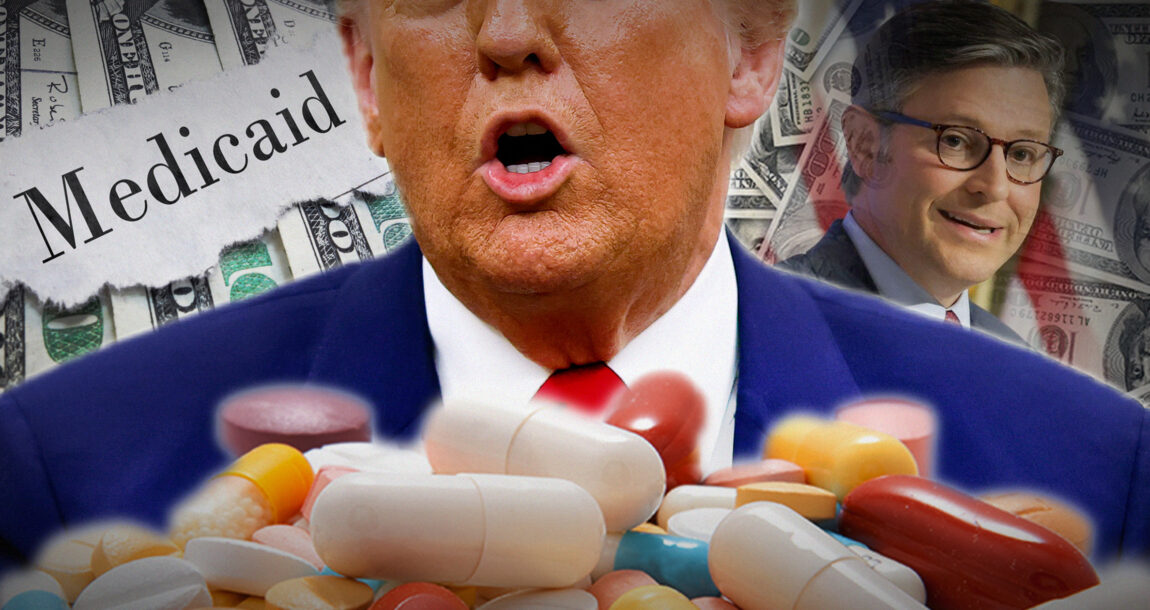
Cuts to Medicaid are at the forefront of health-related news from Washington, as the House of Representatives passed a budget reconciliation bill that includes an estimated $792 billion in Medicaid cuts over the next 10 years.
But the bill is only one of the health-related initiatives to take flight in the first 100 days of the Trump administration. Analysts from Avalere Health discussed some highlights of the new administration’s first three months in a recent webinar.
Medicaid has been in Congress’s crosshairs as Republicans seek ways to cut federal spending to offset the extension of tax cuts from the 2017 Tax Cuts and Jobs Act, said Megan West, Avalere Health managing director. The provisions of the House-passed budget bill include imposing work requirements on Medicaid recipients, imposing new cost-sharing requirements on some Medicaid recipients and requiring recipients to prove eligibility twice a year instead of annually.
It's uncertain what will happen to the bill once it reaches the Senate, but the states have been bracing for Medicaid cuts since last year, said Emily Donaldson, principal at Avalere Health.
Last fall, a majority of state Medicaid directors predicted budget shortfalls, she said. State responses to federal Medicaid cuts will vary, she added, depending on the characteristics of an individual state’s population and that particular state’s spending trends. Responses could range from cuts in optional services to changes in provider reimbursement arrangements.
Mark Newsom, managing director of Avalere Health, said another impact of the budget bill would be its effect on the dual-eligible Medicare-Medicaid population. He predicted that as many as 1 million dual-eligibles could lose their Medicaid coverage.

The bill also contains language that authorizes the Centers for Medicare and Medicaid Services to leverage artificial intelligence for fraud waste and abuse oversight. “We expect them to use this authority to significantly leverage AI to do that work in the future,” he said.
Prescription drug manufacturing is a trade-off
The Trump administration has a two-pronged approach to pharmaceutical manufacturing: increasing domestic production and keeping prices down – and those two prongs could be at odds with each other. In addition, Trump has proposed tariffs on prescription drugs imported into the U.S. in an attempt to bring more manufacturing into the country.
Onshoring of pharmaceutical manufacturing “is not a near-term option for all drug manufacturers,” said Omar Hafez, practice director at Avalere Health. He said that even if manufacturers have an existing line and plant in the U.S., it will take a minimum of nine months to a year to begin production of a drug currently made overseas. “And the labor cost differential may be higher than the cost of the tariff,” he said. If a new line or a new plant must be set up, offshoring could take years and add more costs.
“Pharmaceutical companies will have to do the math to determine the return on investment,” Hafez said.
Whether onshoring of drug manufacturing makes financial sense also depends on the type of drug, he added. With a product that is new to the market and has a high profit margin, the manufacturer might be able to pass the higher price of onshoring on to consumers. But older, generic drugs have razor-thin margins, and the manufacturer is not likely to be able to absorb the cost of moving its production to the U.S. Hafez said he feared this would lead to possible drug shortages.
© Entire contents copyright 2025 by InsuranceNewsNet.com Inc. All rights reserved. No part of this article may be reprinted without the expressed written consent from InsuranceNewsNet.com.



How insurance riders maximize coverage without breaking budgets
Is long-awaited insurance industry transformation arriving — finally?
Advisor News
- Your client’s $3 million portfolio doesn’t tell you their insurance needs
- How life insurance can provide liquidity for wealthy families
- Retirement providers turn to digital engagement to retain assets
- Looking out for clients with diminished mental capacity
- House panel advances CLEAR Forms Act backed by IRI
More Advisor NewsAnnuity News
- AM Best downgrades A-Cap insurers amid financial and regulatory troubles
- Lawsuit claims Delaware Life hid billions in insurer-linked investments
- AM Best to Deliver Presentation at 2026 ACLI Annual Conference
- Global Atlantic Announces Launch of ForeLifetime Income, a New Fixed Index Annuity
- A-Cap strikes back with lawsuit accusing SC regulators of sloppy process, leaking secrets
More Annuity NewsHealth/Employee Benefits News
Life Insurance News