

Guiding women through the Great Wealth Transfer

For decades, wealth-planning conversations often began with assumptions about who would be in the room — and who would not. That reality is shifting. As trillions of dollars move from one generation to the next in the Great Wealth Transfer, women are increasingly the ones inheriting, managing and making decisions about these assets.
For financial planners and insurance professionals, the question is no longer whether women will be central to the Great Wealth Transfer, but whether the industry is prepared to meet them where they are.
When women inherit wealth, they often inherit questions along with it: What now? Who can I trust? And how do I make decisions that align with my values, not just my balance sheet? As more women find themselves at the center of the Great Wealth Transfer, advisors are learning that technical expertise alone isn’t enough — context, empathy and adaptability matter just as much.
Trillions are changing hands
An estimated $105 trillion in wealth will be passed down to heirs through 2048, according to Cerulli Associates, with about $54 trillion of that inheritance heading to spouses. Because women, on average, live nearly six years longer than men, they are more likely to be the ones on the receiving end of that wealth.
Cerulli’s research on high- and ultra-high-net-worth markets projects that total wealth transferred through 2048 will reach $124 trillion — $105 trillion will go to heirs and $18 trillion will go to charity. Nearly $100 trillion — about 81% of all transfers — will come from baby boomers and older generations. More than 50% of the overall total volume of transfers ($62 trillion) is expected to come from those who are currently high net worth and ultra-high net worth, which together make up only 2% of all households.
Projections of horizontal, or intragenerational, transfers show that $54 trillion will be passed on to spouses before eventually transferring intergenerationally to heirs and to charities. Nearly $40 trillion of these spousal transfers will be going to widowed women in the baby boomer and older generations, creating a massive need and opportunity for providers across the wealth and asset management spaces.

Millennials will inherit the most of any generation over the course of the next 25 years ($46 trillion). However, Gen-Xers stands to inherit the greatest portion of assets in the next 10 years, totaling $14 trillion to millennials’ $8 trillion.
 Developing relationships with clients’ spouses or children is a top long-term growth strategy among HNW practices as the prospect of wealth moving from primary clients to spouses and children becomes ever more urgent, said Chayce Horton, Cerulli senior analyst. Conducting family meetings and maintaining a regular communication routine among family members is a key best practice, according to 89% of firms surveyed by Cerulli in 2024.
Women have distinct goals and priorities
Women of the baby boomer and older generations have three distinct financial goals and priorities that are different from those of men in the same age groups, Horton told InsuranceNewsNet.
“The first is financial security. Having a financially secure retirement is the most important financial goal for baby boomer women, both in the short term and in the long term,” he said. “But having emergency savings is also an important short-term financial goal. So financial security is paramount.”
After financial security, women seek to leave a legacy for their heirs, Horton said.
“That involves intergenerational planning, making sure that all of the beneficiaries, trusts and insurance designations are in place alongside plans for philanthropy and charitable giving, which our data shows women tend to be slightly more involved in and prioritize to a higher degree than men do.”
Finally, women want to be able to enjoy the wealth they’ve obtained.
“Saving for travel is also a high priority for women,” Horton said. “It speaks to enjoyment and living life. Especially among widows, we find those short-term, sort of splurgy spending categories are higher short-term financial goals compared with those of the broader population.”
Women face unique challenges
Women continue to face economic headwinds from issues such as lower average pay, more career breaks for caregiving and longer lifespans, even as they stand to gain from the Great Wealth Transfer.
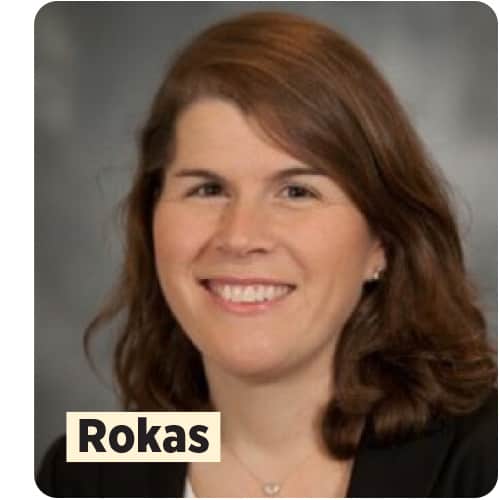 Tracy Rokas, director of research and customer insights at Jackson, shared some findings from her company’s research into women’s unique financial experiences and challenges.
Among the highlights:
• Engagement with formal financial planning: Only 39% of female pre-
retirees said they have a formal financial plan, whereas 50% of men do. Women are also less likely to be working with a financial professional (51% versus 57%).
• Investment behavior: 18% of female pre-retirees hold none of the investment types listed in the survey, making them nearly three times more likely than men to report such is the case. Compared with men, surveyed female investors also indicated they are more risk averse when it comes to investments and focus more on protecting against loss.
• Savings mindset: More than two-thirds of female investors called themselves “savers” as opposed to “spenders,” but a higher percentage of men (83%) self-identified that way. Additionally, data showed that female investors were more likely than men to worry about whether they were saving enough for the long term, at 39% and 26%, respectively.
• Gap in assets merges: Pre-retired women reported having average liquid assets statistically even with men’s in the 35-45 age range. However, by the 55-65 age range, there was an asset gap between men and women exceeding $350,000.
Women already are engaged with money in terms of budgeting and managing household finances, while earning salaries from the workplace, Rokas said.
“But we found there’s a difference between that and feeling confident and informed about investing. So we see this distinction between dealing with everyday finances and working with a financial planner.”
Rokas recommended financial professionals help women prepare for the Great Wealth Transfer “by developing comprehensive plans built on an in-depth understanding of the distinct challenges women have as far as their investment confidence is concerned.”
Jackson’s research found that women have different relationships with investment risk than men do, focusing more on protecting against loss than maximizing potential growth.
“Advisors must help women develop investment confidence,” Rokas said. “Women indicate their favorite approach to their finances is to learn side by side with financial professionals.”
Younger generations of women stand to inherit wealth from parents and grandparents. Rokas said younger women approach finances differently than their mothers do.
“First of all, in the subset of investors, younger women’s salaries are beginning to get closer to the salaries of men. But they’re still lagging in terms of their investable assets. Some of that has to do with credit card debt and spending. But we see a lot more confidence in younger generations, and a lot more willingness to be independent about their finances.”

More than inheriting wealth
Women will inherit more than money during the Great Wealth Transfer. They will also inherit the decision-making around that money.
Rebecca Dunne, executive vice president of affiliated distribution at National Life Group, told InsuranceNewsNet that financial professionals must recognize the responsibilities that women will carry with inherited wealth.

“Women occupy significant leadership roles in their families. Women are inheriting influence over investment priorities, including philanthropy, and how they want that investing to happen,” she said.
“When you think about it from that perspective, we owe them the ability to bear the responsibility of that long-term stewardship of not only the money but the family that they want to protect and the legacy they want to leave.”
Dunne said she is concerned that the industry and the advisors who work in it do not make enough effort to include women at the beginning of the planning process and to seek their opinions.
“What worries me most about all this is what’s going to happen when the shift does happen, when the woman inherits this wealth and you haven’t taken time to build that relationship first. It’s not insignificant that a vast majority of women fire their advisor after their husband’s death. That’s an indication that they don’t feel that trust, they don’t feel that relationship and they haven’t felt it during the time the advisor had the opportunity to build the relationship.
“More women are becoming the breadwinners in America than ever before. But if you’re not including both parties in that equation early on in that relationship building, then you’re not going to have an opportunity to step in later. And women are telling us that now.”
Dunne suggested the way to retain women as clients is “to go deeper.”
“We need to look not just at the person who’s writing the check, so to speak. But what does that entire ecosystem look like, the intergenerational wealth that’s going to move through that particular family, and think of that first. It’s not a sale. It’s not a transaction. It’s a relationship. It’s knowing who they are, what their dreams and ambitions are, what their fears are, and what they expect for their own financial future. How do you protect that? And how do you protect what they can’t see coming in life? You must be the person who brings all that to life in front of them, helps them see that, and then works with them to protect it, to invest it, to grow it, and to make those dreams a reality across that entire ecosystem of a family, of a client, of a business.”
Dunne called for advisors to be their clients’ financial coach and increase their knowledge of financial matters.
“When I think about women, I think that if we are financially knowledgeable, we can gain financial independence through the course of our lives. We become independent in our own ability to make decisions for ourselves and how we want to lead the lives that we have and to do the things that we want. It’s not just about women and men or diversity. It’s about opening the aperture so everyone can have the ability to reap the benefits of the wonderful work that we do.”
Take the first step
The first step in serving women through the Great Wealth Transfer is to interact with the wives of current clients, said Linda Eaton, a certified wealth strategist and executive vice president at Cannon Financial Institute.
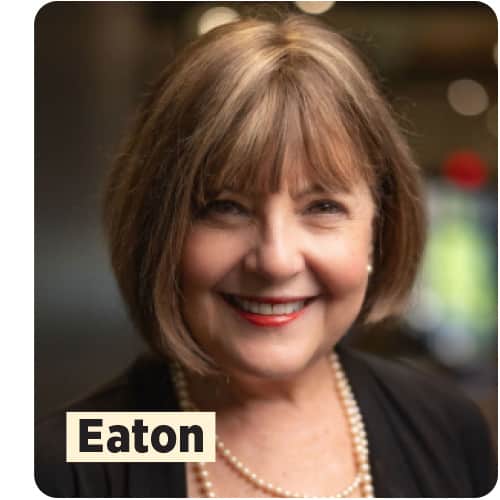 An advisor whose book of business is mainly made up of couples in their 50s and older is “a practice in peril,” Eaton said, with the danger being that the wife will leave the advisor after her husband’s death.
An advisor must ask male clients what would happen to their wives if they were unprepared to deal with the household finances after their husband’s death.
“If the answer is that they are totally unprepared, then say, ‘Let’s create a meeting where we don’t talk a lot about financial stuff.’ She just gets to see my face. She gets to know me. And by the way, now that we have Zoom, nobody even has to wear shoes. ‘You don’t have to get in your car. You don’t have to validate parking.’”
Brain differences between men and women also mean advisors who want to serve women must take a different approach than they would with men, Eaton said.
“There’s this little thing between the lobes of the brain called the corpus callosum, which connects the left and right lobes. It’s 25% bigger in women. Now, what does that mean? One is that women generally have an easier time putting words to feelings than men do. And one of the things we know with absolute certainty is that financial decisions are made from the emotional, limbic part of the human brain. When we kind of unlearn the financial jargon, especially when we’re dealing with the people who’ve not been sort of in the driver’s seat, when we just speak in human terms, we can be so much more effective.”
Men and women also respond differently to stress, and advisors must understand that as well, she said.
“Researchers found that adrenaline mixes with estrogen a little bit differently than it does with testosterone,” Eaton said. “They described the female equivalent of ‘fight or flight’ as ‘tend and befriend.’ What this means is that men want motion, but women want protection.”
In talking with women, Eaton advised professionals to focus less on the nuts and bolts of an insurance policy or annuity “and more on answering the question of who’s going to take care of stuff.”
Life milestones provide good opportunities to touch base with women, whether they are the primary client or a spouse. Eaton provided some door-openers.
For the woman who is turning age 65: “Now that you’ve turned 65, many of our clients find that it’s a great time to just take stock, do sort of a 360 and look at their entire financial situation. Tell me your thoughts about that.”
For the woman whose child is turning 26: “I see in my records that your son is 26, and that means he’s no longer going to be on your health insurance. What are your thoughts about that?”
Ultimately, serving women through the Great Wealth Transfer is about making sure women are protected and empowered to know how to handle what life throws at them, Eaton said.
“Ask the types of questions like ‘If something were to happen, who would be able to take care of you? What would be the impact on their life?’ I call it directing a movie in the client’s head. But instead of telling them what could happen, if you can get them to tell it to you, it is so much more powerful.”



Bringing meaning to life — With Salene Hitchcock-Gear
Convertible market dynamics and the portfolio implications for insurers
Advisor News
- Could a narrower focus help grow your practice?
- U.S. debt hits $40 trillion: how to support concerned clients
- Flourish brings private-bank-like cash solution to MassMutual’s network
- Majority of Americans concerned recent market highs are unsustainable
- GLP-1 users choose between medication and retirement saving
More Advisor NewsAnnuity News
- Corebridge Financial Introduces Progressive Trigger, a First-of-Its-Kind Index Annuity Strategy Designed to Turn Missed Years into Future Opportunity
- Insurer proposes $1.1M deal to resolve CA teachers’ annuity fee lawsuit
- IMOs get frustrated with slow carrier adoption of faster technology
- New class-action lawsuit targets Delaware Life over annuity disclosures
- A client remarried: Does their annuity still fit?
More Annuity NewsHealth/Employee Benefits News
Life Insurance News