

#15: Neuromarketing, with Christophe Morin
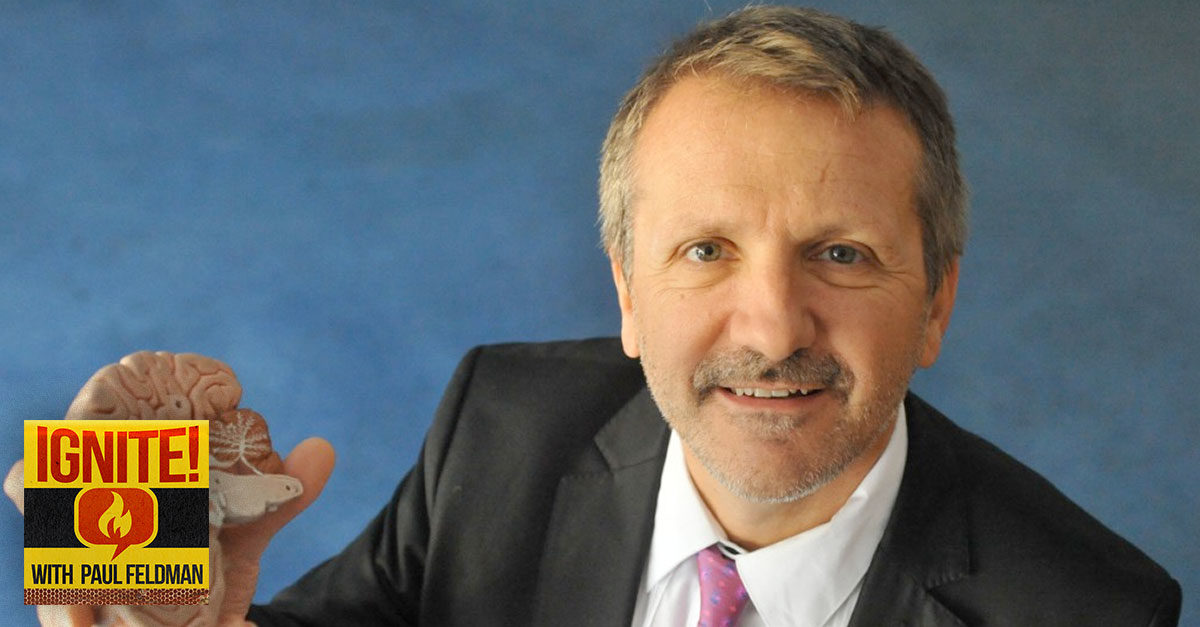
On this episode, we dive deep into the human brain and neuromarketing, with Christophe Morin.
[powerpress]
Did you know that sales stem…from the brain stem? They do, according to scientific research. Over the past decade, advertisers and scientists have teamed up to study consumers' buying decisions and the results are revealing. The science, called neuromarketing, is now widely used by the world's largest brands to directly reach the part of the brain that decides.
Neuromarketing is no stranger to controversy. Although some refer to it as evil manipulation, neuromarketing uses a scientific process to explain what motivates customers to buy and satisfy the rational, emotional and survival instincts residing in the "old brain" or "reptilian brain." That's the part making the real decisions – and it’s also what Christophe has been studying to predict consumer behavior.
Christophe is the marketing guru of the consulting firm SalesBrain and he co-authored the best-seller Neuromarketing: Understanding the Buy Button in Your Customer’s Brain. In this interview, Christophe explains how this science works and how it can help to boost your client communications, presentations and messaging.
SHOW NOTES:
02:30 Christophe started by explaining what neuromarketing is and how it relates to sales.
03:50 Christophe says it’s important to understand the different parts of the brain and what each does – as there’s one particular part where buying decisions are made.
06:20 So what are the best steps to get right into the reptilian brain – the real decision-maker?
08:15 Christophe walks through six rules for reaching the reptilian brain, starting with “self-centeredness.”
10:25 The third rule is tangibility – that is, making the message concrete.
11:20 Can you create a tangible sensation through the use of copy? If you're telling a story, can you reach that part of the brain?
13:15 What about advertising and marketing, which spend a ton of money simply to reach people?
15:15 Christophe gets back to those six steps for reaching right into the reptilian brain, with step number 4: understanding that our pattern of attention follows a particular curve.
17:50 Christophe says the last two stimuli are truly essential, starting with the fifth: the fact that we’re mostly visual.
19:35 But what if you sell something that's not a visual, like insurance, which is not exactly a tangible product?
20:35 The last piece – and the wrapper of it all, Christophe says – is the importance of emotions.
23:25 Having too many choices can actually frustrate the reptilian brain. Christophe says that’s why the most effective sales message builds on a maximum of three claims.
25:20 How do you know when you have “connected” with the reptilian brain?


#14: Powerful speaking, with Jeffrey Gitomer
#16: The power of influence, with Robert Cialdini
Advisor News
- After the midterms: Addressing your clients’ tax concerns
- Berkeley arts tax heads toward passage while public bank measure looks likely to fail
- Americans’ sense of overall prosperity still ticks upward
- Turning expanded eligibility into a better coverage plan for federal clients
- Election 2026: Which of Berkeley's 7 ballot measures will pass?
More Advisor NewsAnnuity News
- AM Best Affirms Credit Ratings of Knighthead Annuity & Life Assurance Company and Merit Life Insurance Co.
- Jackson reports record annuity sales, increases share repurchase authorization
- Why the market doesn’t need more carriers
- Equitable, Corebridge steam toward merger with strong Q3 annuity sales
- Jackson Announces New Annuity Offering for AARP Members
More Annuity NewsHealth/Employee Benefits News
- MEDICAID PAYMENT TRANSPARENCY RULES: STATE REPORTING REQUIREMENTS AND LIMITATIONS
- Medicare open enrollment continues through Dec. 7
- Pike County facing year-end employee healthcare lapse
- Investigators at University of Pennsylvania Report New Data on Managed Care (In-hospital Medicaid enrollment facilitates follow-up care for emergency general surgery patients): Managed Care
- New Findings from University of Pennsylvania in the Area of Managed Care Described (Association of Neighborhood Socioeconomic Disadvantage With Excess Mortality Among Medicare Beneficiaries: Examining an Empirical Basis for Social Risk …): Managed Care
More Health/Employee Benefits NewsLife Insurance News
- AM Best Affirms Credit Ratings of Central States Indemnity Co. of Omaha and Its Subsidiary
- National Life Group Approves $23 Million Dividends for 2027
- Milliman’s proposed $15.5 million settlement puts life insurance underwriting data in focus
- Brighthouse Financial Announces Third Quarter 2026 Results
- Prudential earnings dip as Japan sales suspension offsets U.S. growth
More Life Insurance News