


How executive benefits impact an estate plan
Advisors increasingly deal with executive benefits when creating an estate plan for business executives.

Advisors increasingly deal with executive benefits when creating an estate plan for business executives.

Now that he has been confirmed by the Senate, Kevin Warsh will step into a role closely watched by world and business leaders.

As the cost of living puts greater pressure on household budgets, the market for life settlements continues to grow as well.
The Financial Services Institute applauded the U.S. House of Representatives’ passage of the Financial Exploitation Prevention Act of 2025, bipartisan legislation that would strengthen protections for seniors and vulnerable adults by amending the Investment Company Act of 1940 to give mutual funds the ability to pause redemptions when it reasonably believes it is the result of financial exploitation of the investor.
New research published by the Employee Benefit Research Institute finds that younger workers continue to change jobs at high rates but were more likely than workers from an earlier generation to be eligible for an employer-sponsored retirement plan after changing jobs.
Business and government leaders gathered at the Bank of America Corporate Center for a community roundtable discussion Thursday. The tax is expected to generate $19.4 billion over the next 30 years, according to the Charlotte Area Transit System. Robert McCutcheon, CEO of Charlotte Regional Business Alliance, said the investment could lead to a 1.7%…
Vince Fong, Jay Obernolte, and members of the California delegation in sending a letter to Governor Gavin Newsom and California State Medicaid Director Tyler Sadwith expressing concerns about the state's revised health care tax, which would raise healthcare costs for millions of Californians already struggling with the rising costs of healthcare.
Advisors increasingly deal with executive benefits when creating an estate plan for business executives.
Tensions in the Strait of Hormuz are heightening energy security fears and pressure on businesses, while surging demand from energy-intensive technologies is making investment in alternative energy urgent, as 73% of US executives say uncertainty is stalling transition investment.
Now that he has been confirmed by the Senate, Kevin Warsh will step into a role closely watched by world and business leaders.
As the cost of living puts greater pressure on household budgets, the market for life settlements continues to grow as well.

Americans are carrying nearly $1.7 trillion in auto loan debt, more than $13,800 per household. Experts say that isn’t a good recipe for financial success.
Yet Sacramento continues to favor government spending over real relief. Despite historic revenue gains exceeding $60 billion above initial projections, the budget relies on accounting gimmicks, new tax hikes and withdrawals of more than $14 billion from the state’ s Rainy Day Fund to achieve balance. This will add an average of $400 per year for a family of four…

Roth conversions are among the most popular retirement planning strategies, but the rules surrounding them are increasingly complex.

Worker confidence in their retirement readiness reached its lowest level since 2017, and healthcare concerns, along with a decrease in savings, are driving that decline in confidence.

U.S. insurance brokerage deal volume has increased dramatically over the past 10 years, and that increase is primarily driven by private equity investment.
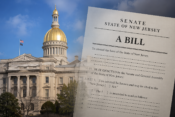
The New Jersey Senate is considering legislation to clarify the choice of independent contractor status for certain professionals, including financial advisors.

Federal retirement benefits can be far more complex than those in the private sector, advisors say.

Financial experts agree that clients should forget trying to time the market and instead focus on solid planning and risk tolerance.

Business credit can be easy to overlook because it usually does not create urgency until a company needs something.

A new survey finds that 80% of American consumers are at least slightly concerned about the onset of a recession.
But as Newsom and leaders of the Assembly and Senate hash out their final budget agreement, the tax increase with the most momentum in those negotiating rooms is one that is likely to fall largely on everyday Californians in the form of increased costs for private health insurance monthly premiums. The money raised is not set to go into the state’ s Medi-Cal…

Health-related income risk remains largely outside the financial planning conversation.
