

Trump Tries To Revive Stalled Election-Eve Drug Discounts
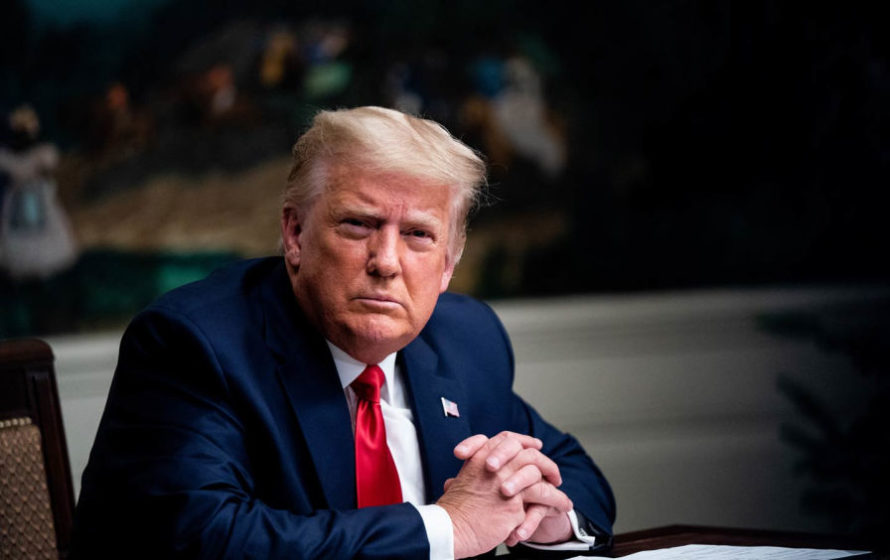
WASHINGTON (AP) — The Trump administration is trying to revive the president's stalled election-eve plan to send millions of Medicare recipients a $200 prescription discount card.
A person familiar with the effort tells The Associated Press that government agencies still face legal questions about the plan. That's on top of the daunting logistics of sending an estimated 39 million people a functional card in the midst of the holiday season without the benefit of much advance planning. The person was not authorized to publicly discuss internal deliberations and spoke on condition of anonymity.
White House spokesman Judd Deere confirmed the administration is continuing to move forward. “It’s simply good policy, and demonstrates President Trump is continuing to deliver on his promises to our nation’s seniors to lower drug prices."
However, a discount card only provides a measure of cost relief, and temporarily. It would not affect prices themselves.
President Donald Trump announced the cards were coming as part of a Sep. 24 speech calling attention to his unfinished health care agenda. As he described the idea, it seemed like they were about to go out in the mail. Some people wondered if they would bear the presidents’ name.
“Nobody has seen this before,” Trump said at the time. “These cards are incredible. The cards will be mailed out in coming weeks.

“I will always take care of our wonderful senior citizens,” Trump added. “Joe Biden won’t be doing this.”
The idea is that seniors would use the cards to save $200 off their prescription copays. If Trump can manage to start distribution before Biden is sworn in Jan. 20, the new administration might be hard pressed to stop it.
But the cost to taxpayers has been estimated as high as $7.8 billion, not counting administrative expenses. The spending has not been authorized by Congress, which has the power of the purse.
The money would come from Medicare’s Supplemental Medical Insurance Trust Fund, which is directly supported by the Treasury and not from payroll taxes that cover inpatient care.
Congressional officials worried that if the Trump administration carries out the plan, it would in effect create a budgetary trap door through which future administrations could try to spend billions of dollars without congressional approval.
Several leading Democratic lawmakers have written Health and Human Services Secretary Alex Azar, questioning the legality of the plan.
The White House has framed the plan as a “demonstration program" to test if the extra cash will make seniors more likely to stay on their medications and avoid costly hospitalizations.
But Reps. Frank Pallone, D-N.J., and Richard Neal, D-Mass., and Sen. Ron Wyden, D-Ore., have argued that sending cards to nearly all Medicare recipients is not a test. For example, there wouldn’t be a control group against which to measure results. Therefore, such a mass mailing would not meet legal standards for a Medicare demonstration program to test a new idea.
Pallone dismissed the latest White House push. “This has never been about helping people," he said in a statement. "It’s always been about Trump’s self-serving political interests.”
Trump came into office promising to get tough on drug prices, but he was unable to win over enough congressional Republicans to pass broad legislation limiting price increases for medications already on the market. Meanwhile, Democrats coalesced behind a more ambitious plan authorizing Medicare to directly negotiate prices.
Trump's has launched regulatory initiatives to curb prescription costs, but some face legal challenges from industry. Prices for brand name drugs continued to rise during his term, though not as sharply as in previous recent years.


Hunter Biden Facing Federal Investigation Over ‘Tax Affairs’
Cigna Announces Leadership Changes to Accelerate Next Phase of Growth
Advisor News
- Flourish brings private-bank-like cash solution to MassMutual’s network
- Majority of Americans concerned recent market highs are unsustainable
- GLP-1 users choose between medication and retirement saving
- Gen X and millennials seek new retirement model
- Are families ready for the costs of aging at home?
More Advisor NewsAnnuity News
- New class-action lawsuit targets Delaware Life over annuity disclosures
- A client remarried: Does their annuity still fit?
- Gen X and millennials seek new retirement model
- Global Atlantic names Dan Farrelly head of IMO and IBD channels
- A rising retirement challenge: The license to spend
More Annuity NewsHealth/Employee Benefits News
Life Insurance News