

The 3 things that shrink your Social Security income
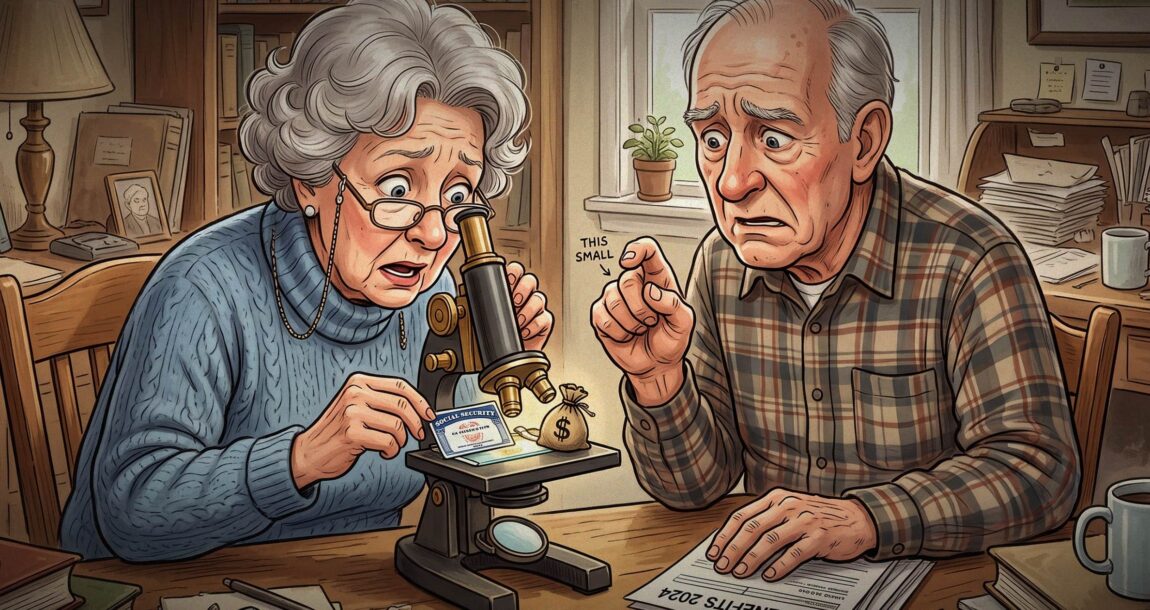
You've probably been told that your goal is to maximize your Social Security. Wait until age 70, lock in the biggest check, win.

Here's the problem with that advice: Receiving the biggest monthly check isn't the same as receiving the most money.
Most Social Security planning comes down to one question: When should you claim? Take it at age 62 and you get a smaller monthly benefit but collect it for a longer period. Wait until 70 and your monthly benefit grows about 8% a year past full retirement age. Advisors run a break-even analysis to find the age, usually around 80, where waiting finally pays off.
The math is fine. The problem is that it's answering the wrong question.
Because the number everyone optimizes — your gross monthly benefit — isn't the number that lands in your bank account. Three things come out before you spend a dollar: Medicare premiums, IRMAA surcharges, and federal income tax. Chase the biggest gross check and ignore those three, and you can win the break-even race while losing real money.
Let me walk you through the deductions nobody plans for.

Medicare comes out first
Once you're on Medicare, your Part B premium gets pulled straight out of your Social Security check before it ever reaches you. In 2026, the standard premium is $202.90 a month. That's about $2,435 a year for one person, or close to $4,900 for a couple. You don't write a check for it; you simply never see the money.
IRMAA: The surcharge for doing well
This is where a bigger benefit can turn around and hurt you. IRMAA — the Income-Related Monthly Adjustment Amount — is an extra charge added to your Medicare premiums once your income crosses a line. In 2026, that line is $109,000 for a single filer and $218,000 for a couple. Cross it and your premium climbs. At the top tier, you're paying close to $690 a month for Medicare instead of $203.
Two things make IRMAA brutal:
- It's a cliff, not a slope. Go one dollar over a threshold, and you pay the full surcharge for that entire bracket. One dollar.
- It looks back two years. Your 2026 surcharge is based on your 2024 tax return. So a Roth conversion, a home sale or a big required distribution from two years ago can trigger it now — long after you've forgotten about it.
And here's the catch: A larger Social Security benefit adds to the income that sets your IRMAA tier. Claim purely to max the gross, and you can push yourself over a cliff you never saw coming.
Your benefit gets taxed, too
A lot of retirees are stunned to learn Social Security itself is taxable. Depending on your "provisional income," up to 85% of your benefit can be subject to federal income tax. The thresholds are low, and they're frozen — they haven't moved in decades. Tax starts at $25,000 of provisional income for individuals and $32,000 for couples. Cross $34,000 single or $44,000 joint, and up to 85% of your benefit is on the table. One last item to note is that the gross amount is taxed, not the amount after Medicare and IRMAA are deducted.
Notice the pattern. The same moves that pump up your gross benefit — waiting until 70, drawing down other accounts — can drag more of that benefit into the taxable zone.
You can't solve this in a vacuum
Here's what most claiming calculators miss. How much of your benefit gets taxed, and which IRMAA tier you land in, both come down to one number: your modified adjusted gross income, or MAGI. And MAGI is everything added together — required minimum distributions, pensions, individual retirement account and 401(k) withdrawals, capital gains, dividends and even tax-exempt interest.
Two people receiving the exact Social Security benefit can owe wildly different taxes and surcharges, just because the rest of their income looks different. So a break-even number calculated in isolation answers a question that doesn't matter. The "optimal" claiming age on a standalone calculator can quietly become the wrong one the second you add the income that drives your taxes and your IRMAA.
The number that counts
Picture two retirees with identical savings. One chases the largest monthly gross check. The other plans around the net — lining up the claiming decision with Medicare, IRMAA and their tax bracket. They can end up with very different spendable incomes, even though the first one "won" on paper.
That's the blind spot in how Social Security usually gets planned. Break-even tells you when to claim. It says nothing about what you keep.
So widen the lens:
- Run the net, not the gross. Before you lock in a claiming age, figure out the Medicare premium, the IRMAA surcharge and the tax on your benefit at your real income level.
- Coordinate your accounts. Pulling from Roth, taxable and traditional accounts in the right order — and timing conversions and sales around that two-year IRMAA lookback — keeps your MAGI and your surcharges in check.
Maximizing Social Security was never really the goal. Maximizing how much of it you keep is. So plan for the check you cash, not the one printed on the award letter.
© Entire contents copyright 2026 by InsuranceNewsNet.com Inc. All rights reserved. No part of this article may be reprinted without the expressed written consent from InsuranceNewsNet.com.


How brokers can become ‘AI whisperers’
An aging population needs advisors to cut through the confusion
Advisor News
- Are families ready for the costs of aging at home?
- When a client moves, their insurance plan needs to move, too
- A rising retirement challenge: The license to spend
- Financial stress leaves less room for retirement saving
- Giving while you’re living: 3 frequently asked questions about gifting
More Advisor NewsAnnuity News
- Global Atlantic names Dan Farrelly head of IMO and IBD channels
- A rising retirement challenge: The license to spend
- What lower interest rates mean to annuity payouts
- AM Best downgrades A-Cap insurers amid financial and regulatory troubles
- Lawsuit claims Delaware Life hid billions in insurer-linked investments
More Annuity NewsHealth/Employee Benefits News
Life Insurance News