

Saving money and relationships — with Clare Dubé
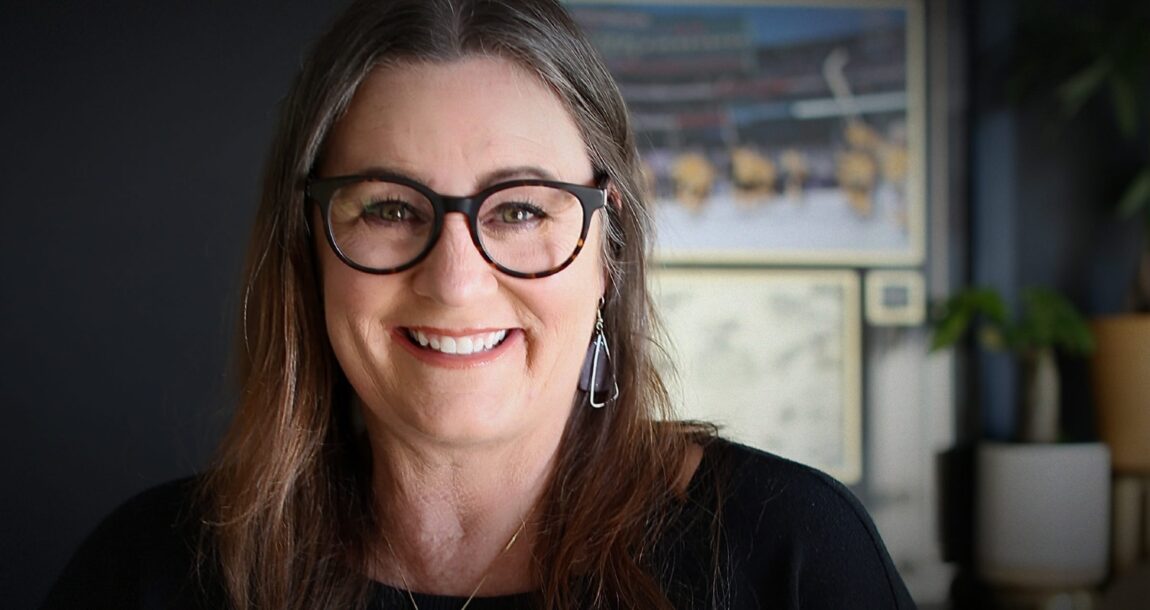
Seek clarity. Take action. Do better to be better.
Those are the words Clare Dubé lives by as she gets people to discuss a topic that many still consider taboo — and that topic is money.
Dubé is cofounder and chief financial officer of the Financial Social Work Collaborative, which was established in January 2024. At the collaborative, she focuses on teaching financial self-care to social workers, caregivers and other helping professionals. She facilitates conversations around money thoughts, beliefs and emotions. She also founded Clare Dubé Financial Therapy in 2004, working with those in money conflicts who desire to improve their communications and money behaviors and to strengthen their personal relationships around money.
She works with clients to improve their financial well-being by coaching them through many of the financial problems that plague couples, families, business partners and others.
She currently makes her home in Myrtle Beach, S.C., and divides her time between there and her native Connecticut.
Dubé said she was “terrible with money” when she was young, but that changed when she began working with clients in her family’s custom home building business. She had her first taste of financial conflict when she worked with clients over change orders in their future homes and the added expenses those changes brought to the cost of construction.

“I saw and heard a lot of battles over money, and at first I was taken aback by them,” she said. “But then I became fascinated by it.”
She earned a degree in finance from Nichols College and then went on to obtain additional education in social sciences at Albert Magnus College.
“When I went to school for social sciences, I got more of the human side of the money aspect,” she said. “That’s how I fell into financial social work. I never thought this would be a career path. It just came about by my being curious about it.”
Currently, she is focusing much of her work on the Financial Social Work Collaborative, where she trains people who are certified in financial social work.
“I’m helping to build new financial social workers, to help them build their practices, help them work with their clients and help them with their own money aspects as well, so that they can then be better working with their clients,” she explained.
Social workers on the front lines
Reeta Wolfson founded the financial social work discipline. Wolfson raised awareness of “femonomics,” how the “gender of money” impacts women, men, children and families.
Dubé said femonomics evolved into financial social work, and social workers became the first group of clients for this advice.
“Social workers are on the front lines of people needing help,” she said. “Social workers often struggle with money, yet it’s kind of taboo for them to talk about money. But money is the thing that touches everything social workers work with. Wolfson had this brilliant insight into money. It was about discussing the human side of money. It goes beyond spreadsheets and budgets. It’s about the emotional and financial trauma behind money.”
Money is symbolic of an individual’s belief system, Dubé said, which makes “personal finance” personal.
In coaching social workers, Dubé said, she found that many of them were told during their education that “they’re in it for the outcome, not the income.” But that message is outdated.
“Social work encompasses so many skills,” she said. “Those skill sets are so broad and in so much demand that they don’t need to have that old belief. You can do good in a lot of ways and still make money. I mean, you should not be ashamed to take a paycheck.”
Couples + conflict = ‘a fascinating dynamic’
Dubé described her work with couples and money conflict as “a fascinating dynamic.” Money was what prompted couples to come to her for help, but there frequently was more than money at play in the conflict.
“It was really about the money messages they received or interpreted growing up and the culture that they brought into the relationship,” she said.
She cited her own experience as the youngest of four children. Her older siblings experienced a different financial environment in their household than she did, as their parents’ financial situation improved by the time she was born. She and her husband came from different financial backgrounds and brought their own experiences with money into their marriage. They each had to understand where the other person was coming from so they could reach their financial goals together.
Many money-related conflicts stem from the adage that opposites attract, Dubé said.
“I found the reason that someone was attracted to the opposite was because they were looking for something that they didn’t have,” she said. “We would often see one person was the spender and the other was the saver, and they would be attracted to each other because it was something that they weren’t doing.”
Dubé said that when she first began working with couples, she had a rule that both partners had to meet with her together.
“But I realized that was not always a great way to approach things,” she said. “So we would meet together for the first time to get to know each other, and then I would work individually, because often someone would not share as much when the other person was there. And my thought process was that I never wanted a he said, she said situation. So that’s why they both had to be there. But I saw much better growth, faster connections and less conflict when we started together and then did things separately.”
SMARTchats: A three-step process
Dubé facilitates conversations around money thoughts, beliefs and emotions through her SMARTchats process (Saving Money And Relationships Together). These conversations are the key to addressing financial stress, shame and anxiety and creating healthy financial behaviors.
“It’s kind of a three-step process,” she said. “First you want to start with clarity because we can’t make decisions when we don’t have data and information. Then we take action on the different things we’ve talked about, and after that we always go back and review, tweak, and make sure actions continue.
“SMARTchats aren’t just about relationships with your significant other but your relationships with friends, your boss. When you think about it, money touches every aspect of your life and your relationships, and that’s how we have those conversations on healthy behavior.”
A list of issues that have built up over time, combined with a particular trigger, are what prompt people to seek Dubé’s help.
“Kids going off to college. The thought of divorce. Usually, there is something — a big event — that sparked a conversation and moved people to reach out to me.”
“Gray divorce” — a divorce that divides couples in their 50s and older — frequently brings people to financial coaching, Dubé said. Other issues that drive people to seek help include being forced to retire earlier than planned, financially supporting adult children and caregiving. Caregiving is becoming more of a concern as the population ages and the trend toward smaller families means fewer children — or often no children — to assist older generations.
“The sandwich generation is becoming the panini generation — they are getting pressed a lot harder than similar generations in the past,” she said. The increased need for caregiving means that more individuals and families must have a conversation about the way long-term care will be provided and paid for in the future.
Dubé also provides financial therapy to a different type of couple — business partners — and said this type of couple often is challenging to work with.
“It’s a different dynamic,” she said. “If they are life partners, it’s a little easier to maneuver because you are working together on what things look like in their family dynamic. But when you have business partners who have other life partners, there are more people chirping in the background who I don’t have the dynamics to work with. It makes it a little bit harder if I am working with two business partners and they go home and talk to their partners and then those partners add their two cents’ worth. So it added a little extra layer of work to be done.”
After working with people who are trying to overcome financial conflicts and undo bad financial decisions, Dubé said the biggest financial mistake people make is “burying their head in the sand and ignoring their financial issues completely.”
“When you avoid something, you create it in your mind to be different than what it really is,” she said. “So when I worked with couples, I would ask each of them to write down the answers to these questions: How much do you pay for groceries each month? How much are your utility bills? And because they never tracked everything, they thought they knew their numbers but the numbers were vastly different. They underestimated what they actually spent. I think that when you don’t peel back and look at the information, even though it can be scary, it’s scary if you don’t do it. So I think avoiding these issues is the biggest mistake.”



Annuities are for everyone — With Mike Downing co-president of Athene USA
Jodie Wallis: The architect behind Manulife’s AI revolution
Advisor News
- Could a narrower focus help grow your practice?
- U.S. debt hits $40 trillion: how to support concerned clients
- Flourish brings private-bank-like cash solution to MassMutual’s network
- Majority of Americans concerned recent market highs are unsustainable
- GLP-1 users choose between medication and retirement saving
More Advisor NewsAnnuity News
- Corebridge Financial Introduces Progressive Trigger, a First-of-Its-Kind Index Annuity Strategy Designed to Turn Missed Years into Future Opportunity
- Insurer proposes $1.1M deal to resolve CA teachers’ annuity fee lawsuit
- IMOs get frustrated with slow carrier adoption of faster technology
- New class-action lawsuit targets Delaware Life over annuity disclosures
- A client remarried: Does their annuity still fit?
More Annuity NewsHealth/Employee Benefits News
Life Insurance News