

Overcoming the AI trust gap

Artificial intelligence is already working its way into everyday insurance operations. It can speed up underwriting, flag suspicious activity, summarize documents and help service teams respond faster. Those benefits are meaningful. But there is another question that matters just as much for advisors: What happens when a client receives an AI-influenced decision and wants to know why?

For advisors and benefits professionals, that is not simply a technology question. It quickly becomes a client-relationship question. A customer may never interact with the data provider, model developer or operations team behind an automated process. The person they know is their advisor. When an approval takes longer than expected, a risk class changes or more information is requested, the client is likely to ask, "What happened?" How that conversation is handled can shape whether the technology feels helpful or frustrating.
A growing operational reality
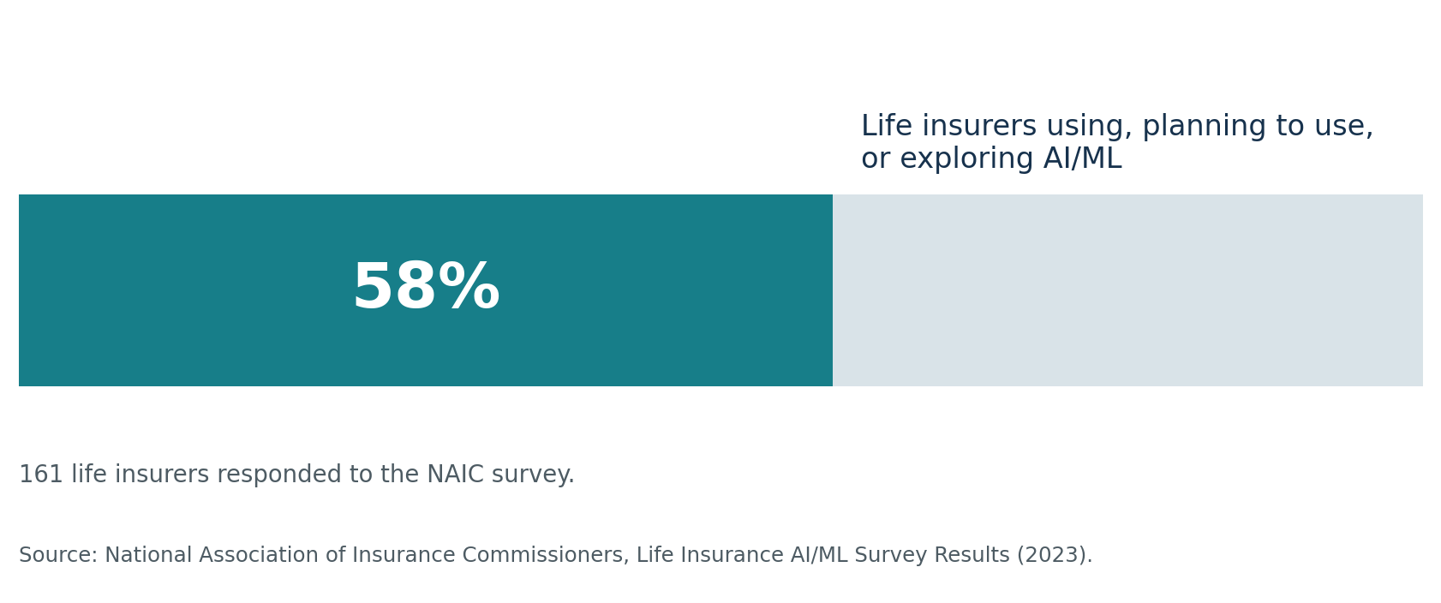
AI use in insurance is moving beyond isolated pilots. In a National Association of Insurance Commissioners survey, 58% of 161 responding life insurers said they were using, planning to use or exploring AI and machine learning, with applications that included marketing, underwriting, pricing and risk management. For insurance professionals, this means AI-supported decisions are increasingly likely to show up somewhere in the client journey, even when the advisor is not directly using the technology.
Accelerated underwriting is a good example. Insurers can combine application information with external data and analytics, sometimes shortening a process that once took weeks to hours. That is a real improvement for many clients. At the same time, more data sources can make a decision harder to explain. If an external record is inaccurate, incomplete or matched to the wrong person, the client may not know where to start. The advisor may not own the system, but can help set expectations, identify the right contact and explain what can be reviewed or corrected.
Where trust can break
In practice, four areas deserve particular attention. First is invisible data: AI-enabled decisions may use information beyond what a client remembers providing, so it helps to explain the categories of data that may be considered. Second is third-party risk. A carrier may rely on outside data suppliers or analytics vendors, but the client still needs a clear point of accountability. Third is automation bias. A computer-generated result can look more authoritative than it really is, so it should be treated as an input to understand, not a replacement for professional judgment. Finally, there is explainability. Most clients do not need proprietary model details. They do need to know what kind of decision was made, what information may have influenced it, whether a person reviewed it and what options they have if something looks wrong.

A five-question trust protocol
Insurance professionals do not need to become AI engineers. They do, however, need a simple way to prepare for these conversations. Before communicating an AI-influenced result, I would ask five questions:
- What decision is AI influencing?
- What categories of data are feeding that decision?
- Is a third-party model or data provider involved?
- Where does meaningful human review occur?
- How can an unexpected outcome be challenged or corrected?
 If one of those answers is not available, it is better to say so than to fill in the gap. The next step may be to pause, seek clarification from the carrier or vendor, and give the client a realistic path forward. That approach is consistent with the direction of insurance AI governance, including the NAIC Model Bulletin on AI Systems and the National Institute of Standards and Technology AI Risk Management Framework. Advisors do not run those governance programs, but they can apply the same basic discipline: understand what the tool influences, recognize where uncertainty exists, avoid overstating what is known and keep a human point of accountability visible.
Make accountability visible
AI will continue to make parts of insurance faster and more automated. I do not see that as reducing the importance of the insurance professional. It changes where professional value shows up. In my work around AI, data and governance, one recurring lesson is that technology is easier to trust when people know who is accountable for the outcome. For advisors, that means knowing when a result makes sense, when it deserves another look and how to explain the process without making promises the facts do not support. Clients do not need to hear that an algorithm is perfect. They need to know that when a result is confusing, consequential or wrong, a responsible person will help them understand what happens next. That is both a governance principle and a client-service standard.
© Entire contents copyright 2026 by InsuranceNewsNet.com Inc. All rights reserved. No part of this article may be reprinted without the expressed written consent from InsuranceNewsNet.com.



MIB reports double-digit life insurance app activity in record August
Why client insurance needs could change even if their life doesn’t
Advisor News
- Can your advisory firm survive without you?
- I started using AI, but what now?
- How to support an entrepreneur client with multiple businesses
- Could a narrower focus help grow your practice?
- U.S. debt hits $40 trillion: how to support concerned clients
More Advisor NewsAnnuity News
- Solen Software Group Acquires Cooperative Technologies, Provider of 1035 Exchange and Annuity Replacement Software
- MassMutual Expands Lending Options With New Secured Credit Line
- Corebridge Financial Introduces Progressive Trigger, a First-of-Its-Kind Index Annuity Strategy Designed to Turn Missed Years into Future Opportunity
- Insurer proposes $1.1M deal to resolve CA teachers’ annuity fee lawsuit
- IMOs get frustrated with slow carrier adoption of faster technology
More Annuity NewsHealth/Employee Benefits News
- Legislators hear report on thin hospital margins, advance prior authorization reform
- Researchers from Department of Research and Innovation Report on Findings in Managed Care (Quantifying Medicare prescription payment plan benefits under Medicare Part D): Managed Care
- New Managed Care Study Results from Brigham and Women’s Hospital and Harvard University Described (Supplemental Rebates From Drug Makers To State Medicaid Programs Grew Fivefold From 2017 To 2024): Managed Care
- Nebraska SHIP offers support during Medicare open enrollment
- Patients demand access to prescription drugs but need support
More Health/Employee Benefits NewsLife Insurance News