

Flood damage can happen where you least expect it

When it comes to selling flood insurance, the world has changed for insurance professionals.
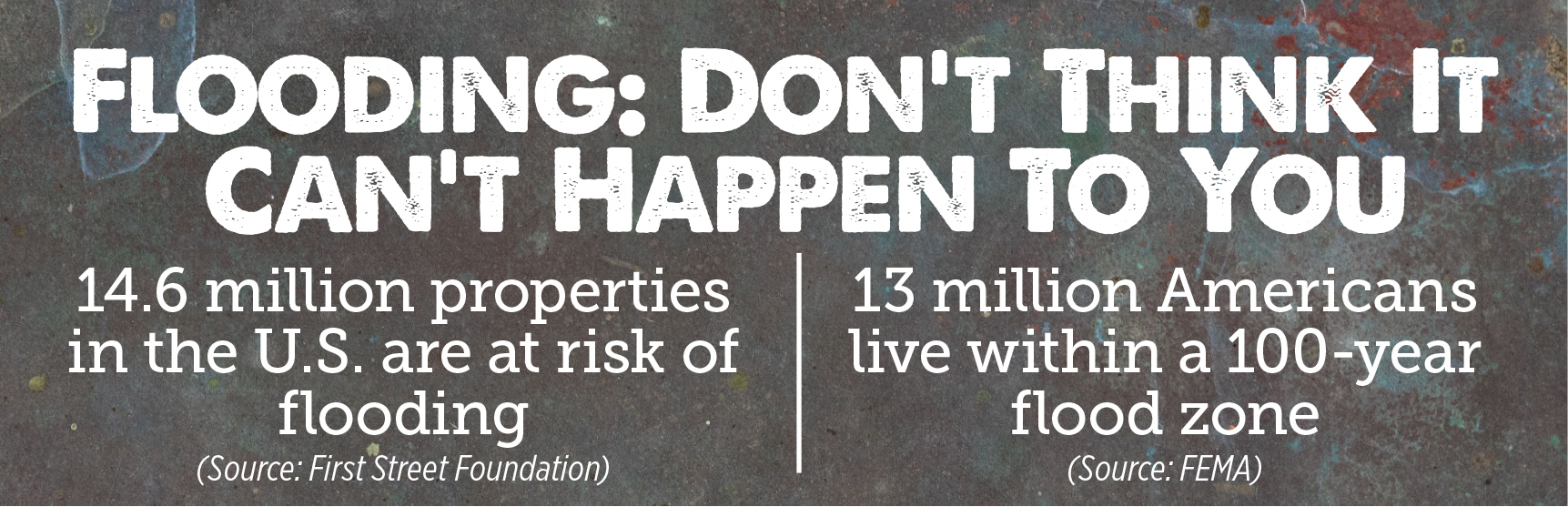
According to the Federal Emergency Management Agency, flooding is already the most common and costly natural disaster in the U.S. Only one inch of floodwater in an average-sized home is capable of causing $25,000 in damage. Although flooding is already a serious threat, the problem is anticipated to get much worse.
Extreme weather events such as hurricanes, tropical storms, heavy rains and flash floods are increasingly causing flood-related damage to residential and commercial property across the U.S. If you haven’t noticed an uptick in flood-related damage in your area, it is likely you soon will.
A recent study published in Nature Climate Change estimates that effects from climate change and population growth will contribute to a 26% rise in U.S. flood risk by 2050. Along with the increase in flood risk, researchers estimate that the total annual loss attributable to flooding across the U.S. could rise from a 2020 baseline of $32 billion to $41 billion over the next three decades.
Although many assume flood damage is mainly of concern for properties located in coastal areas and flood plains, trends suggest flood damage can happen anywhere.
According to the American Flood Coalition, 99% of U.S. counties have been damaged by a flooding event in the past 25 years. Additionally, the National Flood Insurance Program and FEMA issued a report in 2020 titled “Answers to Questions About the NFIP,” in which it was noted that more than 40% of all NFIP-paid flood losses from 2015 to 2019 occurred in areas outside mapped high-risk areas.
This data underscores the fact that even properties that are seemingly at little risk of flooding can be susceptible to major damage. Like many insurance professionals, I have witnessed this phenomenon firsthand.

I recently spoke with a client who had purchased a house on top of a hill in rural Pennsylvania.
Convinced that the elevated location of her home made it impervious to water damage, she didn’t even consider the prospect of investing in flood insurance. Sure enough, after a rainstorm built up enough hydrostatic pressure in the soil around the foundation to cause significant flooding in the basement, the client disclosed to me how the event led to a change in her perceptions.
“If you would have told me when I purchased this house that I needed flood insurance, I would have found another agent, thinking you were trying to sell me coverage I didn’t need,” she told me.
My takeaway from this exchange, and from the increasing amount of data on elevated flooding risk, is that flood insurance should be part of the discussion with every client and prospect — regardless of location or the perceived lack of need.
Understanding coverage
Since typical homeowners and renters insurance do not cover flood damage, only flood insurance can give policyholders the peace of mind and financial assistance to get back on their feet quickly after sustaining damage to their home.
Flood insurance covers losses directly caused by flooding, which the NFIP classifies as an excess of water on land that is normally dry, affecting two or more acres of land or two or more properties.
The problem, and opportunity, for insurance professionals is that there are still many misconceptions about what is covered in the part of the home most likely to flood: the basement.
The NFIP defines a basement as, “Any area of a building with a floor that is below the natural ground level on all sides; otherwise, it is considered the first floor. … Rooms that are not fully below ground level (such as sunken living rooms, crawlspaces, and the lower levels of split-level buildings) may still be considered basements because the lowest floor is below ground on all sides.”
The NFIP offers two types of coverage — building coverage and contents coverage — to protect policyholders’ homes and belongings. The NFIP encourages policyholders to purchase both types of coverage for the broadest protection.
The following items are included under the NFIP’s Standard Flood Insurance Policy building coverage, provided they are connected to a power source or installed in their functioning location in the basement:
» Sump pumps.
» Well water tanks and pumps, cisterns, and the water in them.
» Oil tanks and the oil in them; natural gas tanks and the gas in them.
» Pumps or tanks used in conjunction with solar energy.
» Furnaces, water heaters, air conditioners and heat pumps.
» Circuit breaker boxes, electrical junctions and required utility connections.
» Foundation elements.
» Stairways, staircases, elevators and dumbwaiters.
» Unpainted drywall and ceilings, including fiberglass insulation.
» Cleanup, which can include pumping out trapped floodwater, labor to remove or extract spent cleaning solutions, treatment for mold and mildew, and structural drying of salvageable interior foundation elements.
In addition to the items included under the NFIP’s building coverage, washers and dryers as well as freezers and the food in them are covered under contents coverage provisions.
Just as important as the items the NFIP covers are the items it doesn’t cover under its Standard Flood Insurance Policy.
The NFIP’s Standard Flood Insurance Policy exclusions include “basement improvements or items not necessary to make the home safe, sanitary and functional — such as carpeting, finished walls, paint, floors, ceilings, furniture or personal belongings that may be kept in the basement.”
Items not specifically listed in a policyholder’s flood insurance policy are also not covered, and neither is the removal of noncovered building or personal property items even if the removal helps facilitate the cleanup of covered building repairs.
When in doubt, insurers and policyholders should refer to their policies for specific language as it pertains to coverage, but the bottom line is this: A client’s bonus bedroom, newly renovated family hangout or kid’s playroom could be at risk of sustaining flood damage where much of the finished space, and the personal items in it, wouldn’t be eligible for coverage as specified under the NFIP’s exclusions. Conversely, this coverage can still be pivotal in helping homeowners protect and restore foundational elements of and appliances in the home, which is something my client in Pennsylvania wishes she had known sooner.
As the number of flooding events across the country is expected to increase in the coming years, it is crucial for insurance professionals to initiate a discussion with their clients on flood insurance and what’s included as part of this coverage.
While every homeowner’s situation is different, understanding these policies could make all the difference in a client deciding whether flood insurance coverage is right for their particular needs.
There are few feelings worse than being on the opposite end of a call with a policyholder who has just sustained significant damage to their home and believes they weren’t adequately informed on what their policy covers.
Policyholders rely on us to be knowledgeable subject matter experts capable of leading them through their coverage decisions. By having upfront conversations on the importance of flood insurance — and on what is and isn’t covered under the policy — before a catastrophic event, you can be a hero for your customers even on their rainiest of days.


Life insurance: Build and protect multigenerational wealth
Advisors can turn to client reviews to help repair their image
Advisor News
- Majority of Americans concerned recent market highs are unsustainable
- GLP-1 users choose between medication and retirement saving
- Gen X and millennials seek new retirement model
- Are families ready for the costs of aging at home?
- When a client moves, their insurance plan needs to move, too
More Advisor NewsAnnuity News
- A client remarried: Does their annuity still fit?
- Gen X and millennials seek new retirement model
- Global Atlantic names Dan Farrelly head of IMO and IBD channels
- A rising retirement challenge: The license to spend
- What lower interest rates mean to annuity payouts
More Annuity NewsHealth/Employee Benefits News
Life Insurance News