

Annuities at the speed of a cheetah — With Mark Zesbaugh

Cheetahs are the fastest land mammals on Earth, with measured top speeds of about 70-75 miles per hour. A cheetah can accelerate from zero to 60 mph in roughly three seconds, a rate that rivals high‑performance sports cars and is a major reason they are such effective hunters. Cheetahs’ speed comes from specialized anatomy, including a highly flexible spine that lengthens their stride, long legs, semi‑retractable claws for traction and a long tail that acts as a counterbalance when turning at high speed.
What does any of this have to do with annuities?
Revol One Financial prides itself on its speed in serving its producers and customers. They coined the term “cheetah speed” to describe the company’s quickness and agility.
Mark Zesbaugh is chairman and CEO of Revol One, which was founded in 1980 and is headquartered in Urbandale, Iowa. Zesbaugh believes in challenging the status quo while empowering his team to find new ways to provide retirement solutions to consumers. Under his leadership, the company is building a modern, agile platform designed to revolutionize how people think about annuities.
He has had a lengthy career in industry leadership. At the age of 29, he became chief financial officer at LifeUSA Insurance, then went on to become the youngest-ever CEO at Allianz Life of North America. After a stint as CEO of Security Life, he took the helm at Revol One, where he looks at new ways for technology to help bring annuities to a population in need of retirement income.
In this interview with InsuranceNewsNet publisher Paul Feldman, Zesbaugh describes the inspiration behind his leadership at Revol One, where he believes AI will take the industry, and the need for speed in delivering solutions.

PAUL FELDMAN: How did you get into the industry?
MARK ZESBAUGH: I started in public accounting, and LifeUSA Insurance was one of my clients when they first started. I was kind of pigeonholed into the insurance industry when I first started at Ernst & Young. LifeUSA was in their first couple of years in business, and immediately after I started working with them, they gave me the opportunity to work directly with them as an employee.
My background is finance. I wanted to get into the investment world. LifeUSA was a great place to start because I knew very little about investments and they didn’t have any. And so, as the company grew, I grew along with it.
Bob McDonald, who is my mentor, gave me the opportunity in the 1990s to become the chief financial officer of LifeUSA. So I became the CFO of a public company at 29 years old. Bob saw something in me. He believed in me. He’s a good friend, but he believed in me back then, and I worked with him to help grow LifeUSA.
I had more fun building LifeUSA than I’ve had with any other job, because it was truly an entrepreneurial organization. They were doing things differently. The employees were treated with respect and dignity, and they were the foundation of the company. Everybody was an owner of the company. We grew the company throughout the 1990s under Bob’s leadership. In 1999, Allianz Life of North America purchased LifeUSA. But after the transaction was done, LifeUSA’s leadership took over Allianz. Bob took over as the CEO of Allianz Life of North America, and I was the CFO. Bob retired shortly afterward, and at the ripe age of 37, I became CEO of Allianz Life of North America.
It was a great journey. It was a great run. We were able to grow the company significantly. We took LifeUSA’s culture, distribution and value proposition, along with Allianz’s ratings and capital, and grew the company significantly through my tenure as CEO.
I left Allianz in 2007. I was a very young CEO, and I had very young kids at the time. I didn’t have the opportunity to be much of a dad because I was working too much, so I decided to take a step back. But I didn’t step back for too long. I took that entrepreneurial gene that Bob helped me build and started a Bermuda reinsurance company with some other insurance executives. We raised the capital and had it up and running, but the market took a major downturn.
After that, I worked with KKR and Apollo and others to purchase a company that I would ultimately run. That didn’t work out, but one of the companies we looked at acquiring was Security Life. They were interested in hiring a CEO, so I spent from 2011 to 2017 turning that organization around. We turned it around and sold it to Ameritas in 2017.
Then I kind of sat on the sidelines until I met the people from Axar Capital Management LP in 2021. They were looking to get into the insurance space. They asked me, “If you had the opportunity, what would you do in this space?” I said, “I would build another insurance company with a similar culture to what Bob McDonald did in the 1990s.” Axar believed in this, and they invested in it.
What we see in Revol One today is the playing out of that vision. Last year, we did about a half-billion dollars in sales. We’re 70-plus employees strong and continuing to grow.
FELDMAN: Revol One is one of the most unusual names I’ve ever heard of for an insurance company. How did you choose that name?
ZESBAUGH: I’m not a big believer in hiring a high-priced marketing firm to come up with a name. The company originally was named Pavonia. We wanted to change the name. The leadership team got together and talked about different opportunities. Interestingly enough, there is a whiskey distillery not far from Des Moines called Revelton. We thought it was a unique name, but we couldn’t use the name Revelton for our company. I thought we could shorten it to Revel, but that name was already used by others. So we added a “one” to the name, and now we are Revol One.

I tell our story this way: Three or four years ago, the bad news is we didn’t have any technology. The good news is we didn’t have any technology. So we don’t have the proverbial boat anchor that a lot of our competition has. Because of that, we are much quicker, nimbler and more agile than almost everybody in the industry.
But it’s more than just technology. It’s the relationships that we build with distribution, and it’s the products we offer.
FELDMAN: Your company has moved fast. I think the cheetah mascot is cool, and you live up to that.
ZESBAUGH: We have a cheetah as our mascot. We talk about “cheetah speed” because I think one of our biggest differentiators is our culture that delivers that speed. In today’s world, being responsive to customers with an element of speed is critical and a major differentiator, particularly in an industry that is rather old and slow.
Others ask us how we do things so fast. That’s just the norm for us. Our chief actuary and their team coined the term cheetah speed. We all get more done than you can imagine. It’s in our DNA. And once it’s in your DNA, you don’t know how to work any differently.
FELDMAN: You have a unique perspective on distribution. Tell us more about that.
ZESBAUGH: I believe distribution is the lifeblood of the industry. Most products are sold and not bought. I really believe in long-standing distribution relationships. Where I think we are unique is that we offer the opportunity for our distribution to invest in Revol One — no different than we allow employees to invest. We’re currently in the process of allowing producers to invest in Revol One, so that is one aspect of differentiation.
The impact of ownership is amazing. Those who create value should share in the value they create because if they’re incentivized to do so, they will help grow the company and the benefit grows to them as well.
When it comes to distribution relationships, we allow complete access to everybody on the leadership team. Our head product actuary spends more than half of his time with our distribution partners, because I believe that those relationships are critical, because the best product ideas don’t come internally. They come from our distribution partners that work with their clients every single day and solve their needs.
Because of our technology and our team of people, we can deliver upward of six new products to market every year. If you look at the industry as a whole, they typically introduce one product every one to two years. Again, that goes back to us being nimble, agile and quick.
FELDMAN: What sets your technology apart?
ZESBAUGH: At the end of the day, technology is just an enabler. When we think about what’s important to our distribution, number one is that they must get paid. They must get appointed quickly. We must issue their policy fast.
With our technology, along with the experienced personnel behind it, we can appoint an agent the same day. They can send us an application that day, and we will issue it that day. We can pay their commissions that same day; so in one day, they can get appointed, submit a ticket and get paid.
I believe all this is easier for the financial professional because the last thing they want is disruption. They want to be out there selling. They don’t want to worry about a case status. They want to know that they’re going to get paid and paid fast, and if they call us, we’re responsive to their questions. We want to deploy artificial intelligence as well, but deploy it in a way that provides greater service to our customers.
FELDMAN: How is AI affecting agents?
ZESBAUGH: I think AI will have a significant impact on efficiency and effectiveness, but it won’t be the end-all. I also believe that it will be a game-changer for those that don’t adapt and integrate it into their processes.
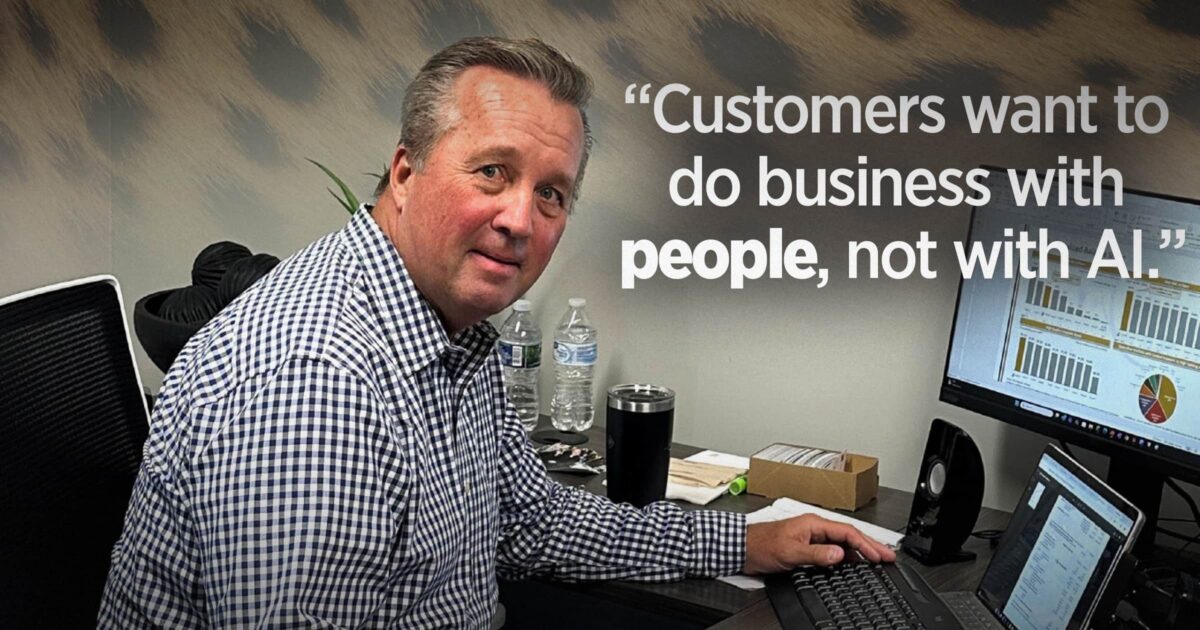
I think AI can make producers better and it can make organizations like Revol One better at what they do, but it won’t completely replace people. Customers want to do business with people, not with AI. We are deploying AI, but we are not changing our value proposition.
FELDMAN: AI is great, but you still have to build distribution, and distribution is based on relationships. Because no one gets up in the morning and says, “I need to buy an annuity today.”
ZESBAUGH: People may want to do a little bit of research on their own. But they want a trusted professional who can guide them in their decision-making. Financial advisors and financial professionals are here to stay. They’re not going away. They’re going to be around forever. It’s just that the advice they will give will be augmented with AI. It will make their job easier in many ways, but sometimes tougher as well. If they don’t embrace it, they may fall behind.
FELDMAN: What do you see as advisors’ biggest challenges and biggest opportunities?
ZESBAUGH: The biggest opportunity is our aging population. The need for income in retirement is greater today, and our industry is uniquely positioned to address that need.
The industry has a lot of tailwinds. We have an aging population with a need for income and a greater trust in the types of products we offer.
I think the challenge for all of us is to be open to change. Consumer needs are changing, the way products are delivered is changing and producers must adapt to that.
AI will help with this. But everybody wants everything fast. Everything moves fast, and we must be able to adapt to that. But we also must make sure we do what’s right for consumers and provide recommendations that fit their needs.
We will see more people come into this industry, which is good. But for somebody in their 20s and starting out to become a high-end producer, that’s a tough value proposition. How do you earn the trust of someone who is 65 years old so they will put their life savings with someone in their mid-20s?
I give financial professionals a lot of credit for sticking with it, because it is not an easy business at all. But once they’ve built a book of business and built that credibility, it can be a lucrative career. Even though I see more people getting into the business, it’s still tough.
FELDMAN: What would you tell an advisor today?
ZESBAUGH: First of all, I would reassure them that what they do is of critical importance and it’s not going away. I would tell them to be open to change. And embrace technology and AI, and continue to work with trusted relationships.



A foundation of faith — with Cheryl D. George
The Annuity Evolution: New Rules, Smarter Tech
Advisor News
- A rising retirement challenge: The license to spend
- Financial stress leaves less room for retirement saving
- Giving while you’re living: 3 frequently asked questions about gifting
- Helping clients prepare for one of their biggest retirement expenses
- Important year-end financial conversations every advisor must have
More Advisor NewsAnnuity News
- A rising retirement challenge: The license to spend
- What lower interest rates mean to annuity payouts
- AM Best downgrades A-Cap insurers amid financial and regulatory troubles
- Lawsuit claims Delaware Life hid billions in insurer-linked investments
- AM Best to Deliver Presentation at 2026 ACLI Annual Conference
More Annuity NewsHealth/Employee Benefits News
Life Insurance News