

5 strategies to deepen client trust through annuity education
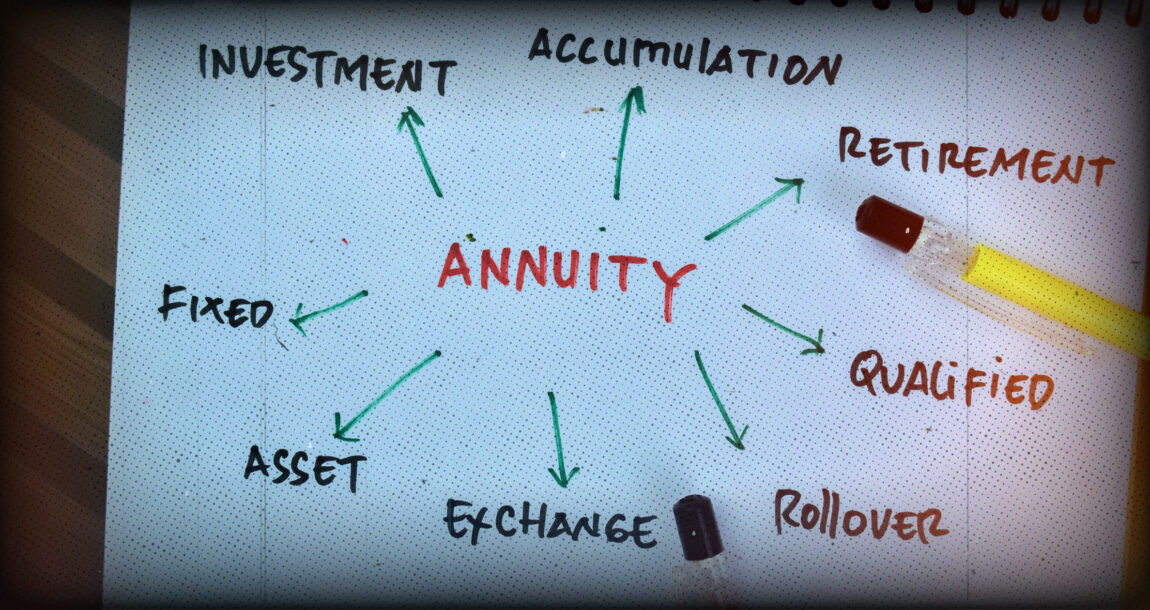
Annuity professionals are navigating one of the most opportunity-rich, yet misunderstood, moments in our industry's history. Between longevity risk, inflation uncertainty, and the ripple effects of SECURE 2.0, there has never been a better time to lean into personalized education and strategic engagement.

But let's be honest: Even in 2025, many people still recoil at the word “annuity.” Some think they'll lose access to their money. Others assume it's a one-size-fits-all product pushed by commission-hungry agents. That kind of thinking can kill trust before we've even had a chance to build it.
Over the years, I've found that successful annuity conversations are rarely about flashy product features. They're about connection, trust and clarity. Here are five strategies I use to make those connections count in a marketplace that's changing faster than ever.
1. Speak to the risk, not the product
Many financial professionals jump straight into what an annuity offers — guaranteed income, downside protection, tax deferral — without slowing down to ask what the client is actually worried about.
In this economy, it's not hard to guess what clients worry about. Our clients are watching prices rise at the grocery store, seeing news about longer lifespans and wondering if their savings can keep up. In 2023, it was estimated that a 65-year-old man could expect to live another 18.2 years to age 83.2, while a woman the same age could expect 20.7 more years, reaching 85.7. That's a long time to stretch retirement income.

When I reframe the conversation around longevity and purchasing power — not the annuity itself — clients listen differently. They stop thinking about what they're “giving up” and start considering what they're protecting.
2. Don't educate all at once — layer it in
One of the biggest mistakes I made early in my career was trying to explain too much, too fast. I'd walk a client through riders, payout options, indexing methods and tax treatment in one meeting, thinking I was doing them a favor by being transparent.
The reality: I was overwhelming them.
These days, I take a more modular approach. If I'm meeting with a 60-year-old client planning to retire at 67, I might use our first conversation to talk broadly about income gaps and the role of guaranteed income. At the next meeting, I'll introduce the idea of an annuity as one way to fill that gap. Then we layer in product types and options once we've narrowed down what matters most to them.
This “slow drip” approach aligns with what behavioral economists have been saying for years: people make better financial decisions when they have time to process new information in stages.
3. Anticipate objections with empathy, not defensiveness
If you've sold annuities for more than a minute, you've heard it: “Aren't those expensive?” “My brother-in-law said they're a scam.” “I heard Suze Orman hates them.”
You can win that conversation, but not by going into battle. Clients don't want a debate. They want a guide.
When someone brings up cost, I might say: “You're right to ask about that. Some annuities do come with fees, and not all are created equal. Can I walk you through how the cost compares to what you're getting in return?”
Or if they say, “I don't want to lock up my money,” I'll acknowledge the concern and explain how liquidity riders or laddering strategies can offer more flexibility than they may realize.
Empathy disarms fear. And when fear goes down, confidence goes up.
4. Use personalization to bring annuities to life
Annuities are often pitched in the abstract: “guaranteed lifetime income,” “market downside protection,” “tax-deferred growth.”
Useful? Sure. Memorable? Not really.
What's far more powerful is helping clients understand how an annuity would function in their lives. For example:
“Let's say your Social Security benefit is $2,000 a month, and your retirement expenses will likely be $3,800. Instead of relying solely on your portfolio withdrawals, we could use an annuity to cover that $1,800 gap. That way, you're not waking up every morning wondering if the market dipped overnight.”
In 2025, what clients value most is knowing they're protected. When we connect the product to that emotional need, they're far more likely to engage.
5. Stay visible after the sale
Here's where the real magic happens - and where too many agents drop the ball. Many people think the annuity sale is the end of the process. I'd argue it's the beginning.
The truth is that clients rarely remember what we told them about their annuity a year or two later. They may forget how the index works or why they chose a confident rider. But if we stay in touch through annual reviews, performance check-ins or even market updates, we keep the value of that product top of mind.
More important, we reinforce our own value as trusted guides. That leads to more referrals, higher retention and fewer panicked calls when market headlines get scary.
And with the SECURE Act 2.0 expanding access to annuities in qualified plans, we have even more reason to stay engaged. Helping clients understand how their workplace options interact with their personal planning is a conversation that builds loyalty.
Change the conversation, change the outcome
Connecting clients with annuities takes more than product knowledge. It requires trust, timing, and a willingness to lead with curiosity instead of assumptions.
Small choices matter. A well-placed question. A clear example. A follow-up that comes sooner than expected. These moments build the kind of relationship that lasts. Clients notice who shows up, who listens and who stays present as their needs evolve. When we bring that level of care to every conversation, we build trust that extends far beyond our initial sale.
© Entire contents copyright 2025 by InsuranceNewsNet.com Inc. All rights reserved. No part of this article may be reprinted without the expressed written consent from InsuranceNewsNet.com.


Misleading online information leads many Americans to make financial errors
How life insurance funds executive benefit plans
Advisor News
- Your client’s $3 million portfolio doesn’t tell you their insurance needs
- How life insurance can provide liquidity for wealthy families
- Retirement providers turn to digital engagement to retain assets
- Looking out for clients with diminished mental capacity
- House panel advances CLEAR Forms Act backed by IRI
More Advisor NewsAnnuity News
- AM Best to Deliver Presentation at 2026 ACLI Annual Conference
- Global Atlantic Announces Launch of ForeLifetime Income, a New Fixed Index Annuity
- A-Cap strikes back with lawsuit accusing SC regulators of sloppy process, leaking secrets
- AM Best to Discuss Its Views on Private Credit Surge and Risks at 2026 NAIC/NIPR Insurance Summit
- OID recovers $260M in life insurance benefits
More Annuity NewsHealth/Employee Benefits News
Life Insurance News