

Preparing clients for retirement’s variables
Protective highlights the importance of flexibility in preparing clients for retirement’s many variables.
Retirement has never been one-size-fits-all. Every client enters retirement with different goals, priorities, and concerns. Just when a plan seems complete, life introduces another variable.
That reality has fundamentally changed the conversations financial professionals are having with clients. At Protective, those evolving conversations have shaped a suite of products designed to support financial professionals as they help clients prepare for retirement’s many variables with greater flexibility.
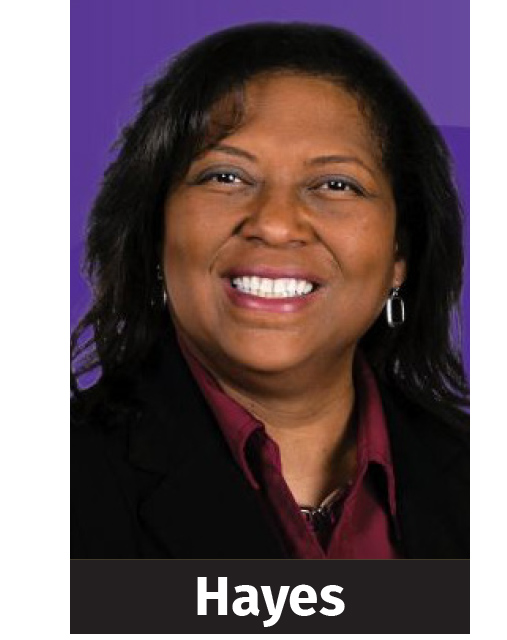 “If you were to look back 10 years, the primary goal was accumulation,” reflected Sonja V. Hayes, Advanced Planning Attorney at Protective. “People were much more focused on how much money they had. Now the switch has turned from, ‘How much money do I have in the bank account?’ to, ‘What can those dollars do for me?’”
That shift from accumulation to distribution has reshaped retirement planning. Rather than simply growing assets, today’s financial professionals are seeking products that support flexible retirement income strategies as clients’ needs evolve.
Planning for the certainty of uncertainty
Market volatility. Longer life expectancies. Rising healthcare costs. Unexpected retirement. Family obligations. Few clients can predict how retirement will unfold, making adaptability one of the most valuable elements of any retirement strategy.
“It’s the certainty of uncertainty,” she explained. “Things are going to change. That’s really what we’re trying to focus on at Protective. What flexibility can be built into the strategy, knowing that a retiree’s needs and plans can change down the road?”
“The obvious one is market volatility,” Hayes observed. “It really makes a difference if the market is going up or down when a person is getting ready to retire.”
Longevity presents another challenge.
“No one knows how long they’re going to live,” she added. “Then there’s what I call ‘life happens.’ People get sick. People lose their jobs. They have to move. Marriages, divorces, and family changes all affect retirement.”
Rather than attempting to predict every possible outcome, financial professionals should acknowledge what cannot be controlled and explore products that may offer flexibility as client needs change.
That philosophy influences how Protective develops products designed for the realities clients and financial professionals face today. Many financial professionals are shifting from investment-return conversations to discussions that focus on clients’ retirement income, legacy and long-term care planning.
“Clients are becoming more goal-focused as opposed to return-
on-investment focused,” she noted. “Today, a client may want the best return possible. Tomorrow, they may want a less volatile investment. Those two things don’t always go hand in hand.”
Start the conversation sooner
Preparing clients for retirement’s variables should begin long before retirement itself.
According to the Employee Benefit Research Institute’s 2024 Spending in Retirement Survey, 32% of near-retirees said understanding retirement withdrawal options was one of their biggest challenges.1 Hayes explained that’s exactly why retirement income conversations shouldn’t wait until clients are on the verge of leaving the workforce.
“I’m a firm believer that the sooner you start, the better off you will be,” she said.
Retirement planning often involves 401(k) distributions, required minimum distributions, taxes, Social Security, healthcare expenses, and income planning. Covering every topic in the final year before retirement can overwhelm clients emotionally and financially.
“I think it’s important to start having smaller conversations and put everything into bite-sized pieces,” Hayes explained. “That allows clients to figure things out little by little instead of experiencing an information overload right before retirement.”
The same principle applies to planning for Social Security.
The Social Security Administration estimates monthly retirement benefits increase approximately 8% each year benefits are delayed beyond full retirement age, up to age 70.2 While delaying Social Security may result in higher benefit payments, some clients may need guaranteed income to cover expenses before benefits begin.
“There isn’t one right answer for everyone,” Hayes acknowledged. “It’s about having that open conversation with clients and understanding that what they choose today may become a different conversation later.”
Every variable affects retirement income
Healthcare costs remain one of the most unpredictable retirement expenses. Financial professionals should have these conversations long before retirement, giving clients more time to prepare for costs that are often underestimated. Fidelity estimates a 65-year-old retiring in 2025 will spend an average of $172,500 on healthcare throughout retirement, excluding long-term care.3
“The first time clients hear that number shouldn’t be when they’re 60,” Hayes remarked. “That’s a conversation that probably should begin around age 50.”
She also encouraged financial professionals to educate clients about Medicare and future healthcare expenses before they become immediate concerns.
“The sooner you address a future debt, the better off you’re going to be,” she observed.
Market volatility creates another challenge. Vanguard research found retirees who experienced poor investment returns early in retirement were 31% more likely to outlive their savings and saw retirement income streams fall by 11% when using constant real-dollar withdrawals.4
Those realities reinforce the importance of dependable income.
“We have to accept that market volatility exists,” she explained. “Since we don’t know when it will happen, creating a guaranteed stream of income is extremely important. What income can you count on to be there consistently, no matter what the market does?”
That predictable income can help cover ongoing household expenses while allowing other assets to remain invested through changing market conditions.
Legacy planning introduces another balancing act.
LIMRA research found that 54% of investors are motivated by securing lifetime income, while 44% are focused on protecting principal.5
“When clients want to enjoy retirement but also leave something behind, it’s important to have assets that aren’t necessarily going to be depleted,” Hayes explained. “You want income throughout retirement while also preserving opportunities to transfer what’s left in the most efficient way possible.”
Flexibility creates confidence
No retirement unfolds exactly as planned. Unexpected job loss. A health diagnosis. Caring for an aging parent. Supporting adult children or grandchildren. Each life event can reshape retirement priorities.
For Hayes, that’s why retirement strategies should be evaluated regularly rather than viewed as static documents.
“Financial professionals should evaluate investments and strategies on an ongoing basis,” she said. “Tax laws change. Legislation changes. Clients’ lives change. The goal is to build in the best opportunity for flexibility.”
That emphasis on flexibility shapes Protective’s product design. Rather than assuming every retiree follows the same path, the company focuses on providing financial professionals with products that can help clients prepare for changing retirement needs.
“The conversation between the financial professional and the client is the most important part,” Hayes emphasized. “It’s about evaluating the client’s situation and asking whether flexibility exists so decisions made today don’t unnecessarily limit choices later.”
“Clients don’t live off their retirement nest egg. They live off the income it provides,” she concluded. “That nest egg must ultimately be converted into dollars that pay for groceries, co-payments and the countless expenses of everyday life.”
Retirement will always include variables that no one can predict. Markets will fluctuate. Goals will evolve. Families and health will change. Planning beyond the plan and building flexibility means preparing clients for those variables before they happen.
As Hayes summed it up, “No one knows what’s going to happen. But clients should feel comfortable that their retirement strategy is as flexible as it can be.”
Explore Protective’s suite of products designed to help financial professionals address the variables of life.
1. Employee Benefit Research Institute. 2024 Spending in Retirement Survey. EBRI Issue Brief, Nov. 7, 2024. Available at: 2024 Spending in Retirement Survey. Accessed July 14, 2026. [ebri.org]
2. Social Security Administration. Benefits Planner: Delayed Retirement Credits. Available at: Benefits Planner: Delayed Retirement Credits. Accessed July 14, 2026. (Benefits for individuals born in 1943 or later increase 8% annually for each year benefits are delayed beyond full retirement age, up to age 70.) [ssa.gov]
3. Fidelity Investments. Fidelity Investments Releases 2025 Retiree Health Care Cost Estimate, a Timely Reminder for All Generations to Begin Planning. July 30, 2025. Available at: 2025 Retiree Health Care Cost Estimate. Accessed July 14, 2026. [newsroom.fidelity.com]
4. Khang, Kevin I., and Andrew S. Clarke. Safeguarding Retirement in a Bear Market. Vanguard Research, June 2020. Available at: Safeguarding Retirement in a Bear Market. Accessed July 14, 2026. [vanguard.co.uk]
5. LIMRA. The Modern Retiree: Embracing the Future of Retirement. 2025 Retirement Investors Behaviors, Attitudes and Financial Situations Study. Available at: The Modern Retiree: Embracing the Future of Retirement. Accessed July 14, 2026
Protective refers to Protective Life Insurance Company (Omaha, NE) and its affiliates, including Protective Life and Annuity Insurance Company (Birmingham, AL). Variable products distributed by affiliate broker-dealer Investment Distributors, Inc., Birmingham, AL.
Protective is a registered trademark of Protective Life Insurance Company. The Protective trademarks, logos and service marks are property of Protective Life Insurance Company and are protected by trademark and/or other proprietary rights and laws.
Life insurance and annuities are issued in all states except New York by Protective Life Insurance Company. In New York, life insurance and annuities are issued by Protective Life and Annuity Insurance Company. Products may have limitations and restrictions, may not be available in all states, and state variations may apply. Product guarantees are subject to the claims-paying ability of the issuing company.
CABD.8147562.07.26


Building Tomorrow Together: How Nasdaq Differentiates Itself as an Index Provider and Strategic Partner
Retirement Planning Has to Answer “What Now?”
Advisor News
- I started using AI, but what now?
- How to support an entrepreneur client with multiple businesses
- Could a narrower focus help grow your practice?
- U.S. debt hits $40 trillion: how to support concerned clients
- Flourish brings private-bank-like cash solution to MassMutual’s network
More Advisor NewsAnnuity News
- MassMutual Expands Lending Options With New Secured Credit Line
- Corebridge Financial Introduces Progressive Trigger, a First-of-Its-Kind Index Annuity Strategy Designed to Turn Missed Years into Future Opportunity
- Insurer proposes $1.1M deal to resolve CA teachers’ annuity fee lawsuit
- IMOs get frustrated with slow carrier adoption of faster technology
- New class-action lawsuit targets Delaware Life over annuity disclosures
More Annuity NewsHealth/Employee Benefits News
- Answering questions on Medicare open enrollment
Terry Savage: Your questions answered on Medicare open enrollment
- Make sure your Medicare coverage makes sense
Jill On Money: Medicare on my mind
- RESURFACED AUDIO: MIKE ROGERS SAYS HE WANTS TO KICK SICK PATIENTS OFF HEALTHCARE, SUPPORTS NEW COPAYS – MICHIGAN DEMOCRATIC PARTY
- It's 5 a.m. at a Princeton Fitness Center – What Do You Say to the Early Arrivals?
- Your questions answered on Medicare open enrollment
More Health/Employee Benefits NewsLife Insurance News