

Your claim is in the oven
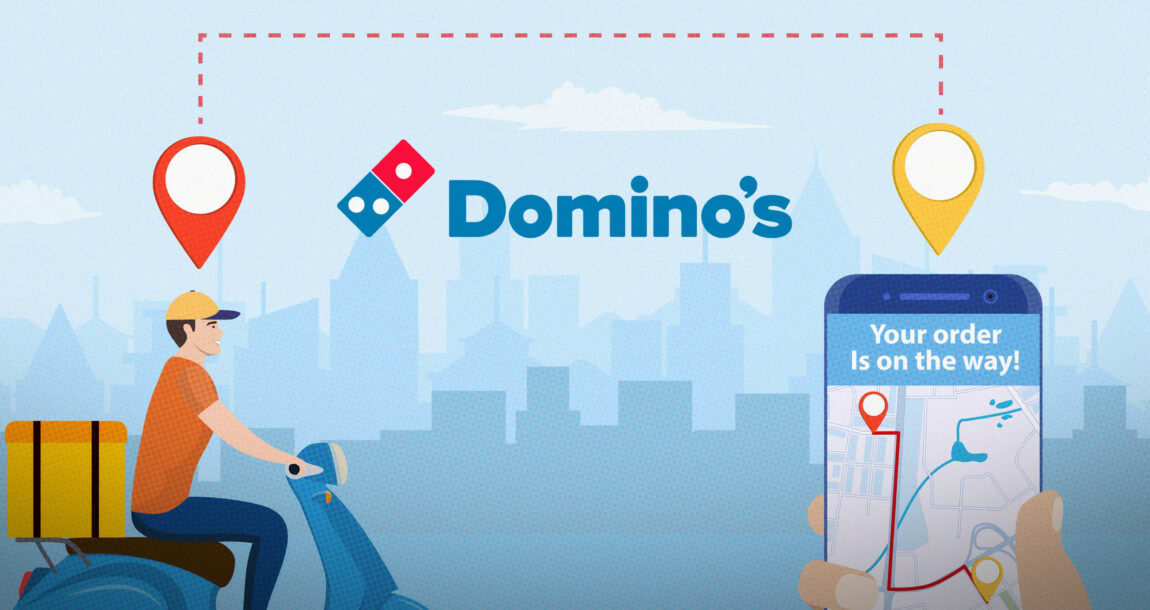
In 2009, Domino's Pizza was in trouble. The pizza was bad, their image was worse, and their sales and market share were abysmal. Domino's was practically a swear word when it came time to suggest a pizza place.
Transparency and innovation save a brand

In 2010, with a new CEO on board and practically nothing to lose, Domino’s opted for a unique and somewhat terrifying solution: complete transparency. The company admitted that their pizza’s quality was poor and promised to improve. They apologized to the masses, and the masses responded. People loved the company’s transparent approach, its brutal honesty and its promise to be better.
Since then, they have seen nearly a 3x growth in revenue and have reached nearly 20% of total pizza sales. With this focus on transparency, Domino's also launched what some consider to be one of the most significant user experience features of all time - the Pizza Tracker. Yes, it’s the colorful little widget that tracks your pizza’s journey from dough to doorstep. This innovation, which today seems so ubiquitous, was revolutionary at launch; a unique marriage of logistics to food service, combined with the dopamine hit of knowing that “Tim has placed your pizza in the oven.”
Nearly every industry has implemented some version of the Pizza Tracker, to various degrees of success. Uber and Amazon show your driver’s precise location on a digital map of your city, while the U.S. Postal Service lets you know that, for some reason, your package is in Bakersfield, Calif., instead of at your house.
Your claim is ready: Lessons from Domino’s
In classic “late to the party” fashion, insurance lacks its own version of the Pizza Tracker. As silly as it may sound, insurers can learn much from Domino's.

First, your claims experience can define your brand. How policyholders experience the claims process shapes their public reviews and brand perception, and a bad claims experience can erase years of customer loyalty in an instant. Unfortunately, the claims process tends to be a big black box of mystery, and policyholders often have no way to peek behind the proverbial curtain.
Nearly 60% of policyholders would switch insurers simply for timely updates on their claims. This clearly shows that there is a need for operational transparency during the claims process. Operational transparency, like an open restaurant kitchen, can be implemented in various ways across every industry.
Price transparency can lead to over a 26% increase in sales, and revealing your processes behind the scenes can increase perception of quality and willingness to pay. A pizza delivery from Domino's is cheap when compared to a damaged vehicle or home; however, you are infinitely more likely to know exactly where your pizza is than where your claim payment is.
The numbers show us that policyholders hate being left in the dark during a claim. This uncertainty leads to frustration, which leads to a flood of inbound calls, chats and emails, asking, “What’s going on with my claim?”
Eventually, this frustration can lead to losing the customer altogether.
The return trip effect
The Pizza Tracker reduces frustration by immediately adding operational transparency. When a person feels like they are a part of the process, instead of simply a bystander, it ultimately creates a sense that the entire system is moving faster. Shuya Gong, a design director at IDEO, believes that the Pizza Tracker has an effect of “speeding up time” because of the return trip effect, the feeling that time moves faster on the way back from a destination. Once you understand the duration of a journey, the perceived time it takes to complete goes down. This is why progress bars on downloads and file transfers have existed since the dawn of computer graphics. They are a visual time machine for the user.
The insurance industry is primed for a similar experience of transparency. There are a finite number of steps to a claim, from first notice of loss to final payout. Displaying all those steps locks in the duration of the claims journey, at least in terms of the number of steps. This creates the progress bar that both pizza lovers and insureds crave.
Data and display
Implementing a Pizza Tracker ideology within your insured portal is a two-part process: data and display. Data comes from your claims or policy systems, where the status of a claim must be captured, so it can be used. Constructing an application programming interface or a data extraction process to gain access to this data is vitally important. After the data is exposed, it must be displayed to the policyholder in a way that makes sense and follows the Pizza Tracker model. It doesn’t need to look exactly like Domino’s, but it should show a complete timeline of all the steps of a claim.
Most important, it needs to show what step they are currently on, and any relevant information associated with that step. If the adjuster has been assigned, display their contact information. If the car is at the body shop, give the shop’s name and phone number. If you don’t have all the data, that’s OK. Even if there is a 10% reduction in claims calls, that can become a real-world savings of thousands of dollars. Luckily, there are many third-party tools and platforms that can help make this process much easier to implement, so you don’t have to reinvent the wheel.
Leveraging multiple channels
A Pizza Tracker-type of experience for insurers doesn't always have to be visual. After you have access to an insured’s data, you can offer something as simple as proactive notifications, primarily with SMS, and backed up by email.
Sending messages like, “Your adjuster has been assigned” or “Your estimate is in progress,” keeps policyholders in the loop and informed without requiring them to click anything.
DoorDash has a similar concept; they use every means of communication they have to update the status of a food delivery. They do this, along with sharing a map, to reduce customer frustration over delivery times and to prevent complaints. That’s why these types of updates aren’t just an added convenience; they reduce call center volume, take the pressure off claims reps, increase customer satisfaction and ultimately improve retention.
None of this is a revolutionary idea today. However, insurers can leverage innovations from the consumer world to gain a better understanding of the human need for visualizing progress and build a better claims experience. Keep in mind that not all the insurance lifecycle needs to be exposed to the public, as there is little desire to “see into the kitchen” of many other insurance processes.
During the claims process, if insurers can keep policyholders updated and informed, and show them where their money is, they will have a happier customer. No one expects their claim to be paid in “30 minutes or it’s free,” the pizza guys can keep that one, but when it comes to the customer journey, insurers can learn a lot from Domino's.
© Entire contents copyright 2025 by InsuranceNewsNet.com Inc. All rights reserved. No part of this article may be reprinted without the expressed written consent from InsuranceNewsNet.com.



4 insurance policies to survive supply chain disruption
High-deductible MedSupp G + hospital indemnity = a win for clients
Advisor News
- Flourish brings private-bank-like cash solution to MassMutual’s network
- Majority of Americans concerned recent market highs are unsustainable
- GLP-1 users choose between medication and retirement saving
- Gen X and millennials seek new retirement model
- Are families ready for the costs of aging at home?
More Advisor NewsAnnuity News
- A client remarried: Does their annuity still fit?
- Gen X and millennials seek new retirement model
- Global Atlantic names Dan Farrelly head of IMO and IBD channels
- A rising retirement challenge: The license to spend
- What lower interest rates mean to annuity payouts
More Annuity NewsHealth/Employee Benefits News
Life Insurance News