

Why life insurance riders aren’t solving the LTC crisis
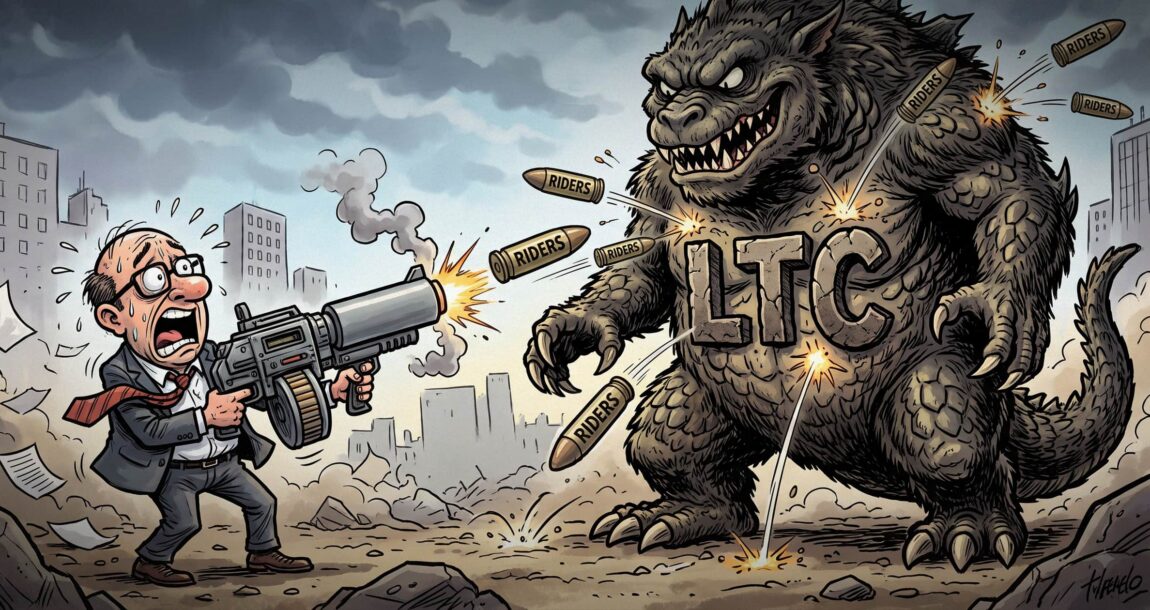
Let me tell you about a conversation I had recently with an agent who thought he had long-term care covered.

He had been selling life insurance policies with chronic care riders for years. He believed he was giving clients a practical solution. His clients agreed. They signed the paperwork, felt reassured and assumed they had addressed a major financial risk.
Then one of those clients needed care. The rider activated. Benefits began. The client was relieved — until she realized what was happening to her legacy. Every dollar paid for care was coming out of the death benefit. What looked like protection on the front end was, in reality, a slow erosion of the policy's death benefit — and the legacy the client had planned to leave behind.
That is the problem with many life insurance riders marketed as long-term care solutions. They can create the appearance of planning without fully addressing the underlying risk.
The gap between perception and reality
Chronic care, terminal care,and extended care riders have become increasingly common. They are easy to explain, familiar to many agents and often presented as a way to check the long-term care box.
But they are not the same as a dedicated long-term care plan. These riders generally rely on the death benefit. They have specific definitions, triggers and limitations. And in many cases, clients do not fully understand that using the benefit for care may significantly reduce what is left for heirs. That creates a gap between what clients believe they bought and what the policy actually delivers. For agents, that gap matters.

What clients actually need
True long-term care protection is designed around the realities of aging, not as an add-on to a life insurance policy. That distinction matters because care needs can last longer, cost more and unfold more unpredictably than many clients realize. A plan built specifically for extended care can address the risk more directly than a rider that simply repurposes another policy benefit.
Unlike riders, true LTC products are designed to preserve both independence and legacy —not force a choice between them. The differences are important: Dedicated LTC coverage is built for care expenses first, not as a secondary feature.
- It is designed to respond to actual care events, not narrower policy definitions.
- It can offer more flexibility in how care is funded and how benefits are used.
- It helps clients think more clearly about both independence and legacy. In other words, the product structure matters because the risk itself is real.
Why the math matters
Consider a client who buys a $250,000 life policy with a chronic care rider. If that rider provides $5,000 per month in care benefits, the available pool can be depleted in a little more than four years.
That may sound useful at first glance. But long-term care needs often do not fit neatly into that kind of timeline. And once those benefits are used, the remaining death benefit is reduced accordingly. The family may be relying on a legacy amount that has already been spent. This is where misunderstanding becomes expensive.
It is one thing for a client to choose a trade-off knowingly. It is another for that trade-off to be buried in the fine print or glossed over in the sales conversation.
Why advisors should pay attention
Advisors do not need to become long-term care specialists overnight. But they do need to understand the difference between a policy feature and a true LTC solution.
That difference is not academic. It affects client expectations, family planning and the quality of the advice being delivered. Advisors who understand the issue clearly are better positioned to identify when a rider may be insufficient, ask better planning questions, avoid unintentionally overstating what the product does and help clients align protection with actual care risk. In a market where clients are increasingly concerned about aging, independence, and family burden, that clarity has real value.
The larger issue with LTC
The rise of life insurance riders has created a feeling that long-term care is being addressed more often than it really is. That is the illusion. The reality is that many clients still lack meaningful planning for extended care, and many agents still rely on tools that do not fully solve the problem.
The result is a growing disconnect between perception and preparedness. That disconnect is where disappointment happens — and where trust can erode.
A better LTC standard
The conversation around long-term care should be honest from the start. If a product is intended to provide access to some care benefits while reducing a death benefit, clients should understand that clearly. If a client needs more comprehensive planning, that should be part of the discussion too.
The goal is not to criticize every rider. The goal is to make sure the client knows exactly what problem is being solved, what trade-offs are involved and what remains uncovered.
That is what professional advice should do. And for many agents, the most practical way to deliver that level of clarity is to partner with a certified long-term care specialist. The agent keeps the primary relationship. The specialist brings focused expertise on care planning, current product options and the nuances of funding independence. Clients receive better guidance. The agency strengthens trust and differentiation. Everyone wins.
The long-term care challenge is not being solved by clever packaging. It is being solved by clearer thinking, better planning and more honest conversations with clients.
Life insurance riders may have a place. But they are not a substitute for a true long-term care strategy. Advisors who recognize that distinction — and who know when to bring in specialized help — will serve clients more effectively and avoid the costly assumption that a box checked is the same as a problem solved.
© Entire contents copyright 2026 by InsuranceNewsNet.com Inc. All rights reserved. No part of this article may be reprinted without the expressed written consent from InsuranceNewsNet.com.



How AI is accelerating policy migration
MIB reports double-digit life insurance app activity in record August
Advisor News
- Retaining clients by giving them a memorable experience
- Addressing the longevity paradox
- Employers shift focus from retirement access to financial outcomes
- Helping widowed clients navigate their new financial reality
- Navigating client communication in a digital age
More Advisor NewsAnnuity News
- Farm Bureau P&C insurers post first underwriting gain since 2021
- Legacy Marketing, Malibu Life launch two fixed indexed annuities
- Changing client priorities are reshaping annuity conversations
- Solen Software acquires annuity software provider Cooperative Technologies
- MassMutual Expands Lending Options With New Secured Credit Line
More Annuity NewsLife Insurance News
Property and Casualty News
- Sponsored Content: The Spotlight – Fact or Fiction w/ Noble McIntyre
- Florida orders iDeal Auto, First Premier Home Warranty to stop business
- Everspan Announces Sale of Admitted Shell Company to Falvey Insurance Group
- Defiance Injury Law Expands Seattle Trial Team, Strengthens Medical Malpractice and Elder Abuse Practice, and Advances Catastrophic Trucking Initiative
- FEMA launches online flood insurance tool
More Property and Casualty News