

SEC rule on data analytics praised by consumer groups, ripped by industry
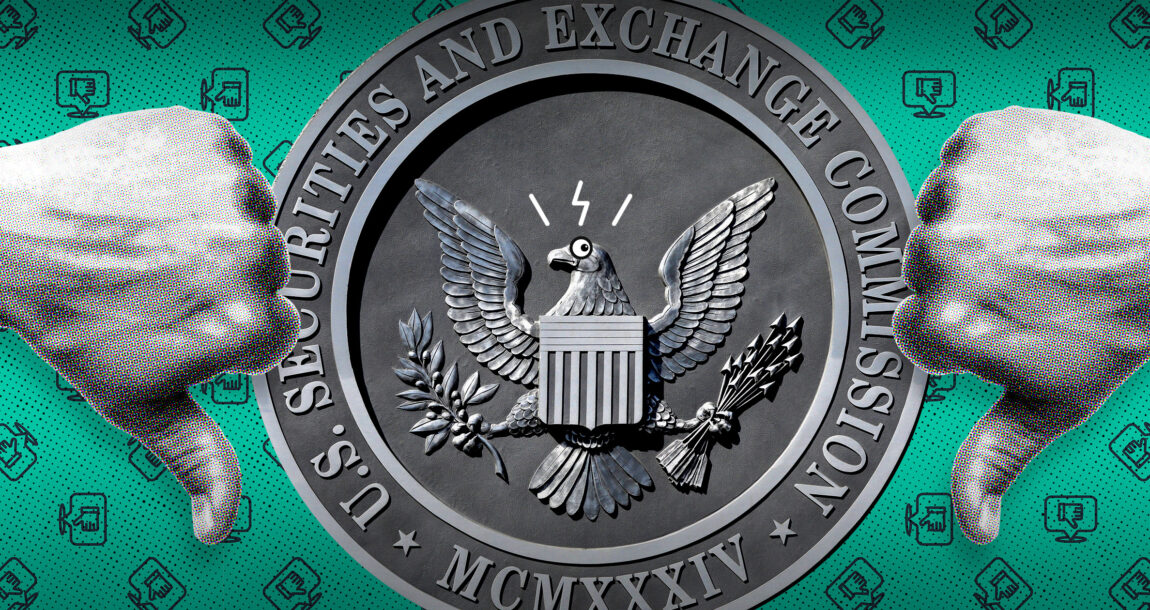
A Securities and Exchange Commission rule attempting to address conflicts of interest created by the use of predictive data analytics could stifle access to much-needed retirement products.
That's the response from financial services' groups.
It could also mean important protection from the wide-ranging power of big-data technology – so consumer advocates say.
It will be left to SEC regulators to figure out who makes the best case after a public comment period closed Tuesday on its Conflicts of Interest Associated with the Use of Predictive Data
Analytics by Broker-Dealers and Investment Advisers.
The SEC recorded 53 comments, most from industry players opposed to the rules. A Sept. 19 letter from six industry trade groups compared the SEC rule to the hated 2016 fiduciary rule from the Obama administration Department of Labor. The letter implied a concerted effort to kill the commission-based system.
"Effectively, like the DOL rule, this proposal puts the most pressure and additional costs on the brokerage model because normal commissions and similar payments are viewed as conflicts of interest," the letter reads. "So, what the DOL rule did, and what this proposal will do, is accelerate the trend away from brokerage services to advisory services. The problem with that is that almost all small investors get their advice through the brokerage model."

The letter is signed by the American Benefits Council, American Securities Association Finseca, Institute for Portfolio Alternatives, Insured Retirement Institute, and the National Association of Insurance and Financial Advisors.
From data analytics comes conflicts?
The SEC proposed the rules July 25, explaining the need to "address conflicts of interest associated with [the] use of predictive data analytics and similar technologies to interact with investors to prevent firms from placing their interests ahead of investors’ interests."
The commission voted 3-2, with the Democratic majority winning out. The two Republican commissioners – Hester Peirce and Mark Uyeda – criticized the proposal as overly broad and potentially hampering progress.
Firms would be required to eliminate or neutralize any conflicts, but firms would be permitted to employ tools that "they believe would address these risks and that are specific to the particular technology they use," consistent with the proposal, the SEC explained. The proposed rules would also require a firm to have written policies and procedures reasonably designed to achieve compliance with the proposed rules and to adhere to strict recordkeeping.
“All broker-dealers, investment advisers, and financial professionals have at least some conflicts of interest with their retail investors," SEC staff stated in an August 2022 staff bulletin. "Specifically, they have an economic incentive to recommend products, services, or account types that provide more revenue or other benefits for the firm or its financial professionals, even if such recommendations or advice are not in the best interest of the retail investor.”
Micah Hauptman is director of investor protection, and Dylan Bruce, financial services counsel, with the Consumer Federation of America. Technology can help firms accomplish the same nefarious goals, their letter claimed.
"Just as broker-dealers and investment advisers are incentivized to recommend products,
services, or account types that benefit their firms financially, even when it's not in investors’
best interest, firms may be incentivized to use technology to steer investors in the same
direction, without making formal recommendations," they wrote.
Overstepping its authority?
Andrew N. Vollmer is a senior affiliated scholar with the Mercatus Center at George Mason University. Vollmer served as deputy general counsel at the SEC from 2006 to early 2009. In that role he advised the SEC on enforcement proceedings, rule-making, appellate briefs, and adjudications, according to his official biography.
In his comment letter, Vollmer insists that the SEC has no legislative authority to create the rule in question. The agency claims its rulemaking authority derives from two subsections of statutes in the Dodd–Frank Wall Street Reform and Consumer Protection Act of 2010.
Vollmer argues that those subsections are subordinate to other sections of Dodd-Frank, "as well as the limiting language that recurs throughout" the bill.
"The SEC ignored the statutory limitations and treated the two subsections as free-standing authority for a far-reaching proposal of detailed and intrusive rules to govern and restrict the way BDs and IAs employ technological innovation," Vollmer wrote. "The structure and context of the statutes surrounding the two subsections on which the SEC relied show that Congress did not grant the rulemaking power the SEC grabbed."
InsuranceNewsNet Senior Editor John Hilton covered business and other beats in more than 20 years of daily journalism. John may be reached at john.hilton@innfeedback.com. Follow him on Twitter @INNJohnH.
© Entire contents copyright 2023 by InsuranceNewsNet.com Inc. All rights reserved. No part of this article may be reprinted without the expressed written consent from InsuranceNewsNet.com.


High cost of living is top financial wellness issue for employers, workers
3 ways insurers can prepare for climate change
Advisor News
- I started using AI, but what now?
- How to support an entrepreneur client with multiple businesses
- Could a narrower focus help grow your practice?
- U.S. debt hits $40 trillion: how to support concerned clients
- Flourish brings private-bank-like cash solution to MassMutual’s network
More Advisor NewsAnnuity News
- MassMutual Expands Lending Options With New Secured Credit Line
- Corebridge Financial Introduces Progressive Trigger, a First-of-Its-Kind Index Annuity Strategy Designed to Turn Missed Years into Future Opportunity
- Insurer proposes $1.1M deal to resolve CA teachers’ annuity fee lawsuit
- IMOs get frustrated with slow carrier adoption of faster technology
- New class-action lawsuit targets Delaware Life over annuity disclosures
More Annuity NewsHealth/Employee Benefits News
- Answering questions on Medicare open enrollment
Terry Savage: Your questions answered on Medicare open enrollment
- Make sure your Medicare coverage makes sense
Jill On Money: Medicare on my mind
- RESURFACED AUDIO: MIKE ROGERS SAYS HE WANTS TO KICK SICK PATIENTS OFF HEALTHCARE, SUPPORTS NEW COPAYS – MICHIGAN DEMOCRATIC PARTY
- It's 5 a.m. at a Princeton Fitness Center – What Do You Say to the Early Arrivals?
- Your questions answered on Medicare open enrollment
More Health/Employee Benefits NewsLife Insurance News