

Flood risk rises as coverage declines in KY, TN & WV
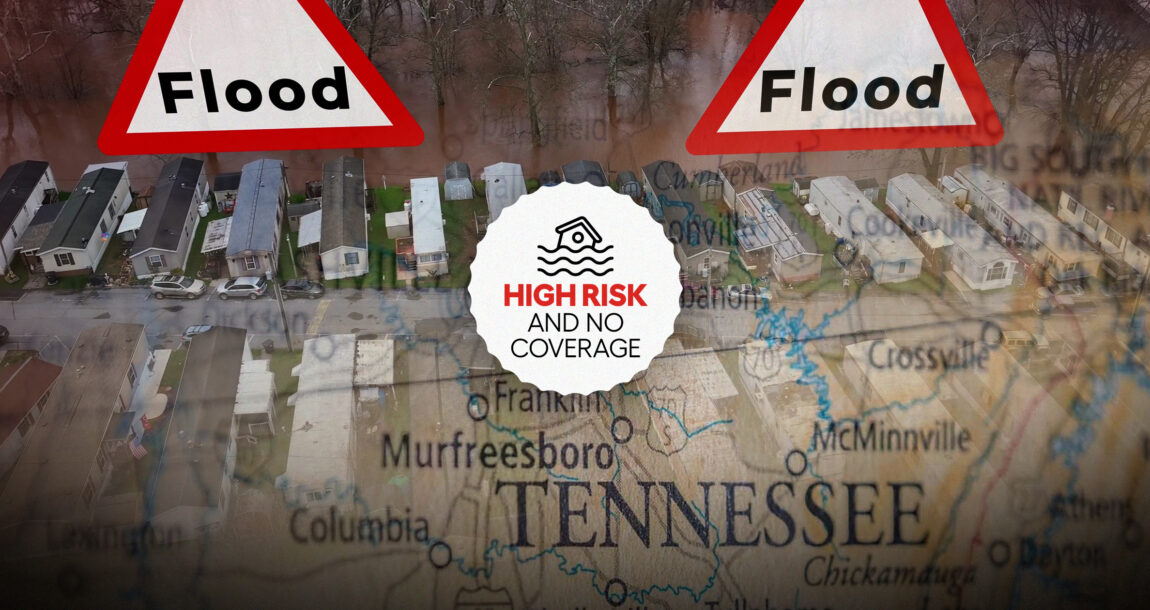
A string of deadly floods across central Appalachia in early 2025 has highlighted a dangerous truth: millions of residents in Kentucky, West Virginia, and Tennessee face growing flood risk while at the same time, their insurance participation is plummeting.
That’s the core finding of the latest issue from the Neptune Flood Research Group, which paints a stark picture of climate-fueled hazard, outdated infrastructure, and a deepening affordability crisis under federal flood insurance reforms.
The report catalogs two decades of catastrophic events: the 2010 Nashville flood ($2 billion in damage), the 2016 West Virginia flash flood (23 dead), the 2022 Eastern Kentucky flood (44 dead, 9,000 properties damaged), and two more events this year alone that killed 21 and triggered more than 1,300 insurance claims.
Yet for all the destruction, fewer than 1% of households across the three states carry flood insurance. In the 2022 Kentucky disaster, 95% of homes were uninsured.
"Tragedy in the making'
“This is not just an oversight,” said Neptune CEO Trevor Burgess. “It is a tragedy in the making. And we as an industry have a responsibility to help educate and guide the consumer to help protect themselves in the right way.”
Burgess blamed the problem on a broken system of risk communication, affordability challenges, and outdated federal flood maps.

“When we study this issue, 60% of homeowners mistakenly believe that their homeowner's insurance covers the risk of flooding,” he said. “When the real answer is zero.”
Based in St. Petersburg, Florida, Neptune is the largest private flood insurance company in the U.S. and the biggest alternative to the National Flood Insurance Program, with 235,000 customers in 49 states and Washington, D.C.
According to FEMA, about 365,000 buildings in these states lie in designated high-risk flood zones. But the First Street Foundation, which uses more advanced climate and rainfall modeling, puts the figure closer to 950,000 — more than 2.5 times FEMA’s estimate.
This underestimation contributes to low insurance uptake. Only homes with federally backed mortgages in FEMA-mapped Special Flood Hazard Areas must carry flood insurance. But in rural Appalachia, many homes are mortgage-free — 47% in West Virginia, and more than 38% in Kentucky and Tennessee — meaning they’re exempt from federal mandates.
Seeing flooding 'far away from the coast'
“If you're on the Gulf Coast or the Atlantic Coast, you're more likely to see higher flood uptake because they're subject to regular hurricanes and are required by law to buy flood insurance,” Burgess said. “But what we're seeing now – and we saw it with Hurricane Helene last year in North Carolina – is the frequency and severity of storms is getting to the point where we're seeing inland flooding far away from the coast, flooding that you used to only see on the coast.”
The result is a massive coverage gap in places repeatedly hit by floods. In Woodford County, KY, the highest NFIP participation rate is still under 30%. In many other counties, it’s below 2%.
Launched in 2021, Risk Rating 2.0 was intended to modernize the National Flood Insurance Program (NFIP) by pricing coverage based on individual property-level risk rather than broad flood zones. While hailed for improving actuarial soundness and pricing fairness, the new system has sent premiums soaring.
“Historically, because of the NFIP's subsidization, they were sending people the wrong signal, making them think their risk was low because the premiums were low,” Burgess said. “Everything was cheap, and everybody was subsidized, and people were getting these mistaken signals.”
In rural Kentucky and parts of West Virginia, some households are now facing annual increases of 200% or more. Premiums can consume up to 9% of household income in certain counties — far above affordability thresholds.
Exodus from the program cited
The reform is causing an exodus from the program. Between 2021 and 2024, NFIP policy counts dropped 17% across the three states, with participation falling fastest in high-risk, low-income areas.
Despite dismal uptake, NFIP has still paid more than $600 million in insured claims across the region since 2005. Jefferson County, KY alone saw $48.5 million in payouts from 2,300 claims. In Tennessee, Davidson County (home to Nashville) accounted for $175 million in losses. In West Virginia, Kanawha County topped the list with nearly $27.5 million.
These figures reflect only a sliver of actual damage. Because most properties aren’t insured, most recovery costs are borne by homeowners, local governments, or federal disaster aid programs. “The real economic loss is many multiples of the insured loss,” the report concludes.
As NFIP prices rise and participation falters, Neptune contends that private flood insurance market could help close the protection gap. Unlike the NFIP, private insurers can offer flexible underwriting, multi-peril coverage, and tailor-made products — potentially at lower cost.
The Neptune report ends with a call to action: “This is not just a matter of resilience, but of equity and fiscal responsibility.” With more than 950,000 Appalachian homes now at substantial flood risk, modernizing flood insurance access — through public-private collaboration, clear risk communication, and affordability initiatives — is imperative.
Whether FEMA, insurers, and state governments can respond fast enough remains to be seen. But with floodwaters rising and insurance coverage shrinking, the stakes for Appalachia have never been higher.
© Entire contents copyright 2025 by InsuranceNewsNet.com Inc. All rights reserved. No part of this article may be reprinted without the expressed written consent from InsuranceNewsNet.com.



Despite Medicaid pressures, Elevance reports strong Q1 earnings
‘Really huge’ opportunity for life insurance sales if riddle can be solved
Advisor News
- How student loan debt impacts 401(k) balances
- The ‘sandwich generation’ faces compounded barriers to retirement savings
- Benefit Costs Squeeze Schools, Driving Cuts, Tax Hikes And Difficult Tradeoffs
- Why client insurance needs could change even if their life doesn’t
- Most Gen Z investors think less than a year ahead when making financial decisions
More Advisor NewsAnnuity News
- Bitcoin gains ground in retirement market with Equitable annuity option
- Best’s Special Report: First-Half 2026 Net Income in U.S. Life/Annuity Insurance Industry Dips Slightly
- The next phase of life insurance investing
- Ty J. Young Wealth Management Acquires Senior Insurance Services, Expanding Its Growing Annuity Firm: Ty J. Young Wealth Management
- Guidance, bulletin or reg? NAIC debates form of annuity illustration update
More Annuity NewsHealth/Employee Benefits News
Life Insurance News