

Black Americans Show High Levels Of Financial Well-Being

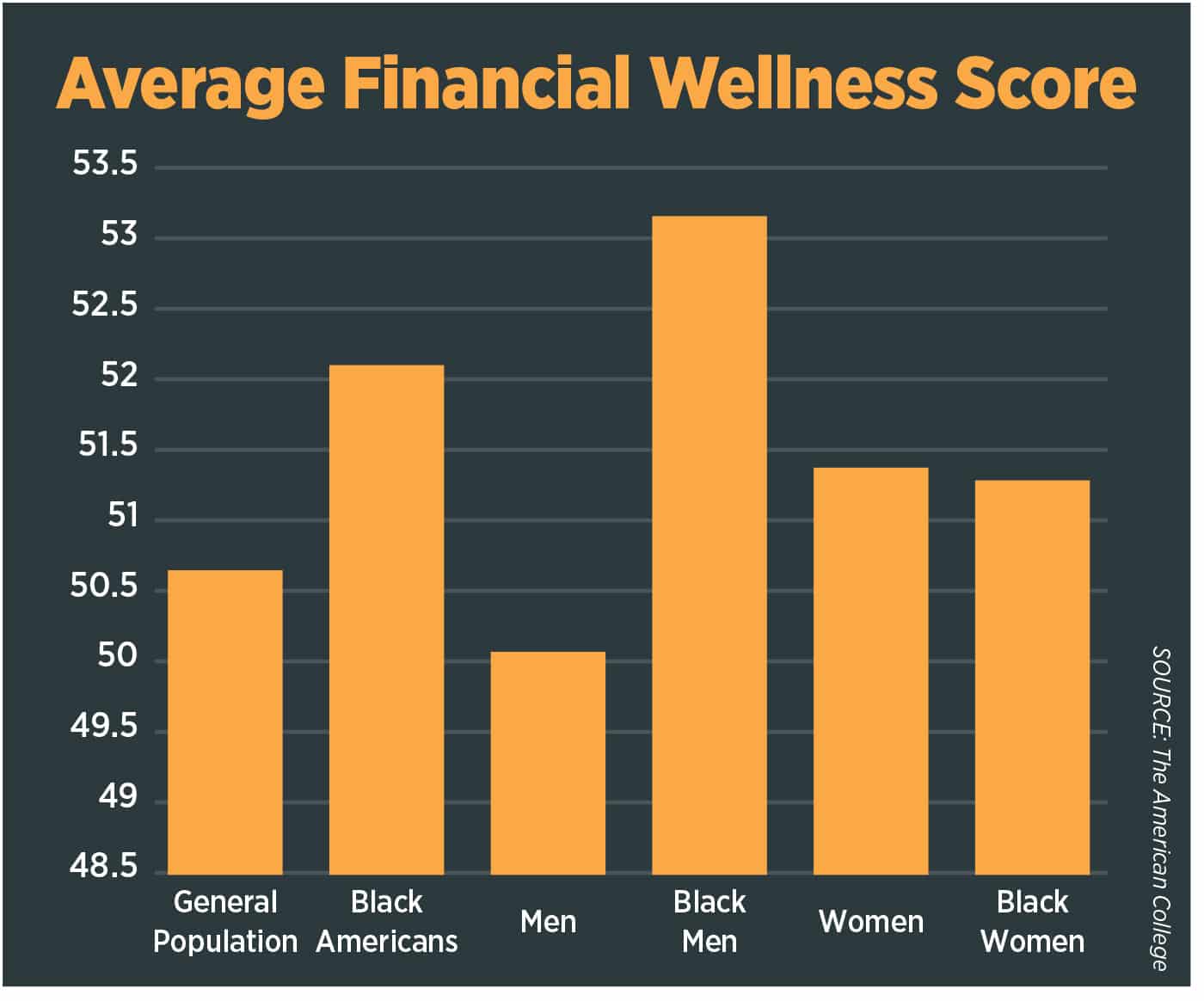
Black Americans make up a disproportionate percentage of lower income groups, yet have higher financial well-being scores than the general population.
That was a key finding of a study, Black America’s Financial Wellness, authored by Timi Joy Jorgensen, assistant professor and director of financial literacy at The American College. The research evaluates the main factors impacting financial well-being in the Black community to assess ways the financial services industry can guide Black Americans toward better financial success.
The bad news, according to the study, is that more than 1.2 million Black adults lack access to financial services, meaning no bank accounts, no access to credit, an unstable income and no financial literacy. Despite these findings, Black adults showed higher financial well-being scores than the general population.
The study also showed that Black Americans represent “a fertile and untapped marketplace of resilient and capable consumers ready for better financial alternatives … Therein lies the opportunity for unprecedented growth.”
How does the industry increase financial well-being? The report made these recommendations:

» Exposure. Share culturally competent education married with financially sound practices.
» Stability. Focus on the next goal — wealth creation comes after financial stability.
» Empowerment. Change the narrative around what it means to “make it” financially from “making money” to “making your money work for you.”
The report showed:
» More than 10% of Black men and 14% of Black women reported the lowest levels of access; only 8% of Black men and 7% of Black women experienced the highest tier of access. By comparison, 30% of white men experienced the highest tier of access, and only 3% of white men reported the lowest tier of access.
» Notably, financial stress was not a significant predictor of financial well-being for Black women, compared to the overall consumer market, where financial stress strongly predicted financial well-being.
Some of the report’s key findings address the following issues:
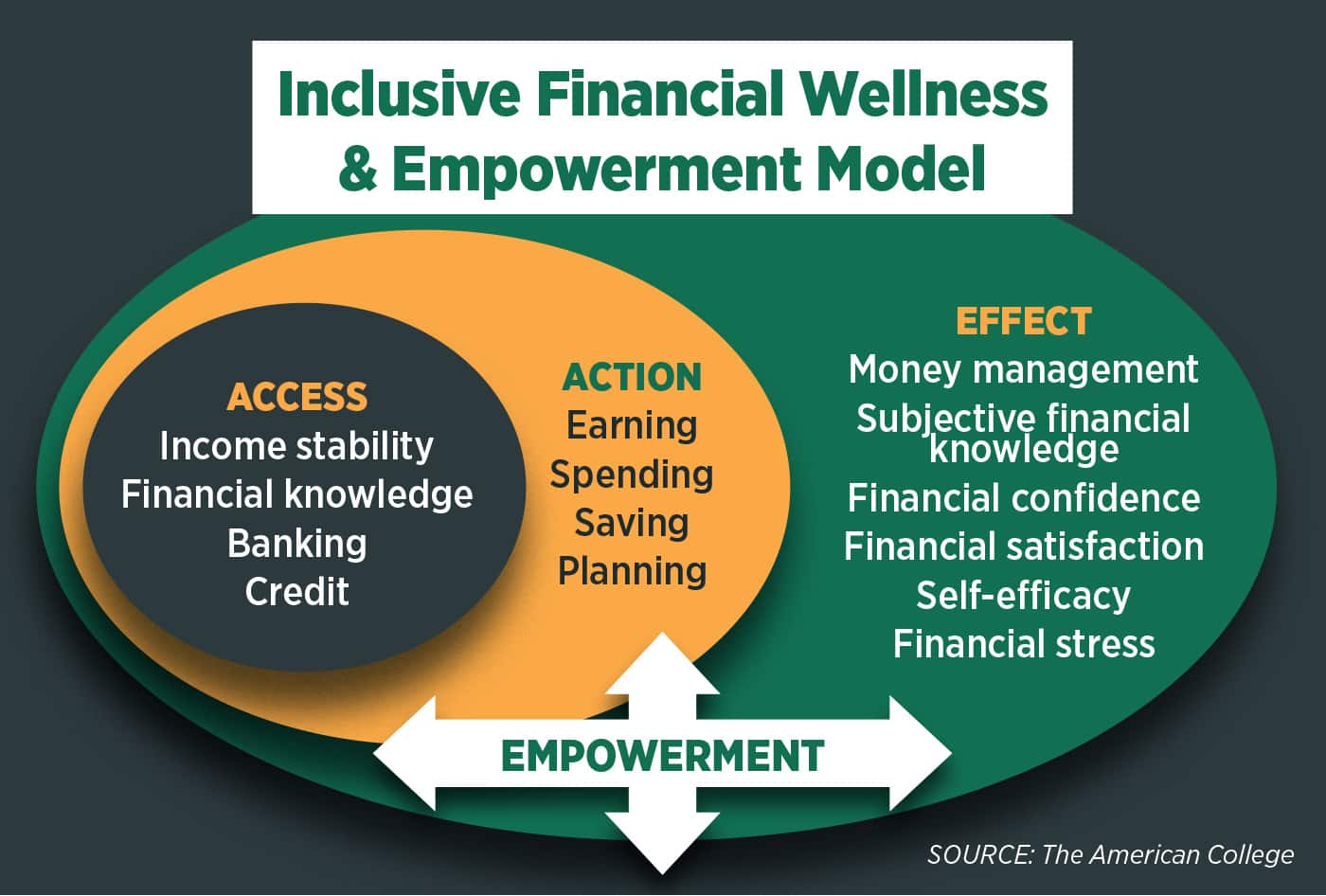
Economic empowerment and equality. Black Americans’ lack of access to financial education, stable incomes and financial products influences their ability to take action to address their financial situations.
Black America models financial resilience. Black women are key stakeholders in the financial culture and well-being of Black communities. The most significant predictors of financial well-being for Black women were actions. Tangible solutions for Black women to improve their financial well-being include paying credit cards in full, being able to handle an unexpected $2,000 expense, and regularly contributing to retirement savings.
The study further showed that when it comes to how Black women are thinking and feeling about money, the biggest predictors of financial well-being are financial satisfaction, financial confidence (or one’s ability to set a goal and accomplish it) and financial self-efficacy (knowing how to act and believing in one’s ability to follow through).
“Communities of color are not being served by financial advisors today,” said Chris Blunt, CEO of Fidelity & Guaranty. “So some of what we saw in this study is a wealth threshold issue, meaning most of the middle market today in the United States is not being well served, because so many financial advisors have moved up to serve affluent and high net worth clients. But even within those segments, I think you’re seeing communities of color not having access to advice and guidance.”
How can the industry respond? Blunt listed two issues.
“The first one is that the industry needs to do a better job of recruiting and attracting people within communities of color to be financial advisors. The other is addressing the lack of knowledge around different types of financial products and making an investment in basic financial literacy.”
Financial literacy is a generational issue, Jorgensen said.
“Communities teach the next generation how they interact with financial services. So I think part of this is a learned gap, both on the financial services side and on the community side, that needs to be addressed through some creative solutions that might bring the community more to the financial services sector, but also bring the financial services sector more to the communities.”
Blacks, Hispanics Worried About Retirement Income
A recent F&G survey revealed that 62% of Black American and 74% of Hispanic American investors are worried about their retirement income as a result of the pandemic compared with only 57% of whites, underscoring how COVID-19 and social unrest has further deepened financial disparities across racial lines.
Other findings from F&G’s survey include:
» COVID-induced risk aversion. Forty-three percent of Black American investors “strongly agree” that the events of the first six months of COVID-19, paired with social unrest and market volatility, have made them less likely to take financial risks, while only 29% of whites reported the same.
» Appetite for new financial products. While about one in four white American investors (28%) report they are more likely to explore new financial products that they haven’t used before post-COVID-19, 41% of Black American investors and nearly one in two Hispanic American investors (49%) say the same.
» Lack of education around role of guaranteed income. Nearly one in two Black American investors have never used a financial advisor (47%) and another 21% have used one in the past but do not currently. This statistic points to an education gap around which products can help create a financial safety net, even amid turbulent market conditions.
Blunt said the findings from his company’s survey showed “there’s a great opportunity to talk to people and ask them, ‘How did COVID-19 change the way you’re thinking about retirement? What’s keeping you up at night?’”


Legislation Would Encourage Retirement Product Innovation
The Impact Of Genetic Testing On Life Insurance Coverage
Advisor News
- Nearly half of nonretirees doubt they will fully retire
- How much could failure to fund Social Security cost average Americans?
- How can more Americans achieve financial independence?
- Savers vs. spenders: How money management attitudes impact financial confidence
- Demonstrating the value of life insurance to Gen Z
More Advisor NewsAnnuity News
- DOL slams pension risk transfer lawsuit as ‘opportunistic’ litigation
- AM Best Affirms Credit Ratings of New York Life Insurance Company and Its Subsidiaries
- Advisors don’t have an annuity problem; they have an integration problem.
- Agentic AI is transforming insurance sales both for consumers and agents
- Canvas steps into the direct-to-consumer market that has yet to take off
More Annuity NewsHealth/Employee Benefits News
- Va. hospitals predict $31B reduction in state's Medicaid funding if proposed CMS rule passes
- Va. hospitals predict $31B reduction in state's Medicaid funding if proposed CMS rule passes
- New Findings from National Health Insurance Service Ilsan Hospital in the Area of Kidney Transplants Reported (Serum Proteomic Profiles of Microvascular Inflammation in Donor-specific Antibody-negative and C4d-negative in Kidney Transplantation): Transplant Medicine – Kidney Transplants
- AM Best Upgrades Credit Ratings for Delta Dental of California and Its Affiliates
- NEW DATA: RYAN MACKENZIE-BACKED HEALTHCARE CUTS CAUSE MORE THAN 13,000 PENNSYLVANIANS IN THE LEHIGH VALLEY TO DROP INSURANCE COVERAGE
More Health/Employee Benefits NewsLife Insurance News
- AM Best Affirms Credit Ratings of Bao Viet Insurance Corporation
- AM Best Affirms Credit Ratings of New York Life Insurance Company and Its Subsidiaries
- Agentic AI is transforming insurance sales both for consumers and agents
- USAA introduces Secure Start whole life program for children
- Best’s Market Segment Report: AM Best Maintains Stable Outlook on South Korea’s Non-Life Insurance Market
More Life Insurance News