

Relief Package Includes $600 Payments; $284B In Business Loans
Dec. 21—A new federal relief package is said to feature direct "stimulus" payments of $600 to qualified adults and $600 per child.
It is believed that the $900 billion package would invest $284 billion into Paycheck Protection Program small business loans, and include funds for loans from small and minority-owned lenders. It would fund another $20 billion for small business grants and $15 billion to live event venues, according to early reports.
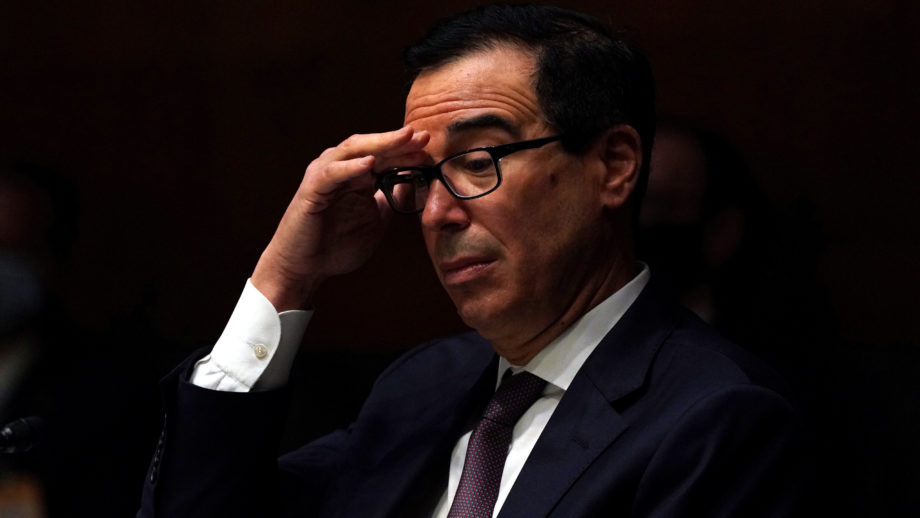
Treasury Secretary Mnuchin expects direct deposits of $2,400 for a family of four to begin arriving as soon as next week, a Washington Post reporter said.
The $600 direct payments are to be paid to individuals making up to $75,000 per year and couples making $150,000 per year — with payments phased out for higher incomes — with $600 additional payments per dependent child, the Associated Press has reported.
Also added would be a $300 federal unemployment supplement and temporary maintenance — until mid-March — of pandemic-era programs that expanded unemployment insurance eligibility.
Some key federal jobless benefits have been nearing expiration, including the federal Pandemic Unemployment Assistance (PUA) program.

PUA benefits provide up to 39 weeks of unemployment payments to those who are not usually eligible for regular state aid but lose work, through no fault of their own, in the midst of the ongoing COVID-19 pandemic. Gig workers in particular were expected to benefit from PUA payments.
Kim Hall, director of the Ohio Department of Job and Family Services (ODJFS), had noted that the state's lower unemployment rate triggered federally mandated expirations in the federal programs, including PUA.
That unemployment rate had dropped to 5.6% in October from 8.3% in September. But since then, the October jobless rate has been revised upward to 6.1%, and the November unemployment rate of 5.7% has been released.
Questions were sent Monday morning to an ODJFS spokesman.
Other expected features of the bill: Rental assistance would be extended until Jan. 31, $20 billion would be made available for vaccine payment aid and an increase in SNAP funding — the Supplemental Nutrition Assistance Program, formerly the food stamp program — of 15%.
The package, if passed, would also deliver $54 billion to public K-12 schools affected by the pandemic and $23 billion for colleges and universities; $4 billion would be awarded to a Governors Emergency Education Relief Fund; nearly $1 billion for Native American schools, according to the AP's account.
It was unclear Monday morning when a congressional vote would take place.
Ohio Sen. Rob Portman and his Problem Solvers Caucus released a statement Sunday evening praising the emergency relief package.
"Following months of deadlock in Congress while millions of Americans were at risk of losing their lifelines, we put our heads down and worked around the clock for nearly a month to produce a bipartisan, bicameral bill to address the emergency needs of our country," said the statement released by Portman's office. "We are relieved Congress has finally agreed on a COVID-19 emergency relief package.
"Our consensus bill was the foundation of this final package and we applaud Congressional leadership for finishing what we started," the statement added. "Workers, businesses, and families need help right now and we urge our colleagues to quickly pass this bill and President Trump to immediately sign the legislation to provide Americans with relief."
___
(c)2020 the Dayton Daily News (Dayton, Ohio)
Visit the Dayton Daily News (Dayton, Ohio) at www.daytondailynews.com
Distributed by Tribune Content Agency, LLC.


Get insurance companies on your side with REVIV’s Covid-19 management software which Hap Klopp hails as “revolutionary”
IoT Medical Devices Market 2020 Share, Size, Future Demand, Global Research, Top Leading Player: GE Healthcare, Medtronic, Abbott Laboratories, Siemens, Johnson & Joh
Advisor News
- How much could failure to fund Social Security cost average Americans?
- How can more Americans achieve financial independence?
- Savers vs. spenders: How money management attitudes impact financial confidence
- Demonstrating the value of life insurance to Gen Z
- Poor money habits are a dealbreaker in a new relationship
More Advisor NewsAnnuity News
- Canvas steps into the direct-to-consumer market that has yet to take off
- The next growth phase in life/annuities depends on modernization
- CA judge certifies class action in teachers’ lawsuit over in-plan annuity fees
- Globe Life Inc. (NYSE: GL) Records 52-Week High Thursday Morning
- AM Best Managing Director Joins ‘Target Topics’ Podcast to Discuss State of Delegated Underwriting Authority Enterprises Market
More Annuity NewsHealth/Employee Benefits News
- Iowa health insurers propose premium increases for ACA customers
- Atrium pushes back after State Health Plan leaves healthcare network out of Tier 1
- BUILDING A COMPETITIVE BENEFITS PACKAGE IN 7 EASY WAYS
- People with this Medicare plan could soon go out-of-network at UHealth hospitals
- Findings from Yonsei University Advance Knowledge in Demography (Different Understandings of Scientific Research in the Use of De-identified Personal Sensitive Data: South Korea, in Comparative Perspectives): Science – Demography
More Health/Employee Benefits NewsLife Insurance News
- Best’s Market Segment Report: AM Best Maintains Stable Outlook on South Korea’s Non-Life Insurance Market
- Horace Mann Strengthens Customer Relationships and Accelerates Long-Term Growth Through Transactions with Medical Mutual of Ohio
- Regulators: ‘No firm conclusions’ from first offshore reinsurance filings
- Allianz Life Study Finds Americans Struggle to Shift From Retirement Saving to Spending
- The next growth phase in life/annuities depends on modernization
More Life Insurance News