

Medicaid on the chopping block as Republicans release budget draft
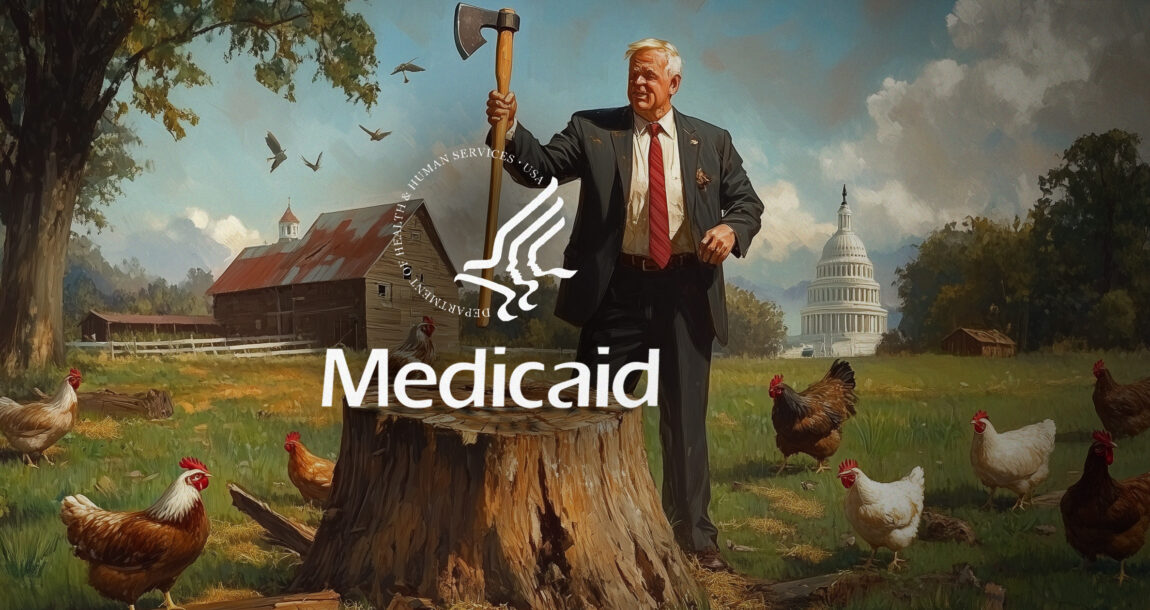
House Republicans proposed slashing Medicaid as a way to pay for federal budget cuts that would fund a GOP agenda that includes tax cuts, border security and energy production.
Last week, the House Budget Committee considered a plan that would instruct the Energy and Commerce Committee — which has jurisdiction over Medicaid — to find $880 billion in savings over the next 10 years.
More than 72 million were enrolled in Medicaid as of October 2024, according to the most recent Medicaid enrollment data. Another 7.2 million were enrolled in Children’s Health Insurance Programs. In some states, Medicaid coverage from October 2024 revealed that over 72 million people were enrolled in Medicaid, while 7.25 million were enrolled in Children's Health Insurance Programs. Medicaid covers more than 30% of the population in some states. Medicaid spending in 2023 was nearly $872 billion, the Centers for Medicare & Medicaid Services reported.
Medicaid currently provides comprehensive health care and long-term care to 1 in 5 Americans and represents about $1 out of every $5 spent on health care in the U.S.
KFF estimates that the proposed Medicaid cuts would boot 20 million recipients from the program.
The changes that Republicans are eyeing include:

- Capping Medicaid spending on a per capita basis at a potential savings of $900 billion per year.
- Rolling back the enhanced federal matching rate for states that expanded Medicaid eligibility under the Affordable Care Act. That has the potential to save $561 billion.
- Lowering the 50% floor for the traditional Medicaid population, for savings of up to $387 billion.
A major issue is changing the federal medical assistance percentage, or FMAP, which is how much the federal government, as opposed to states, will contribute to Medicaid expenditures.
KFF analyzed the impact of rolling back the federal match for states that expanded Medicaid eligibility under the ACA.
In states that expanded Medicaid under the ACA, the federal government pays 90% of the costs for adults enrolled in coverage under the expansion. Forty-one states expanded Medicaid coverage under the ACA to nearly all adults with income up to 138% of federal poverty level. Those Medicaid expansion enrollees represent nearly one-fourth of Medicaid enrollment as of March 24 and one-fifth of total Medicaid spending as of fiscal year 2023.
The FMAP for services used by people eligible through traditional Medicaid is determined by a formula set in statute. The formula is designed so that the federal government provides a match rate of at least 50% and provides a higher match rate for states with lower average per capita income. For FY 2026, the traditional FMAP will range from 50% to 77%.
Robin Rudowitz, KFF vice president and director of the Program on Medicaid and the Uninsured, put some of these proposed Medicaid cuts into perspective.
The proposed cuts would slash about one-third of current federal Medicaid spending, she said.
“These policy changes would fundamentally change how Medicaid financing works,” she said in a recent post. “Cuts of this magnitude would put states at financial risk, forcing them to raise new revenues or reduce Medicaid spending by eliminating coverage for some people, covering fewer services, and [or] cutting rates paid to physicians, hospitals and nursing homes.”
She added ways to put the House Republicans’ numbers in perspective:
- Medicaid cuts of $2.3 trillion account for nearly half (46%) of all proposed federal cuts, making it the largest source of spending reductions.
- $2.3 trillion over 10 years represents nearly one-third (31%) reduction from Congressional Budget Office's projected federal Medicaid spending of $7.5 trillion.
- While cuts would likely compound and be more severe over time, if the cuts were evenly distributed over the 10-year period a reduction of federal funding for states of $230 billion would represent 22% of all federal revenues to states and 39% of all Medicaid revenues to states. Given that policy changes would likely have different implications across states, this could be a much higher share of federal Medicaid revenue in some states compared to others.
© Entire contents copyright 2025 by InsuranceNewsNet.com Inc. All rights reserved. No part of this article may be reprinted without the expressed written consent from InsuranceNewsNet.com.



Panel: AI alone won’t be enough to carry insurtechs in 2025
It’s time for the insurance sector to ramp up its cyber defenses
Advisor News
- CT governor’s candidates claims: What’s true, and what’s misleading
- Retaining clients by giving them a memorable experience
- Addressing the longevity paradox
- Employers shift focus from retirement access to financial outcomes
- Helping widowed clients navigate their new financial reality
More Advisor NewsAnnuity News
- Symetra and TIAA Announce Launch of Mariner Re
- Jackson Launches Suite of Fixed Index Annuities Focused on Accumulation
- Farm Bureau P&C insurers post first underwriting gain since 2021
- Legacy Marketing, Malibu Life launch two fixed indexed annuities
- Changing client priorities are reshaping annuity conversations
More Annuity NewsHealth/Employee Benefits News
- AM Best Assigns Credit Ratings to TMHCC (CI) Insurance SPC Ltd.
- Building trust in a more complex Medicare Advantage market
- Access Health CT opens health plan enrollment for 2027
- Cost of employer-sponsored health insurance plans rises again, nonpartisan survey finds
- Centene sues feds over low ratings for senior health plans
More Health/Employee Benefits NewsLife Insurance News