

Market factors or government policies? Opinions differ on lowering drug costs
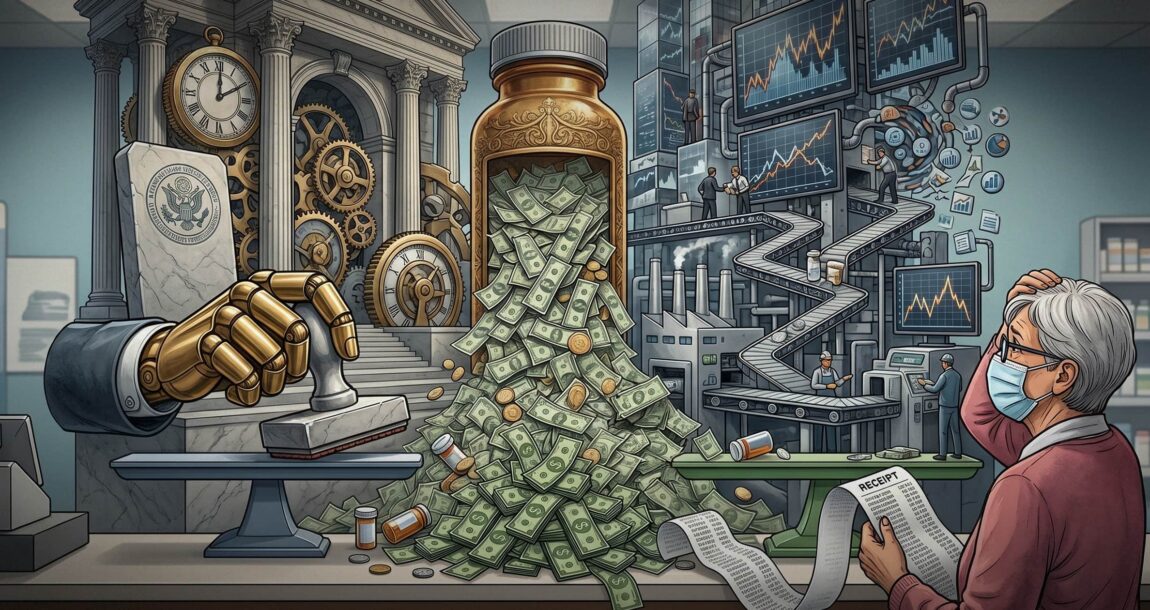
One of the few opinions that Americans across the political spectrum agree on – prescription drug costs are too high. But what can be done to lower those costs? That’s where opinions differ.
The Senate Committee on Health, Education, Labor and Pensions held a hearing on how to make prescription drugs more affordable. While discussing proposed legislation to bring down the cost of drugs, senators and witnesses disagreed on the approach.
Sen. William Cassidy, R-La., committee chair, introduced the MVP plan, which stands for Money and Value for Patients. He announced the MVP agenda earlier as a market‑based alternative to Democratic-supported drug‑pricing approaches. The plan is framed around reducing what patients pay at the pharmacy and counter, instead of imposing government price controls.
The MVP plan’s three pillars include:
- A proposal to provide advanceable, refundable tax credits—up to $2,000 for a family of four—that would be deposited into pre‑funded health savings accounts or similar patient‑controlled accounts. While the credits are not drug‑specific, Cassidy has said they are meant to help people afford prescription drugs and deductibles.
- Expanded drug price transparency, enabling patients to see the actual price of prescription drugs, the differences between cash prices and insurance‑negotiated prices, and lower‑cost alternatives, including generics and cost‑sharing at the point of sale.
- Accelerating generic and biosimilar competition, which Cassidy has described as “what works” in lowering prices. At the HELP Committee hearing, Cassidy cited that generics account for roughly 90% of prescriptions and generate hundreds of billions in savings, while biologics — although fewer in number — drive a disproportionate share of spending.
“We need to get patients what they need at the lowest possible price,” Cassidy said at the opening of the hearing.
He called for a free-market approach to bring down drug costs. “Intellectual property protection incentivizes and rewards ingenuity, and drives the work needed to find treatments and cures,” he said. “Government overreach will harm Americans in the long run.”

Government intevention is necessary
The ranking member of the HELP Committee, Sen. Bernie Sanders, I-Vt., introduced the Prescription Drug Price Relief Act, which would reduce U.S. prescription drug prices by directly linking them to prices paid in other wealthy countries. The bill reflects Sanders’ position that Americans pay far more for prescription drugs than patients abroad and that government intervention — rather than market competition alone — is necessary to bring prices down.
Sanders’ bill would cap prescription drug prices in the U.S. at no more than the median price paid for the same drug in a group of peer countries (typically Canada, the U.K., France, Germany, and Japan). If a drug manufacturer charges more than that benchmark in the U.S., it would face significant financial penalties. Those penalties are designed to force compliance, instead of nudging companies toward lower prices.
FDA could help lower drug prices
Dr. Brian J. Miller, associate professor at The Johns Hopkins University School of Medicine, told the HELP Committee that Food and Drug Administration regulation — not payment policy alone — is a powerful but underused lever to lower drug prices through competition.
Miller said he believes drug affordability can be improved substantially by reforming FDA product regulation to reduce unnecessary barriers to entry, particularly for biosimilars and generics. Competition depends not only on pricing rules but on how easily products can reach the market.
“Changing FDA product regulation while preserving efficacy and safety standards offers a tool to improve price competition,” he said.
Miller said modernizing drug review and evidence generation can lower the costs of a drug’s entrance to market while preserving the FDA’s safety standards.
“FDA drug review is treated as both an artisanal and a manual process,” he said.
Public subsidies are to blame
Robert Weissman, copresident of Public Citizen, contended that high drug prices in the U.S. are the result of government‑created monopolies layered on massive public subsidies — not a free market.
He argued that the federal government funds much of the foundational research, and grants long patent and exclusivity monopolies. He also said that the government’s forbidding its largest buyer - Medicare - from negotiating prices creates a system almost guaranteed to produce price gouging.
“There is no ‘free market’ for the pharmaceutical industry,” he said.
“The industry relies on massive public subsidies; it exploits government‑granted monopolies; and it leverages its political power to prevent its largest purchaser from exercising its negotiation power.”
Weissman argued that recent Trump administration efforts — such as secret most-favored-nation deals and the TrumpRx website — either do little, risk backfiring or actively undermine Medicare negotiation. Instead, he called for reforms that force competition or empower government buyers.
© Entire contents copyright 2026 by InsuranceNewsNet.com Inc. All rights reserved. No part of this article may be reprinted without the expressed written consent from InsuranceNewsNet.com.



Health insurers used hidden online tracking tools, lawsuits allege
LTD claims: What advisors and clients must know
Advisor News
- Retirement providers turn to digital engagement to retain assets
- Looking out for clients with diminished mental capacity
- House panel advances CLEAR Forms Act backed by IRI
- Modifying life insurance based on evolving needs
- Gen X faces ‘pension envy’ as they head into retirement
More Advisor NewsAnnuity News
- Global Atlantic Announces Launch of ForeLifetime Income, a New Fixed Index Annuity
- A-Cap strikes back with lawsuit accusing SC regulators of sloppy process, leaking secrets
- AM Best to Discuss Its Views on Private Credit Surge and Risks at 2026 NAIC/NIPR Insurance Summit
- OID recovers $260M in life insurance benefits
- NUNN BILLS TO COMBAT PAYMENT SCAMS, CUT FINANCIAL RED TAPE PASS FINANCIAL SERVICES COMMITTEE
More Annuity NewsHealth/Employee Benefits News
Life Insurance News