

How COVID-19 Is Making Employers More Receptive To Benefits
Courtesy of LIMRA
The COVID-19 pandemic has brought many operational changes to U.S businesses. It has also drawn attention to the importance of many types of financial protection, which may increase employers’ interest in offering certain benefits.
A new LIMRA survey provides insights into recent changes to their business practices, interest in modifying their benefits packages, enrollment strategies and their relationships with their carriers.
About 25% of employers say COVID-19 has made them more interested in making changes to their insurance benefit programs within the next 18 months.
While approximately 4% of employers have already dropped an insurance benefit as a result of COVID-19 and 16% are considering doing so, 40% of employers say the coronavirus outbreak has affected their views of the importance of benefits, and these are almost universally shifts toward viewing benefits as more important now.
Large companies and those most concerned about COVID-19 are the most likely to say their opinions have changed.

Benefits that are directly related to healthcare — such as hospital indemnity, critical illness and major medical plans — are the most likely to have experienced a boost in perceived importance.
“We’ve also seen increased interest in some supplemental non-insurance benefits — particularly telehealth services, mental health benefits and employee assistance programs,” says Kimberly Landry, assistant research director, Workplace Benefits Research at LIMRA.
Some employers that do not already offer supplemental benefits say they have become interested in adding them because of the pandemic (chart).

Changes Brought By Remote Work
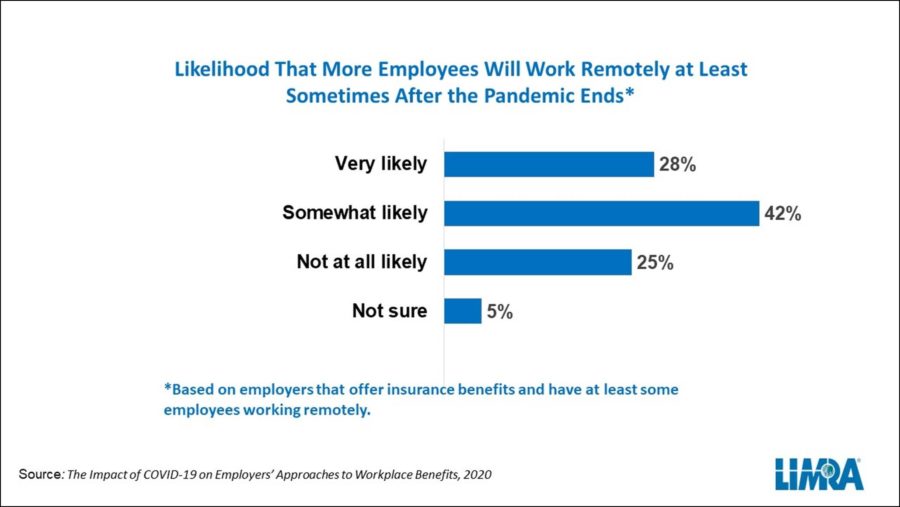
The pandemic not only changed employers’ perceptions around the importance of benefits, but also shifted their stance on remote working. Almost 4 in 5 employers say they currently have at least some of their staff working remotely.
More than two thirds of these employers think a portion of their workforce will continue to work remotely at least some of the time after the pandemic has ended.
As companies re-evaluate their remote working policies, they may have an increased need for electronic enrollment platforms and other services that make it easier to offer benefits to remote workers.
Overall, the study finds the majority of employers are highly satisfied with the support they have received from their insurance benefit carriers during the COVID-19 outbreak. The study revealed the most important types of support employers want from their insurance carriers are:
1. Helping them communicate with employees about the pandemic;
2. Keeping them informed about relevant legislative changes; and
3. Offering more online self-service options for employees.



Annuities Begin To Even Out After A Wild Springtime Ride
Is Your Practice More Like Blockbuster Or Like Netflix?
Advisor News
- Could a narrower focus help grow your practice?
- U.S. debt hits $40 trillion: how to support concerned clients
- Flourish brings private-bank-like cash solution to MassMutual’s network
- Majority of Americans concerned recent market highs are unsustainable
- GLP-1 users choose between medication and retirement saving
More Advisor NewsAnnuity News
- MassMutual Expands Lending Options With New Secured Credit Line
- Corebridge Financial Introduces Progressive Trigger, a First-of-Its-Kind Index Annuity Strategy Designed to Turn Missed Years into Future Opportunity
- Insurer proposes $1.1M deal to resolve CA teachers’ annuity fee lawsuit
- IMOs get frustrated with slow carrier adoption of faster technology
- New class-action lawsuit targets Delaware Life over annuity disclosures
More Annuity NewsHealth/Employee Benefits News
Life Insurance News