

More than 1 in 4 US adults reports having medical debt
More than one in four U.S. adults (27%) reported that they or their family members owed medical debt in 2025, including 26% of adults with health insurance, according to a new Urban Institute analysis supported by the Robert Wood Johnson Foundation. The findings show that health insurance does not guarantee families can afford the care they need.
More than half of adults who reported having medical debt (54%) said their families owed at least $1,000, and 16% owed $5,000 or more. The analysis shows that, for many families, the burden extended well beyond an unpaid bill. More than one-third of adults with medical debt (35%) said they or a family member had been contacted by a collection agency about unpaid medical bills in the past year. Overall, 15% of U.S. adults reported having family medical bills that were past due or that they were unable to pay.
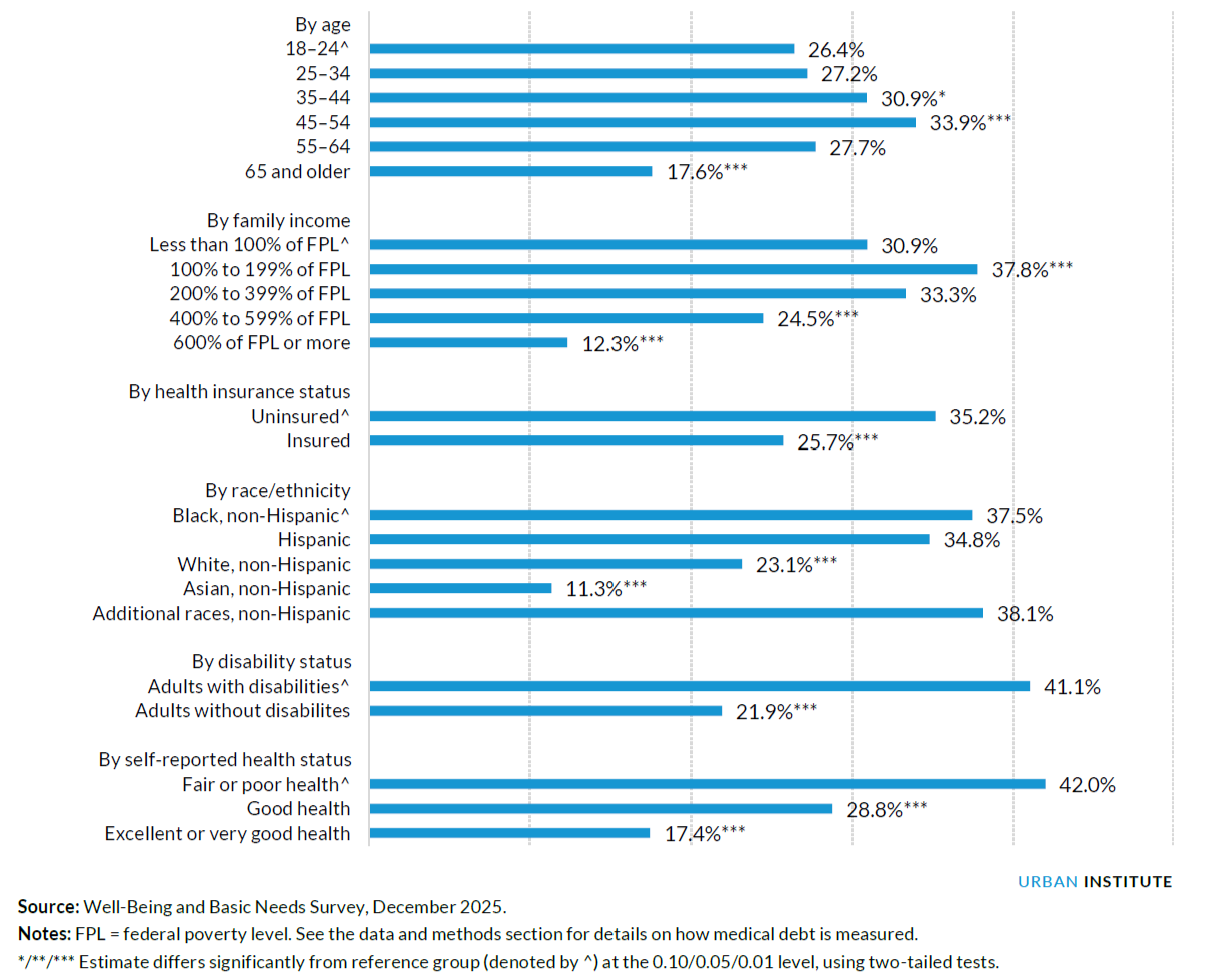
Adults with low incomes, those with a disability or in fair or poor health, and those ages 45 to 54 were more likely to have medical debt. More than one in three Black adults (38%) and Hispanic adults (35%) reported holding medical debt, which reflects ongoing health and economic inequities.
Nearly one in five adults age 65 and older (18%) reported that they or a family member owed medical debt, despite nearly all people in this age group having health coverage through Medicare.
Share of U.S. adults who had medical debt in December 2025

“Health insurance does not shield people from rising healthcare costs and the crushing burden of medical debt,” said Katherine Hempstead, senior policy officer at the Robert Wood Johnson Foundation. “Historic cost increases and coverage losses are forcing impossible tradeoffs between healthcare and other basic needs.”
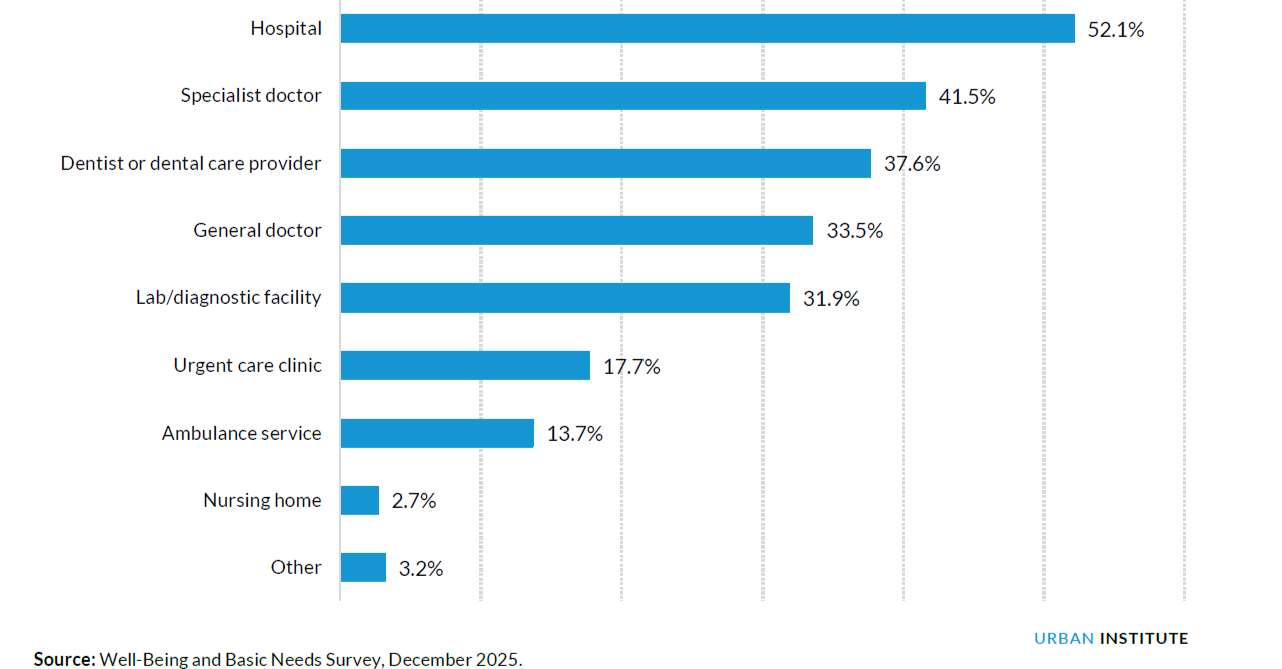
The study found that hospitals were the largest reported source of debt, with just over half of adults with medical debt (52%) owing money for hospital services. Other reported sources of medical debt include specialists (42%), dental care providers (38%), and general doctors (34%).
Reported debt sources among U.S. adults who held medical debt in December 2025
“This analysis shows medical debt is pervasive, affecting adults across age groups and income levels and people with and without health insurance,” said Michael Karpman, principal research associate at the Urban Institute. “It will be important to monitor how the burden of medical debt shifts as policies restricting access to Medicaid and Marketplace coverage take effect.”
The study suggests medical debt challenges could worsen in the coming years, as employers respond to the rising price of health insurance by shifting costs to employees and millions of people are expected to lose Medicaid and Marketplace coverage due to federal policy changes.
Methodology
The study examined the prevalence and burden of medical debt among U.S. adults ages 18 and older using December 2025 data from the Urban Institute’s Well-Being and Basic Needs Survey, a nationally representative survey of more than 10,000 adults.
Read the full analysis, More Than One-Quarter of U.S. Adults Had Medical Debt in 2025.


1 in 3 U.S. workers do not have a legacy plan in place
Gen X and millennials seek new retirement model
Advisor News
- Gen X and millennials seek new retirement model
- Are families ready for the costs of aging at home?
- When a client moves, their insurance plan needs to move, too
- A rising retirement challenge: The license to spend
- Financial stress leaves less room for retirement saving
More Advisor NewsAnnuity News
- Gen X and millennials seek new retirement model
- Global Atlantic names Dan Farrelly head of IMO and IBD channels
- A rising retirement challenge: The license to spend
- What lower interest rates mean to annuity payouts
- AM Best downgrades A-Cap insurers amid financial and regulatory troubles
More Annuity NewsLife Insurance News
Property and Casualty News
- Police investigating after explosion damages Tacoma business
- Jim Beam column: Flood insurance too expensive
- Extreme weather damage is leaving homeowners with long-term household debt
- A record-quiet hurricane season: what it means for property insurance
- Is travel insurance useless in a crisis? Read the fine print
More Property and Casualty News