

How technology is changing personal injury auto claims
The auto insurance claims operation in 2026 looks almost nothing like it did five years ago. Frequency has remained relatively stable, but severity continues its relentless climb -- bodily injury severity rose 9.2% year-over-year according to recent industry data, and property damage severity increased 2.5% over the same period. At the same time, the technology stack available to claims organizations has expanded so rapidly that it is reshaping every phase of the process, from first notice of loss through settlement.

For claims professionals, adjusters and underwriters, the question is no longer whether to adopt these tools. It is how to deploy them effectively without sacrificing the human judgment that complex claims still demand.
The automation wave in claims evaluation
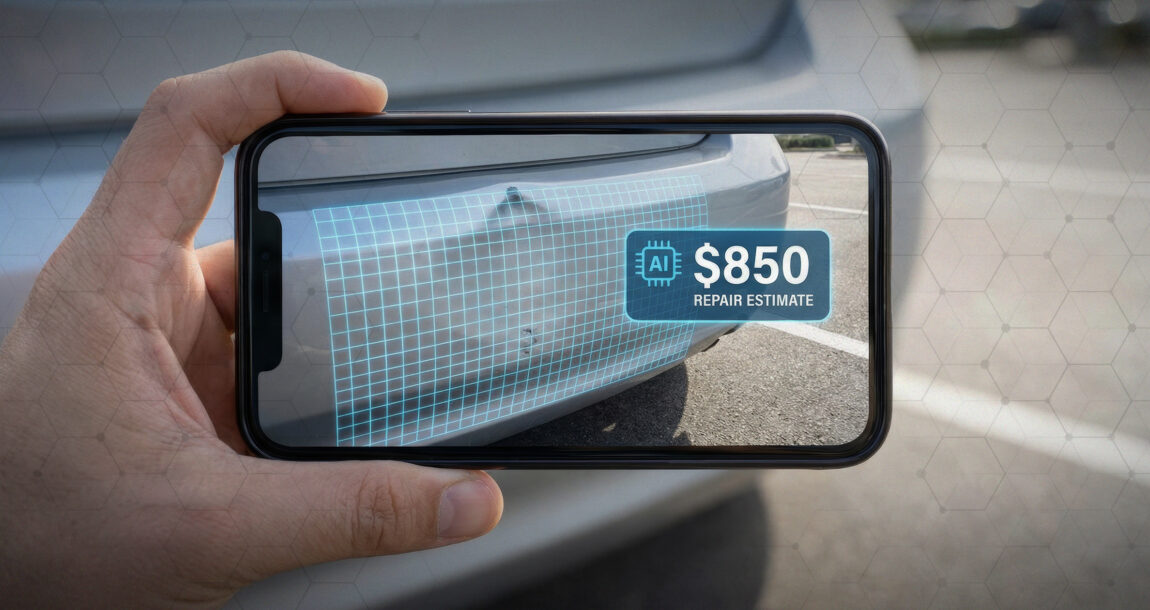
The most visible shift is in damage assessment. Platforms such as CCC Estimate -- STP and Tractable now generate detailed, line-level repair cost estimates from a handful of smartphone photos in seconds. Tractable reports that its claim automation handles roughly 70% of cases without human involvement, and its estimate pre-population feature has cut estimate-writing time by half. CCC's system prepopulates estimate lines based on photos of vehicle damage, with repairers setting their own confidence thresholds and human estimators retaining final approval authority.
Behind the scenes, artificial intelligence triage systems are classifying incoming claims by predicted severity before an adjuster ever opens the file. Predictive analytics models score each claim for complexity, estimated cost and litigation probability. This allows organizations to route straightforward fender-benders through expedited channels while flagging multivehicle injury claims for senior adjusters.
The efficiency gains are real. Industry surveys show claims processing times have dropped by roughly 18.6%, and carriers report faster product times-to-market as well. By 2026, an estimated 91% of insurance companies have adopted AI technologies in some form, and the AI-in-insurance market is projected to reach $35.8 billion by 2029.
But speed introduces its own risks. When an algorithm assesses vehicle damage from four photographs, it is working from limited information. Structural damage hidden beneath body panels, pre-existing conditions that complicate repair scope, and the nuanced interplay between vehicle damage and occupant injury are areas where automated systems still struggle. Claims professionals who understand these limitations are more valuable, not less, in an AI-assisted environment.

Telematics and dashcam data: A new evidentiary landscape
Usage-based insurance has crossed a meaningful adoption threshold. More than 21 million U.S. policyholders now share telematics data with their insurers, a figure that has grown at a 28% compound annual rate since 2018. A recent survey by the IoT Insurance Observatory found that 82% of policyholders view telematics apps positively, and 60% say they are open to switching to usage-based coverage.
Dashcam adoption is following a similar trajectory. More than half of surveyed policyholders said they would pay for a connected dashcam service offering video recording, emergency assistance and real-time safety feedback.
For claims operations, this data is transformative. Telematics sensors enable automated crash detection and can trigger first notice of loss without the policyholder placing a call. Speed, braking force, impact angle and GPS coordinates are captured in real time, providing an objective data layer that supplements -- and sometimes contradicts -- the narratives in police reports and witness statements.
The implications for fault determination are significant. Adjusters now have access to pre-impact driving behavior data that can establish whether a driver was accelerating, braking or traveling above the posted speed limit in the moments before a collision. Dashcam footage, analyzed frame by frame, can clarify lane positioning, signal usage and reaction timing with a precision that was previously unavailable outside of formal accident reconstruction.
This evidentiary richness cuts both ways. It can expedite clear-liability claims by eliminating disputes over basic facts. But it also introduces new complexity. Privacy considerations are evolving alongside the technology -- questions about data ownership, consent scope and the circumstances under which telematics data can be shared with third parties remain unsettled in many jurisdictions. Claims professionals need to stay current on their state's regulatory framework for telematics data use, as the landscape is shifting quickly.
Fraud detection and the false positive problem
AI-powered fraud detection represents one of the highest-return applications of machine learning in claims operations. Pattern recognition algorithms can identify anomalies across claim histories, provider networks and submission timing that would be invisible to manual review. The need is acute: In 2026, AI-generated documents, deepfake identity submissions, and automated claim attempts are creating fraud vectors that did not exist even two years ago.
The challenge is calibration. Fraud scoring models that are tuned too aggressively will flag legitimate claims, creating delays for honest policyholders and generating regulatory exposure for carriers. Industry analysts have noted that even innocent claimants can trigger fraud flags when something unusual -- but entirely legitimate -- appears in their submission pattern.
The most sophisticated carriers are adopting a calibrated approach: paying the undisputed portion of a claim while investigating the flagged elements separately. This avoids the reputational and regulatory costs of blanket denials while still addressing potential fraud. Tools designed to reduce false positives and increase the transparency of each analytic score are gaining adoption. This reflects a growing recognition that explainability is not optional when algorithmic decisions affect claim outcomes.
For adjusters and claims managers, the practical takeaway is that fraud detection AI is a screening tool, not a decision-maker. Every flagged claim still requires human review, contextual judgment and a documentation trail that can withstand regulatory scrutiny. The carriers that treat fraud scores as one input among many -- rather than as dispositive -- will be better positioned as state regulators increase their focus on AI-driven claims decisions.
The digital-first claims experience
Consumer expectations have shifted permanently. The "touchless" claim -- where the entire process from FNOL through payment is handled with minimal human involvement -- is no longer a pilot program. For minor, clear-cut accidents, AI-powered systems can triage, approve and issue payment within hours rather than days.
Mobile-first FNOL is now the default channel for many carriers. Policyholders file claims through insurer apps that capture structured data in the format the AI triage system expects, upload damage photos for computer vision analysis, and receive status updates through chatbots and push notifications. AI-operated voice assistants guide callers through reporting steps and can populate claim records in real time.
Virtual inspections have reduced the need for in-person appraisals on many property damage claims. Image recognition software analyzes uploaded photos or videos to estimate repair costs and identify total-loss candidates, compressing what was once a multi-day process into minutes.
The business case is straightforward: faster cycle times, lower loss adjustment expenses, and higher customer satisfaction scores. But the digital-first model works best for the claims that need it least -- the simple, low-severity, single-vehicle incidents where liability is clear and injuries are minimal. The moment a claim involves disputed liability, significant bodily injury, multiple parties, or complex medical treatment, the limitations of automated processing become apparent.
Claims organizations that have invested heavily in touchless processing for routine claims are now grappling with a related challenge: ensuring that their complex-claim handling capabilities have not atrophied. The adjusters who handle the claims that AI cannot resolve need deeper expertise, not less, precisely because the easy work has been automated away.
How claims professionals should prepare
The technology trajectory is clear: more automation, more data, faster processing. But the claims professionals who will thrive in this environment are not the ones racing to eliminate human involvement. They are the ones who understand where human judgment remains irreplaceable.
Several areas deserve focused attention.
Data literacy is becoming a core competency. Adjusters who can interpret telematics data, understand the confidence intervals on an AI damage estimate, and recognize when a fraud score is driven by a legitimate anomaly will make better decisions than those who simply accept or reject algorithmic outputs.
Regulatory awareness matters more than ever. As AI systems take on larger roles in claims decisions, state insurance departments are increasing their scrutiny of algorithmic fairness, transparency, and accountability. Claims professionals must understand not only what their tools do, but how those tools' decisions would be evaluated by a regulator -- or a jury.
Complex claim skills are a differentiator. The automation of routine claims means that the remaining caseload skews toward higher severity, disputed liability, and multiparty scenarios. Negotiation skills, medical treatment knowledge, and the ability to assess credibility and damages in nuanced situations are more valuable in a world where straightforward claims handle themselves.
Empathy remains a competitive advantage. No chatbot has replicated the ability to guide an injured policyholder through a difficult recovery while managing expectations about claim timelines and outcomes. The carriers that maintain strong human touchpoints for their most vulnerable claimants will see that investment reflected in retention, litigation rates and regulatory relationships.
The technology reshaping claims operations in 2026 is genuinely impressive. It is also, fundamentally, a set of tools. The organizations and professionals who deploy those tools with judgment, transparency and an understanding of their limitations will outperform those who mistake automation for intelligence.
© Entire contents copyright 2026 by InsuranceNewsNet.com Inc. All rights reserved. No part of this article may be reprinted without the expressed written consent from InsuranceNewsNet.com.


Rethinking whether annuities are too late for older retirees
Market reports turn economic trends into a strategic edge for advisors
Advisor News
- Retaining clients by giving them a memorable experience
- Addressing the longevity paradox
- Employers shift focus from retirement access to financial outcomes
- Helping widowed clients navigate their new financial reality
- Navigating client communication in a digital age
More Advisor NewsAnnuity News
- Farm Bureau P&C insurers post first underwriting gain since 2021
- Legacy Marketing, Malibu Life launch two fixed indexed annuities
- Changing client priorities are reshaping annuity conversations
- Solen Software acquires annuity software provider Cooperative Technologies
- MassMutual Expands Lending Options With New Secured Credit Line
More Annuity NewsHealth/Employee Benefits News
- Terry Savage: Small business owners, now is the time to offer health insurance coverage
- Aldermen select employee medical insurance broker services provider
- Southwest Bridge Health focusing on insurance coverage gap in Berrien County
- HEALTHCARE SHOULDN'T REQUIRE A MAP
- BOSTON ENCOURAGES RESIDENTS TO APPLY FOR HEALTH INSURANCE DURING OPEN ENROLLMENT SEASON
More Health/Employee Benefits NewsLife Insurance News