

Most Americans want more prescription drug price regulation
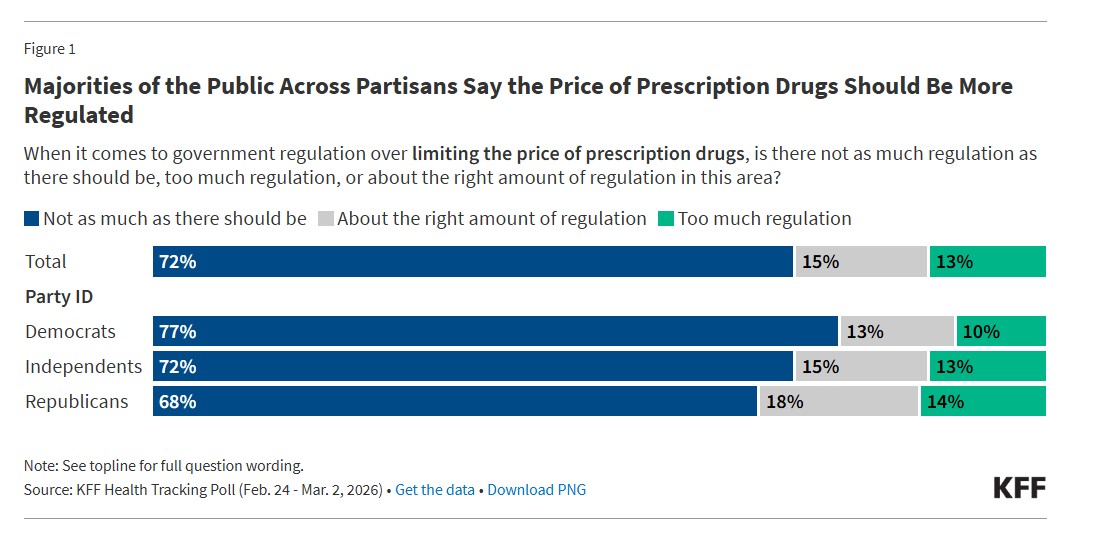
There is broad, bipartisan agreement that there should be more government regulation when it comes to prescription drug costs, according to KFF, a nonprofit health policy research, polling, and news organization.
About seven in 10 (72%) adults say there is not enough government regulation when it comes to limiting the price of prescription drugs, while 15% say there is “about the right amount,” and 13% say there is “too much” regulation in this area. At least two-thirds of Democrats (77%), Republicans (68%), and independents (72%) say there is not enough government regulation when it comes to limiting prescription drug prices.
Among adults who currently take prescription medications, more than three in four say there is not enough government regulation of prescription drug prices (77%), including similar majorities of those who take one to three medications (78%) and four or more (75%). Among those who do not currently take prescription medications, a smaller majority agrees (62%).
Most doubt the administration’s policies will lower eosts
In early February, the Trump administration officially launched TrumpRx, the federal government-run website where people can get discounts to buy prescription drugs directly from some manufacturers or pharmacies, without using their health insurance. Few U.S. adults have heard much about the website in the weeks following its launch, and most remain skeptical that relief is coming.
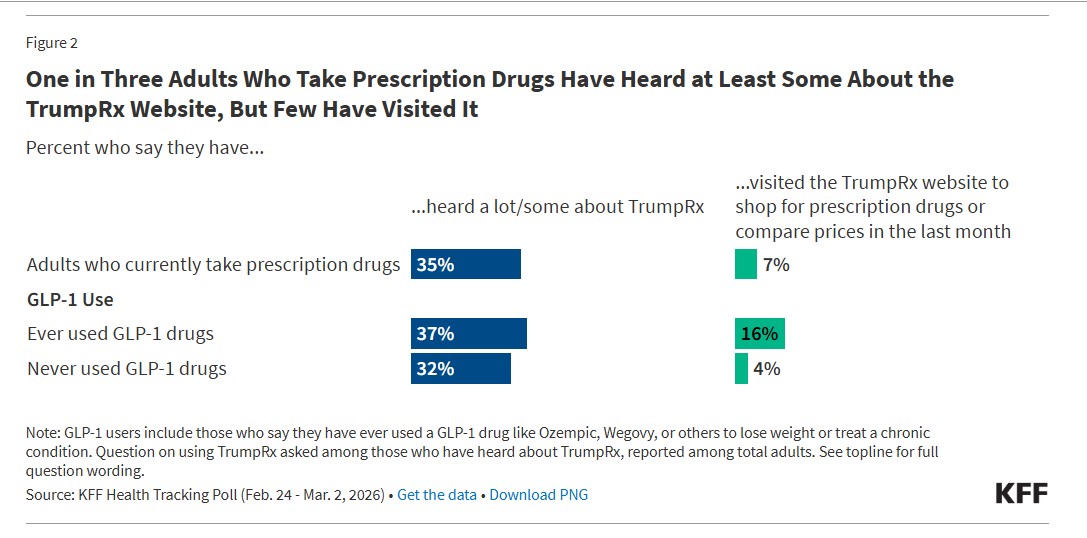
One-third (35%) of adults who currently take prescription medication (66% of all adults) say they have heard “a lot” (6%) or “some” (29%) about TrumpRx, up from about one in five (18%) who had heard about plans for the site in November 2025, leaving a large majority of prescription drug users still unaware of the new program. However, awareness has grown slightly since the site’s launch as about one-third (32%) of adults who take prescription drugs now say they have heard “nothing at all” about TrumpRx, compared to six in 10 (61%) in the months preceding the launch.

With GLP-1 agonist prescriptions on the rise, KFF polling finds nearly one in five adults (18%) have ever taken a GLP-1 medication, including 12% who report currently taking one. While few prescription drug users (7%) say they have visited the TrumpRx site to shop for or compare prescription prices in the past month, this rises to about one in six (16%) among those who currently take or have ever taken a GLP-1 medication for weight loss or certain chronic conditions. The TrumpRx website features at least four major GLP-1 medications among its initial 43 listed drugs.
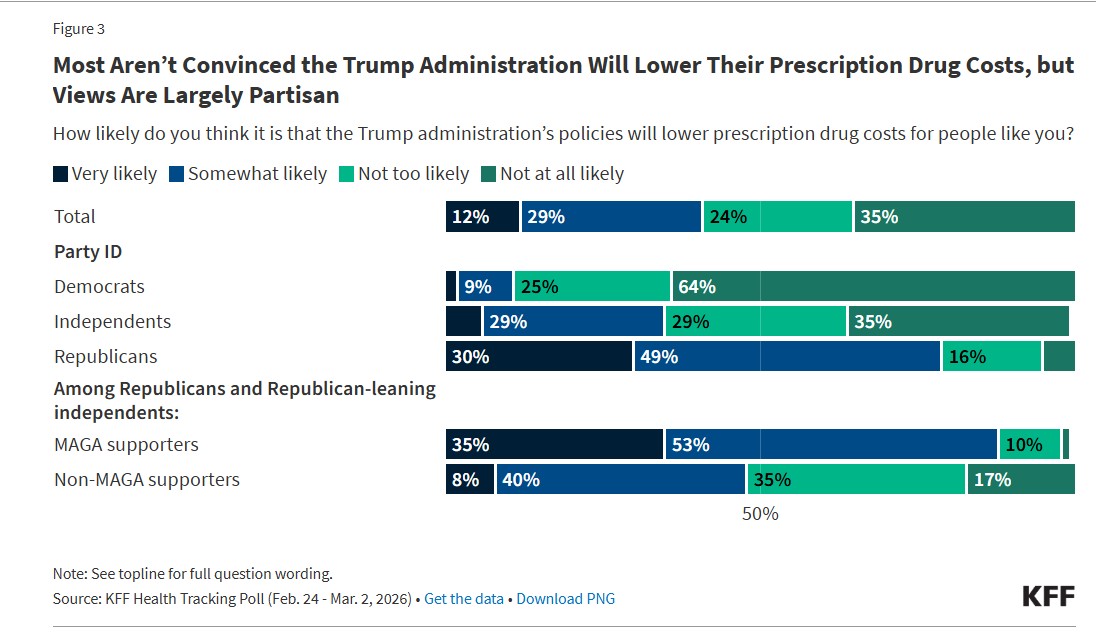
The public remains skeptical that the Trump administration’s policies will lower prescription drug costs for people like them. About six in 10 (59%) adults say it is “not too likely” or “not at all likely” that the policies will lower drug costs, compared to about four in 10 (41%) who say it is “very likely” or “somewhat likely.”
These expectations largely mirror overall partisan views of actions by the Trump administration, with large majorities of Republicans (79%) and MAGA-supporting Republican and Republican leaning independents (88%) saying it is likely the administration will lower drug costs for people like them. Much smaller shares of independents (35%) and Democrats (11%) say they think the administration will lower their prescription drug costs.
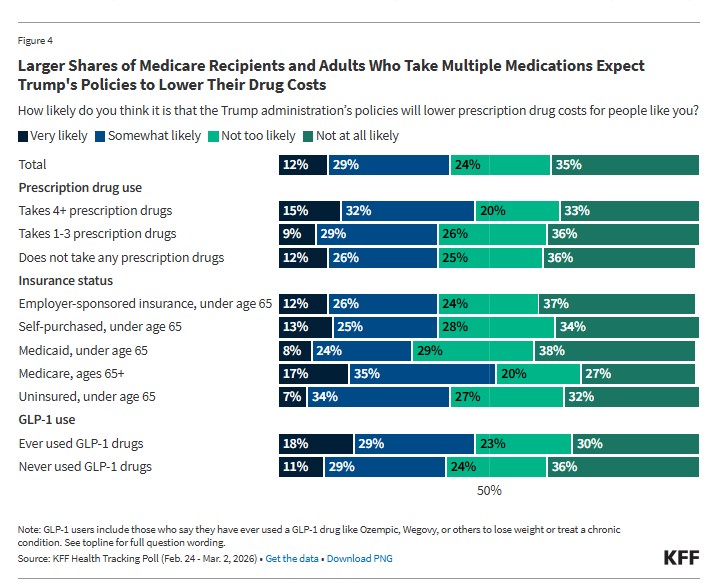
Adults ages 65 and older with Medicare coverage are split on whether the administration’s policies will lower prescription drug costs for people like them (53% say it is likely, 47% say it is unlikely). Similarly, nearly half of adults who take four or more prescription medications say the administration’s policies will lower their costs (47%), while half say it is unlikely (53%). Nearly half (46%) of adults who take or have taken GLP-1 medications say the Trump administration’s policies are likely to lower their costs, while 54% say it is unlikely.
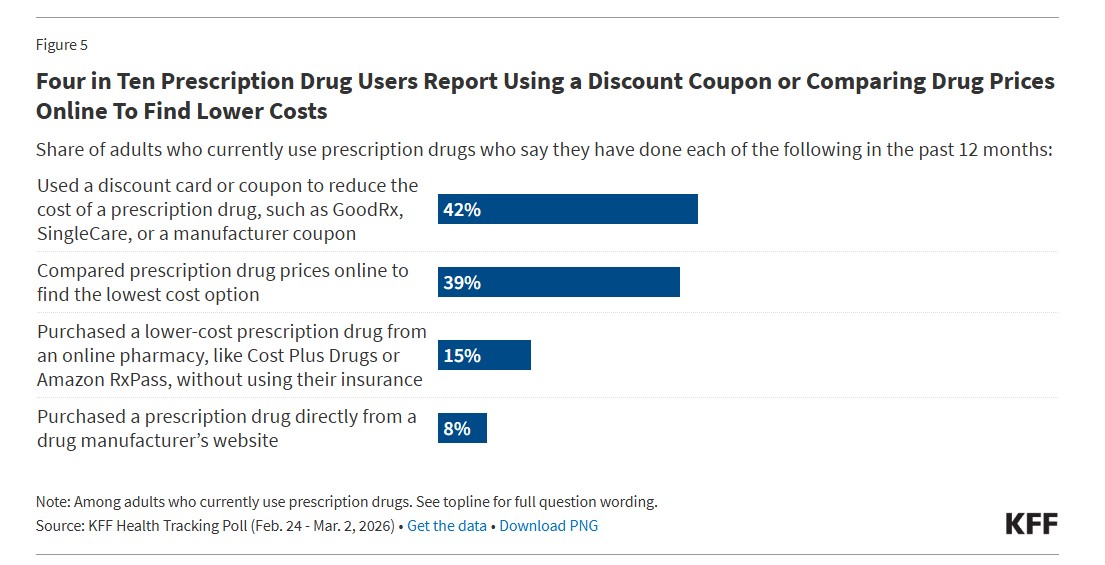
Prior to TrumpRx, drug discounts have long been available through third-party platforms such as GoodRx and directly from drug manufacturers. About four in 10 adults who currently take prescription medication say, in the past year, they have used a discount card or coupon to reduce their prescription drug costs, such as GoodRx, SingleCare, or a manufacturer coupon (42%), or compared prescription drug prices online to find the lowest cost option (39%). Fewer say they have purchased a lower-cost drug from an online pharmacy without their insurance (15%) or directly from a drug manufacturer’s website (8%).
Growing majority worry about affording their prescription drugs
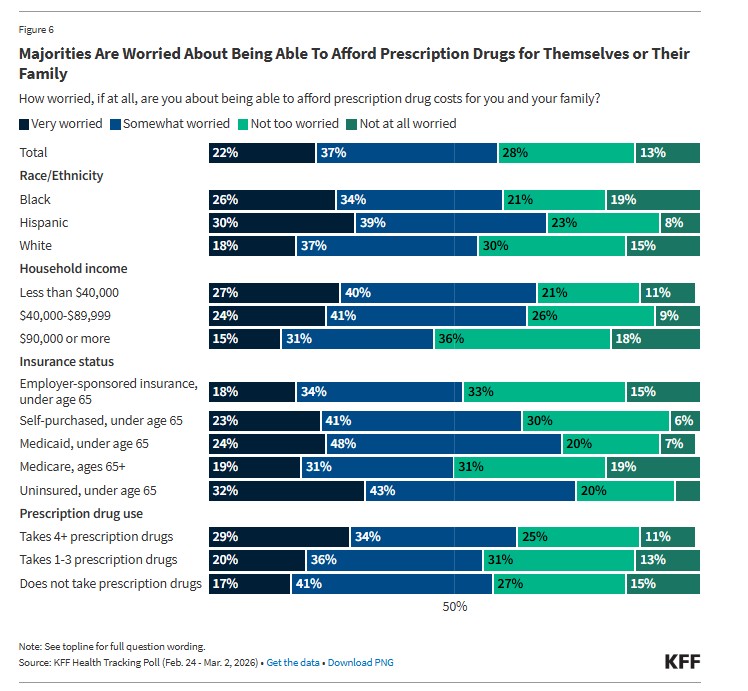
Prescription drug costs are a widespread concern for U.S. adults. Two-thirds (66%) currently take prescription medication, including three in 10 (31%) who report taking four or more. Most U.S. adults are worried about affording prescription drugs for themselves and their families, and four in 10 say they have not taken their medication as prescribed in the past year due to cost.
Overall, about six in 10 U.S. adults say they are worried about being able to afford prescription drug costs for themselves or their families (59%), including about one in five (22%) who are “very worried.” Substantial shares of uninsured adults under age 65 (32%), Hispanic adults (30%), Black adults (26%), adults in households with annual incomes less than $40,000 (27%) say they are “very worried” about affording their prescription drug costs.
Among adults who take four or more prescription medications, about two-thirds (64%) report worrying about affording their medications, including about three in 10 (29%) who are “very worried.”
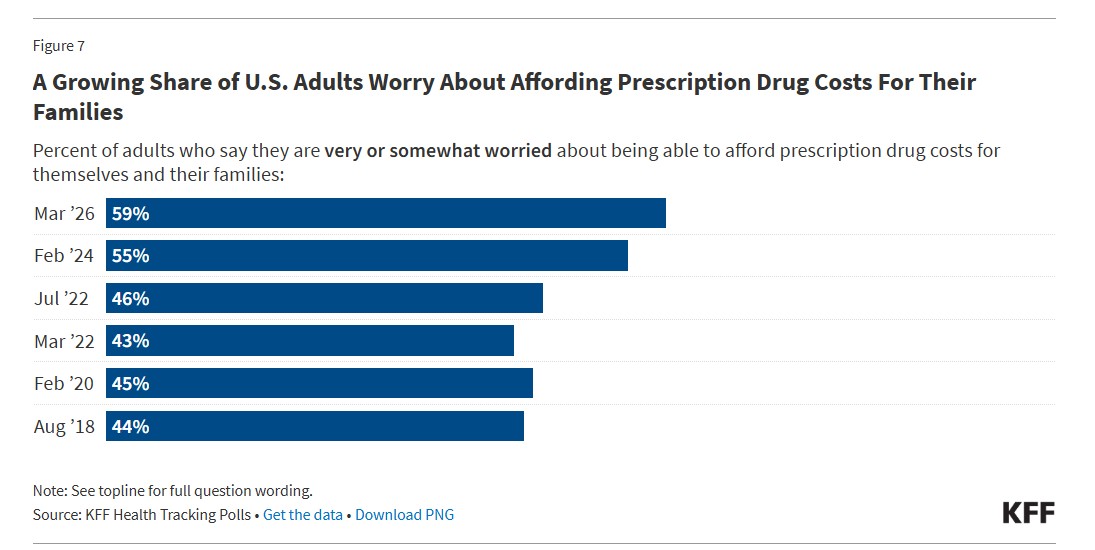
Notably, this KFF poll finds the largest share of U.S. adults saying they are “very” or “somewhat” worried about affording prescription drug costs for themselves or their families since KFF first polled on this question in 2018.
Among Medicare beneficiaries ages 65 and older, the share who report being worried about affording their prescription drug costs has remained unchanged from August 2018. The vast majority of Medicare beneficiaries are enrolled in Medicare Part D plans, giving them prescription drug coverage that has improved with recent policies in the Inflation Reduction Act of 2022.
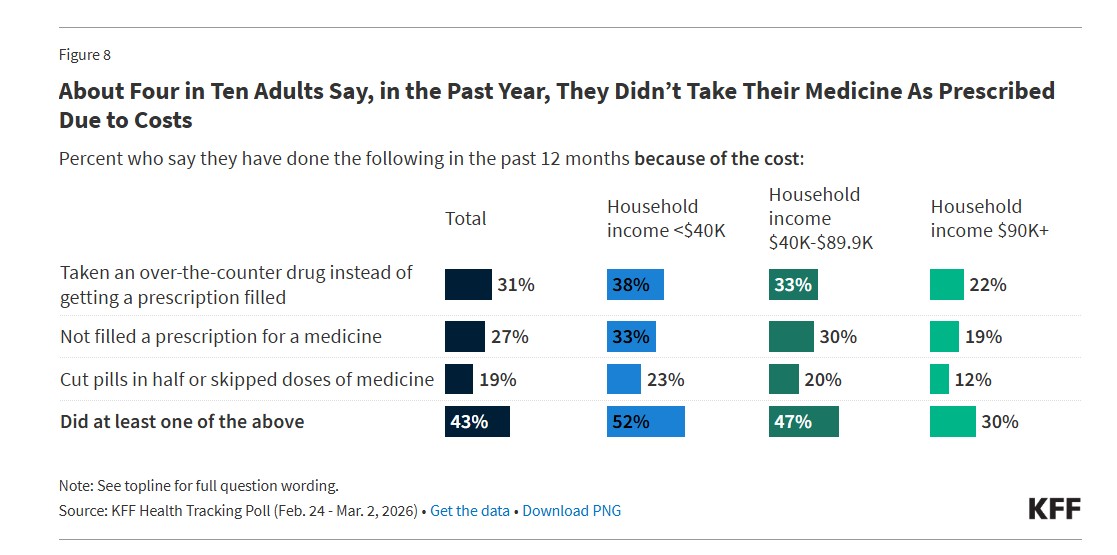
About four in 10 (43%) U.S. adults say, in the past year, they have not taken their medication as prescribed due to the cost. This includes about three in 10 adults who say they have taken an over-the-counter drug instead of getting a prescription filled because of the cost (31%), one in four who say they have not filled a prescription for a medicine due to the cost (27%), and about one in five (19%) who say they have cut pills in half or skipped doses of medicine because of the cost in the past year.
Notably, larger shares of adults report not taking medication as directed due to the cost than KFF polls found three years ago, when about three in 10 (31%) reported taking at least one of these cost-saving measures.
Larger shares of adults in households with lower and middle incomes report resorting to these cost-saving prescription medication solutions compared to those with higher incomes. About half of adults in households with annual incomes under $40,000 (52%) or between $40,000 and $90,000 (47%) say they have not taken their medication as prescribed due to the cost in the last year, compared to three in 10 adults in households with incomes of $90,000 or more.
Voters trust Democrats to deliver lower drug costs
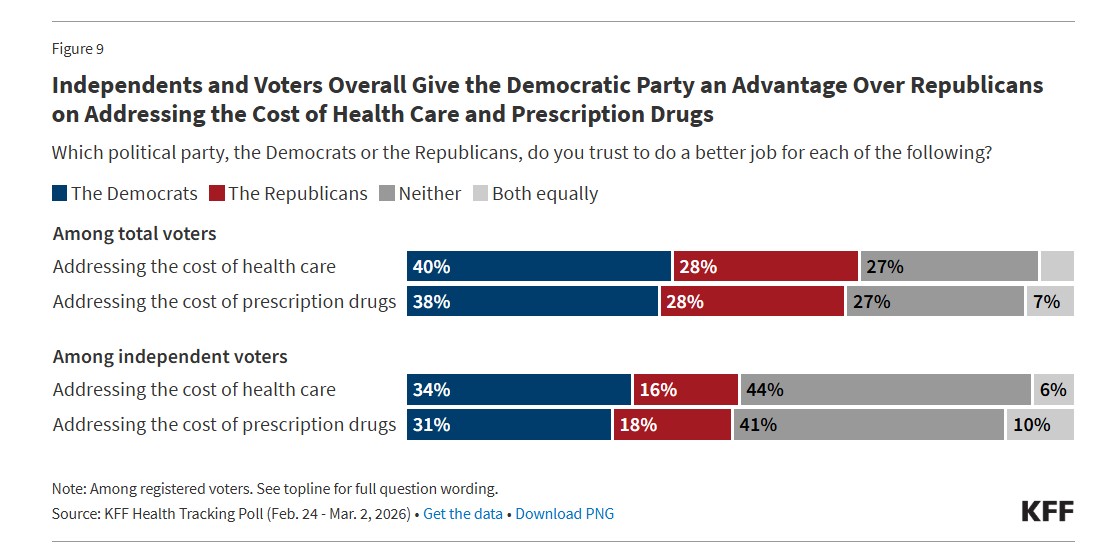
Looking ahead to the 2026 midterm elections, the Democratic Party holds the advantage over the Republican Party on who voters trust to address health costs, including prescription drugs. Nearly four in 10 (38%) voters say they trust the Democratic Party to do a better job addressing the cost of prescription drugs, while about three in 10 (28%) say they trust the Republican Party. However, reflecting a general frustration over the cost of prescription drugs in the U.S., about one in four (27%) say they trust “neither party” to handle the issue.
The Democratic advantage on drug costs mirrors the party’s advantage on addressing health care costs overall. Four in 10 voters say they trust the Democratic Party to do a better job addressing the cost of health care, compared to about three in 10 (28%) who trust the Republican Party. Again, about one in four voters (27%) say they do not trust either party to handle the issue.
While partisans largely trust their own party to address the cost of prescription drugs and health care generally, independent voters are more likely to say they trust the Democratic Party over the Republican Party to address the cost of health care generally (34% vs. 16%) and prescription drugs (31% vs. 18%). However, more than four in 10 independent voters say they do not trust either party to do a better job handling either of these areas of affordability (44% and 41% respectively), suggesting that a substantial share of independents remain unconvinced that either party will deliver on these issues.


BlackRock Inc. (NYSE: BLK) Posts Strong Gains in Friday Morning Trading
Asian Stocks Fall As Iran War Keeps Oil Near $100, Clouds Rate Outlook
Advisor News
- CT governor’s candidates claims: What’s true, and what’s misleading
- Retaining clients by giving them a memorable experience
- Addressing the longevity paradox
- Employers shift focus from retirement access to financial outcomes
- Helping widowed clients navigate their new financial reality
More Advisor NewsAnnuity News
- Farm Bureau P&C insurers post first underwriting gain since 2021
- Legacy Marketing, Malibu Life launch two fixed indexed annuities
- Changing client priorities are reshaping annuity conversations
- Solen Software acquires annuity software provider Cooperative Technologies
- MassMutual Expands Lending Options With New Secured Credit Line
More Annuity NewsLife Insurance News
Property and Casualty News
- FEMA launches option to buy national flood insurance policy online
- Hurricane Isaias causes $582 million in insured damage; state seeks $237 million from FEMA
- How credit score affects your car insurance
- State of health care, part 3
- Sponsored Content: The Spotlight – Fact or Fiction w/ Noble McIntyre
More Property and Casualty News