


GBP/USD Lurches Higher as Risk Aversion Abates
The GBP/USD currency pair took a decisive leg higher on Thursday, driven by an easing of global risk aversion and a broader reversal in Greenback flows. Although the move brought Cable closer to the psychological 1.3000 level, upside momentum remains constrained as macroeconomic uncertainties linger.
This week's developments underscore how market sentiment, inflation data, and tariff rhetoric continue to shape currency movements in the near term. The specialists at Raliplen walk readers through a comprehensive review of the topic in this piece.
Greenback Falters as Inflation Cools
The catalyst behind GBP/USD's most recent bullish breakout lies largely in the US inflation print, which delivered a notable downside surprise. The US Consumer Price Index (CPI) report for March revealed that core CPI slipped to 2.8% YoY, marking its lowest level in four years. This cooling trajectory is significant, especially considering that core inflation had been entrenched above 3.0% YoY for nearly eight consecutive months.
In parallel, headline CPI also moderated, falling to 2.4% YoY, further reinforcing the notion that inflationary pressures in the US may be losing steam faster than anticipated. With the
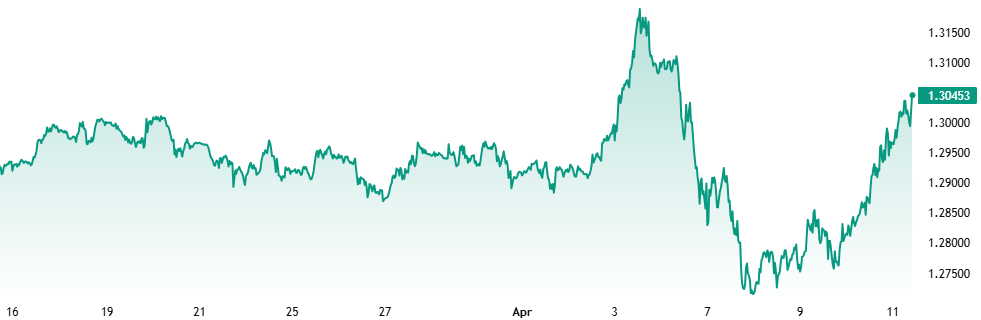
This environment has triggered a broad-based pullback in US Dollar demand, giving high-beta currencies such as the British Pound (GBP) room to breathe. The GBP/USD pair has climbed approximately 2.2% from its recent lows around the 1.2700 level, reflecting a renewed appetite for risk assets and a shift in short-term market positioning.

Tariff Tensions Ease... For Now
Another driver behind the GBP/USD resurgence is the temporary de-escalation of tariff threats. In recent weeks, the
However, with no new major tariff implementations announced this week, investor anxiety has cooled modestly, reducing demand for risk-off trades.
Despite this, the broader market tone remains fragile. Financial markets have grown wary of the unpredictable nature of current US trade policy, particularly as mixed signals continue to emanate from
While the GBP/USD pair is capitalizing on improved sentiment in the short term, volatility risks remain elevated, particularly if protectionist measures return to the forefront.
Technical Analysis: GBP/USD Price Forecast
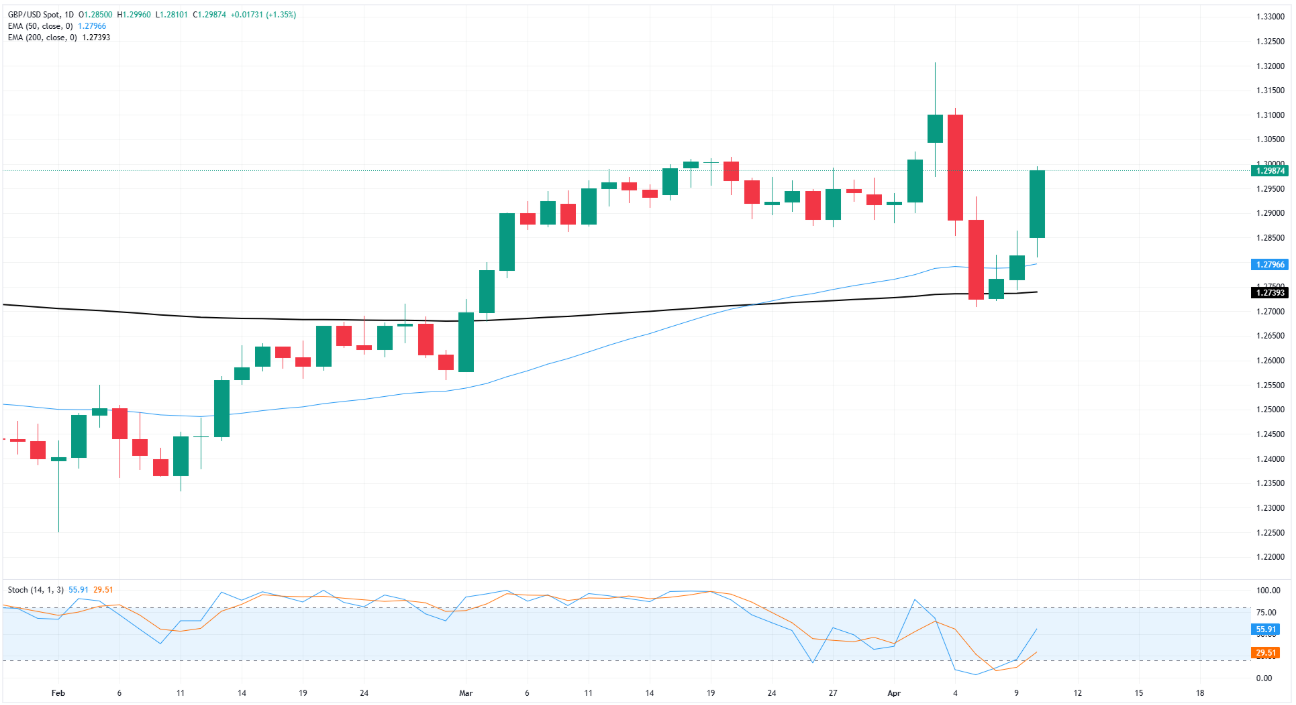
From a technical standpoint, GBP/USD has now posted three consecutive days of gains, lifting the pair toward the upper bounds of a near-term resistance channel. The latest leg higher saw the Pound rally 1.3% against the US Dollar, bringing it within striking distance of the 1.3000 psychological threshold.
A key support zone was confirmed at the 200-day Exponential Moving Average (EMA), which acted as a springboard for bullish momentum earlier in the week. However, traders should remain cautious; the price remains capped just below the 1.3000 handle, a significant psychological and technical barrier that has rejected bullish advances multiple times in recent months.
The next major inflection point lies around the 1.3100 region, where prior swing highs coincide with Fibonacci retracement levels from the broader downtrend.
A clear breakout beyond 1.3000, backed by momentum and volume, could open the path to a more sustainable bullish structure. On the downside, the 200-day EMA, followed by horizontal support at 1.2800, now forms the critical support structure.
Outlook: Cautious Optimism Prevails
While the GBP/USD pair appears to be staging a meaningful recovery, investors must be careful not to overinterpret the current rally. The pair's rise is more a reflection of Dollar weakness than Pound strength, and the absence of truly positive
Additionally, macro risks remain tilted to the downside, with geopolitical trade frictions, inflation uncertainties, and potential Fed pivot missteps all capable of reversing the current trend.
As such, the outlook for GBP/USD remains constructively bullish in the short term, but range bound conditions are likely to persist until there's a decisive shift in either fundamental direction or central bank policy tone.
Conclusion
In summary, GBP/USD's latest climb has been underpinned by a confluence of softening US inflation, a pullback in tariff fears, and broader Dollar softness. While the pair has shown notable resilience and broken higher, the lack of bullish conviction above 1.3000 suggests traders are still testing the waters rather than committing to a new directional trend.
For now, the market's focus will remain locked on US consumer sentiment data and inflation expectations, both of which could dictate the next move in the Cable narrative.

COMTEX_465096851/2922/2025-05-01T02:19:01


Readers sound off on delayed outrage, managed care plans and blue-state voters
Storms and Signals: How Tariffs, Transitions, and Tech Are Redrawing the Financial Map
Advisor News
- Proposed legislation takes aim at Social Security shortfall
- The overlooked retirement security risk that must be addressed
- What advisors should know about hedge funds in retirement planning
- Retirement control is top success measure for middle class, ACLI says
- Industry groups applaud House passage of Financial Exploitation Prevention Act
More Advisor NewsAnnuity News
- Built-in guaranteed annuities: What advisors should know
- Malibu Life Holdings Completes Acquisition of TruSpire, Establishing Malibu USA and Accelerating Entry into the U.S. Retail Annuity Market
- Why job boards are failing insurance agencies
- MassMutual Ranks No. 100 on the 2026 Fortune 500® List
- What’s fueling record annuity growth?
More Annuity NewsHealth/Employee Benefits News
- Findings from George Washington University Update Understanding of Managed Care (Eligibility Assistance Increases Insurance Enrollment Within Community Health Centers but Not At the State Level): Managed Care
- Findings from Razanne Oueini and Colleagues Provides New Insights into Proinsulin (Changes in persistence to basal insulin following the Medicare out-of-pocket cost cap): Peptide Proteins – Proinsulin
- Researchers from Columbia University Detail New Studies and Findings in the Area of Managed Care (The Impact of Health Shocks On Housing Instability: Evidence From Urban Medicaid Enrollees): Managed Care
- Studies Conducted at Stanford University on Economics Recently Reported (Why Doesn’t the United States Have National Health Insurance? the Political Role of the American Medical Association): Economics
- This rural Colorado hospital is using AI to go after health insurers that ghosted payments. Here's how.
More Health/Employee Benefits NewsLife Insurance News
- Fortitude Re Announces $3.8 Billion Long-Term Care Reinsurance Agreement with Unum Group
- Unum Group Announces $3.8 Billion Long-Term Care Reinsurance Transaction with Fortitude Re
- Before you debate premium financing, understand the bigger picture
- NAIFA praises House committee approval of Clarity for Compensation Act
- PHL Variable liquidation pushed out to 2027, Connecticut regulators say
More Life Insurance News