

Fed Chair Powell won't call it 'stagflation'Jill On Money:
JILL ON MONEY
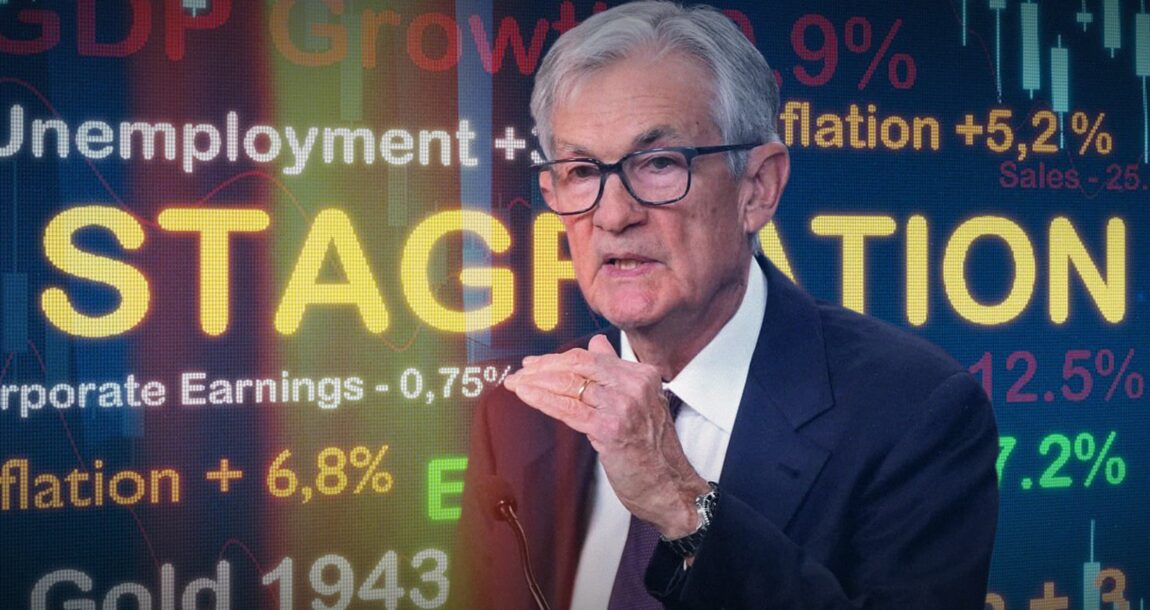
After the Federal Reserve decided to hold interest rates steady at its March policy meeting, Chairman Jerome Powell conducted a news conference. In it, he was asked whether the economy was facing stagflation. In his very Fed-speak way, Powell said that there was "tension" between the Fed's dual mandate of maximum employment and stable prices.
"We're? trying to manage our way through it. ... It's a very difficult situation, ?but? it's nothing like what they faced in the 1970s and? I ?reserve stagflation for ?that - the word - for that period. Maybe ?that's just me."
So even if the labor market is slowing down (not stagnating!), and although there is evidence that the rate of price increases was moving higher even before the current war-induced oil shock (not inflation), please don't invoke the S-word.
For the uninitiated, the term "stagflation" was coined in 1965 by the British politician Iain Macleod, who declared in a speech to the House of Commons: "We now have the worst of both worlds - not just inflation on the one side or stagnation on the other, but both of them together. We have a sort of 'stagflation' situation." Despite the invocation of the term 60 years ago, stagflation's heyday was in the '70s, when economic growth cooled, wages stagnated, and prices were rising. The situation went on steroids after the 1973 OPEC oil embargo.
The most recent stagflationary scare occurred in mid-2021. At that time, the Fed was more concerned with recouping millions of jobs lost during the pandemic than aggressively fighting inflation, which the central bank viewed as "transitory" (temporary). We know how that story played out - inflation climbed to multi-decade highs, as the economy and labor market grew.

The Fed's experience of allowing inflation to run too hot for too long in 2021-22 is like a black cloud hanging in the distance, haunting Fed officials today. Powell's difficult situation is not just about the coming energy price increases. Over the past few months, inflation has remained above the Fed's desired target, as job growth has fizzled (just 17,000 net total jobs were created over the past three months).
The Fed knows all too well that it is difficult to vanquish the inflationary beast once it makes its presence known. Powell can choose not to utter the word "stagflation," but in the Fed's March economic projections, "risks to growth were to the downside, while risks to inflation and unemployment were to the upside. That suggests a fear of stagflation," says KPMG Chief Economist Diane Swonk.
Maybe this period will pass without stagflation or a dramatic price surge. AI powered economic growth continues and tax refunds should help consumers absorb price increases that will eventually hit the economy. That said, whatever you might call it, we should probably prepare for at least a possibility that this period of uncertainty will last longer than any of us would like.
What can you do to protect yourself?
Instead of blowing through your tax refund, make sure your emergency fund is fully stocked - ideally six to 12 months of living expenses - so you're not forced to take on high-interest debt if prices keep rising.
Second, pay down high interest debt. If the "flation" part of the equation continues, interest rates will start to rise, which will make carrying debt more expensive.
Third, if you have an opportunity to increase retirement contributions, force yourself to do so. Volatile markets can be a good friend to long-term investors who can continue to buy, regardless of the headlines.
Finally, think carefully about big discretionary purchases. In a stagflationary or just uncertain environment, patience and flexibility are your best financial tools.
Jill Schlesinger, CFP, is a CBS News business analyst. A former options trader and CIO of an investment advisory firm, she welcomes comments and questions at [email protected]. Check her website at jillonmoney.com.


Club Vita Announces Key Promotions to Strengthen North American Leadership
What the Fed’s Latest Rate Decision Means for Your Mortgage
Advisor News
- Your client wants to cash out an annuity. Here’s what to consider
- How student loan debt impacts 401(k) balances
- The ‘sandwich generation’ faces compounded barriers to retirement savings
- Benefit Costs Squeeze Schools, Driving Cuts, Tax Hikes And Difficult Tradeoffs
- Why client insurance needs could change even if their life doesn’t
More Advisor NewsAnnuity News
- SS&C Black Diamond Expands Annuities & Insurance Marketplace with New Insurance Capabilities and Carriers
- Regulators urged to sharply limit hypothetical data in annuity illustrations
- Your client wants to cash out an annuity. Here’s what to consider
- Oklahoma Insurance Dept. helps Oklahomans recover unclaimed life insurance benefits
- Bitcoin gains ground in retirement market with Equitable annuity option
More Annuity NewsHealth/Employee Benefits News
Life Insurance News