

What an airspace shutdown tells us about risk
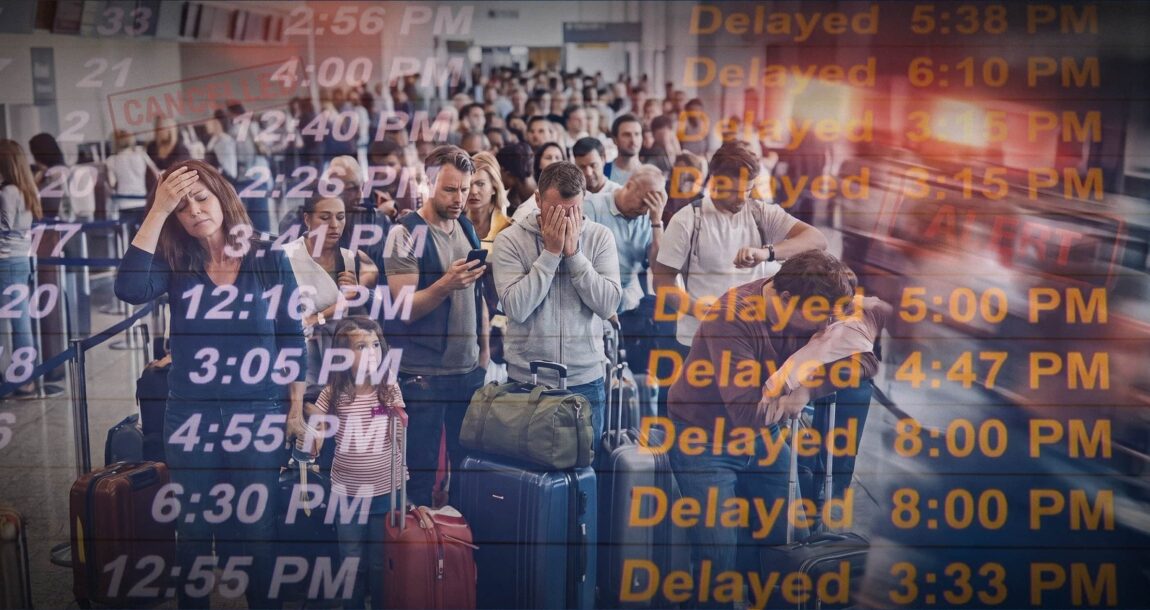
Amid the 2026 United Nations General Assembly, which brought thousands of world leaders, diplomats, dignitaries and business leaders from 193 countries to New York and Washington, a series of errors at a single construction site appears to have brought air travel to a halt across the northeastern United States.

The incident occurred at 9:45 a.m. Sept. 21, when a circuit at Philadelphia International Airport’s air traffic control facility failed, and then the backup fiber line had been mistakenly severed by a construction crew.
The combined failures caused a telecommunications outage, forcing the Federal Aviation Administration to pause flights for hours. Not only were many of the world’s VIPs unable to reach their destinations with ease, but everyday business travelers and families taking advantage of a holiday weekend were left unable to complete their travel itineraries.
Imagine the equivalent of Air Force 1 for other major world powers being ordered to a new destination airport because flights were halted, as was the case at Newark Liberty, John F. Kennedy, LaGuardia, Philadelphia, Boston-Logan, Teterboro and Westchester. Thousands of flights were snarled while the issues were resolved.
The financial implications of this single construction incident are far-reaching. They highlight the systemic fragility of air travel and force leaders to rethink the importance of, and also the limits of, business interruption coverage.
According to Airlines for America, a trade association representing 10 of the largest passenger and cargo airlines, a single-hour delay on one flight costs an airline nearly $6,000, not to mention what it costs the passenger.

When even a single delayed or canceled flight can have such a large impact, imagine the economic consequence as approximately 7,000 flights were unable to land at, or depart from, five of the busiest airports in the country. Combined, they see almost 170 million passengers annually, or more than 465,000 daily. Those 7,000 flights likely carried tens of thousands of passengers, each of whom will miss a hotel check-in, an important work meeting or a family event, resulting in an incalculable economic loss.
Meanwhile, the airlines and airports will likely have lost astronomical sums themselves due to the delays and cancellations. Average delays at Newark Liberty International reached 306 minutes, and per Airlines for America’s formula, that can amount to as much as $30,113 per flight, multiplied by hundreds of flights. Almost 7,000 flights across the Northeast were delayed, a ballooning cost.
However, coverage is another matter. From the airports' and airlines' policies that may cover their lost revenue, to the construction crew that cut the critical cable, business interruption insurance generally covers specified events, such as fires or floods. Whether a “small but crucial cable accidentally being cut by a construction crew” in New Jersey is covered for extensive business interruptions in Pennsylvania is a question for policyholders, but lost revenue is unlikely to be directly covered.
It has happened before
This is not the first time, nor will it be the last time a seemingly small accident had massive trickle-down consequences.
In 2017, Atlanta’s Hartsfield-Jackson airport suffered an 11-hour power outage after a fire occurred in an underground Georgia Power electrical facility, leading to nearly 1,200 flight cancellations. That delay cost Delta, which is headquartered in Atlanta, $50 million in revenue.
In January 2023, the FAA’s NOTAM (Notice to Airmen) system suffered a series of technical issues that led to the temporary grounding of the entire nation’s airspace. The NOTAM system is critical for flight management, as it keeps pilots informed of crucial information such as runway conditions, weather and real-time safety alerts. The issue was later found to be that some of the system’s files had been mistakenly deleted, leading to technical issues.
According to RAND, the global policy think tank, flight cancellations alone were expected to cost more than $50 million, not to mention the thousands of delayed flights and the downstream impacts on passengers.
International commerce was rocked and a region thrown into months of turmoil when a single loose wire caused the 984-foot-long and nearly 117-ton container ship, Dali, loaded with 4,700 containers, to lose power on March 26, 2024. That loss of power led the massive vessel to collide with the Francis Scott Key Bridge, which spans the mouth of Baltimore Harbor.
Most shipping to the port, one of the busiest in the country, was blocked for 11 weeks, with an estimated economic impact of $15 million per day. While the port has been cleared, the bridge, formerly the third-longest in the world, has not yet been rebuilt, two and a half years later. Meanwhile, Grace Ocean Private Limited and Synergy Marine Pte Ltd., the owner and operator of the M/V Dali, was forced to pay $2.25 billion in settlements resolving claims brought against them by the State of Maryland.
Passengers also feel the impact
While this latest airport shutdown and its predecessors have massive costs for airlines, the impact on passengers must not be ignored. For every delayed or canceled flight, someone is missing an important meeting, event or a connecting flight to a family event, imposing real costs.
However, what makes this incident more complicated than its predecessors are the actions of the New Jersey Transit construction crew that mistakenly cut the backup fiber cable. Damage to underground infrastructure during construction projects is far from uncommon, with nearly a quarter-million such accidents taking place in 2025.
Leading causes include failing to maintain proper distance from verified markings indicating critical infrastructure or making incorrect marks. Depending on the ultimate findings of any further forensic investigations, parties from the contractor to the utility locating company could end up being liable, if not just egg on their faces.
Events like these expose the fragility of the systems we rely on for everyday life and commerce. Even the most expansive liability policies cannot cover every scenario, and events like these remind us of the forensics that follow.
Somewhere in the U.S., an executive is going to sleep tonight thinking that their insurance policy will cover any potential mishap that may befall their business. That is a grievous mistake. If these events prove anything, it is that no insurance policy can cover everything.
© Entire contents copyright 2026 by InsuranceNewsNet.com Inc. All rights reserved. No part of this article may be reprinted without the expressed written consent from InsuranceNewsNet.com.



CHOICE arrangements: Not your father’s workplace health insurance
Advisor News
- The Gen Z money paradox
- NAIFA applauds final SECURE 2.0 regulations
- What will Democrats in Congress do about healthcare and retirement?
- Election results cloud retirement legislation outlook, experts say
- Planning for the missing chapter
More Advisor NewsAnnuity News
- AM Best Affirms Credit Ratings of Massachusetts Mutual Life Insurance Company and Its Subsidiaries
- Boomers want retirement protection, but their actions don’t match their mindset
- NAIC task force to address LTC riders
- ‘It’s really shocking:’ Regulators scrutinize assets backing annuity sellers
- Jackson Launches Direct-to-Consumer Annuity Offering
More Annuity NewsHealth/Employee Benefits News
- Vermont public schools expect the lowest health insurance increase in years. For districts, it’s only a small relief.
- Vt. public schools expect the lowest health insurance increase in years
- Samantha Wildow: Mercy Health warns thousands of Medical Mutual of Ohio patients may go out-of-network in 2027
- Reports Outline Managed Care Study Results from Harvard University (Inpatient-Only List Removals Shifted Procedures To The Outpatient Setting And Reduced Medicare Spending): Managed Care
- Health and Humor: Picking a Medicare insurance plan is daunting
More Health/Employee Benefits NewsLife Insurance News
- AM Best Affirms Credit Ratings of Massachusetts Mutual Life Insurance Company and Its Subsidiaries
- U-Haul Holding Company to Participate in Deutsche Bank Conference
- NAIC task force to address LTC riders
- Protective names Kurt Meyers Chief Legal Officer and Fernando Levy Chief Digital & AI Officer
- Best’s Commentary: Shanghai Cross-Border Investment Pilot Unlocks Overseas Growth Potential of China Non-Life Companies
More Life Insurance News